
Nokia launch Mission-Safe Phone for defense and public safety
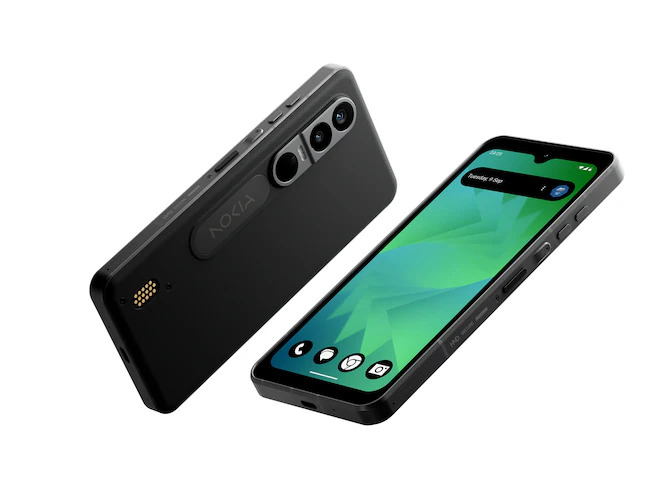
Nokia has silently teamed up with HMD to launch something quite different from regular smartphones – the Nokia Mission-Safe Phone. This isn’t a device you’ll find in shops for everyday users, but a tactical smartphone built for defense and public safety forces.
The phone is the same as the one for Bittium, with the only difefrence a Nokia logo placed beneath the laser focusing. It is designed with security, resilience, and mission-readiness as top priorities. Nokia says it can handle encrypted broadband communications in tough environments, while offering the speed and reliability needed for military or emergency operations.
Built to survive the toughest conditions
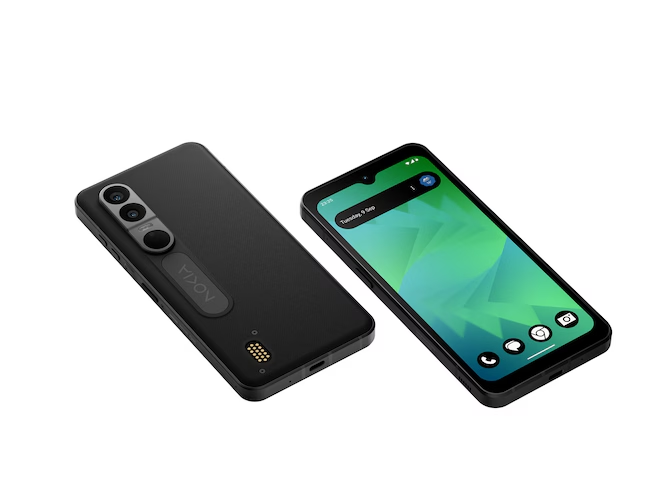
The Mission-Safe Phone comes with:
- 6.32” Gorilla Glass Victus 2 display
- MIL-STD-810H & IP68 protection (dust, sand, water, drops)
- 4500 mAh battery rated for 1000 cycles
- 50 MP dual rear cameras + 32 MP front camera
- Support for 29 LTE and 20 5G bands
Despite weighing 270 grams and being 23 mm thick, it’s still designed to work where consumer phones fail.
Secure and European-made
The phone runs a hardened OS with encrypted storage and no bloatware, backed by regular updates. Importantly, it’s designed and manufactured in Europe, giving governments and institutions the supply chain trust they demand.
Part of a bigger ecosystem
Besides the base version, Nokia will also offer the Mission-Safe Pro and Mission-Safe Ultra, aimed at different levels of mission requirements. The Mission-Safe Phone integrates with Nokia’s Banshee tactical radios and other defense solutions like private wireless networks and biometric monitoring systems, making it more than just a phone. It’s part of a broader mission-critical communications ecosystem.
Not that I didn’t expect this, so I’ll just repeat what I said in the post written for the Bittium phone. Still, for all the cutting-edge hardware and uncompromising security, the most insecure element of this phone might just be its relatively modest 4500 mAh battery.
And what about a Nokia watch?

Mission success doesn’t depend only on secure communication – but also on the health status of the warfighters. Nokia has developed a Biometric Monitoring System, a non-invasive wearable that tracks core body temperature, heart rate, and respiration rate in near real time.
This system equips commanders with better situational awareness by combining data generation, communication, remote monitoring, aggregation, and visualization into a single ATAK-integrated platform. In short – it looks like Nokia may now even have its own watch for defense use.
I’ll try to dig a bit more about the watch.
Source Nokia


