
Fitbit Air vs. Fitbit Edge: Which New Google Fitness Tracker is Right for You?
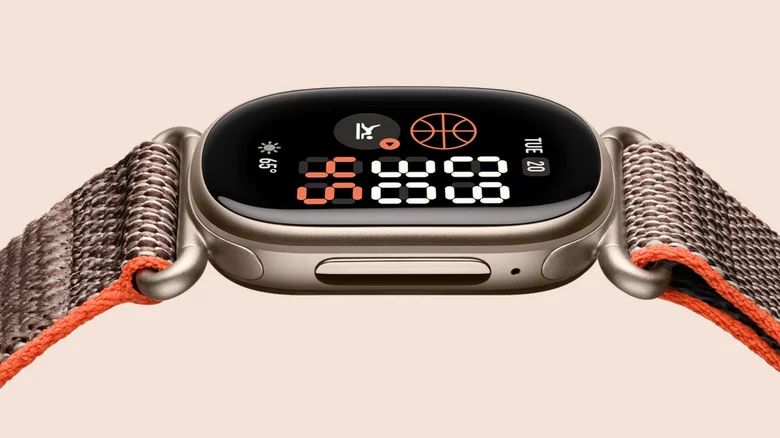
Google has aggressively re-entered the dedicated fitness tracker market with the $99 Fitbit Air and the $179 Fitbit Edge, offering buyers a clear choice between a discreet, screenless wearable and a fully interactive, display-equipped device. Both devices function outside the Android ecosystem and leverage the new AI-powered Health Guardian tools introduced on the Pixel Watch 5, though maximizing their capabilities requires a Google Health Premium subscription.
Design and Display: Screen vs. Screenless
The entry-level Fitbit Air operates purely as a passive data collector. Measuring just 1.37 x 0.66 x 0.32 inches, the screenless sensor puck is designed to fade into the background, pushing all interaction to the companion Google Health app.
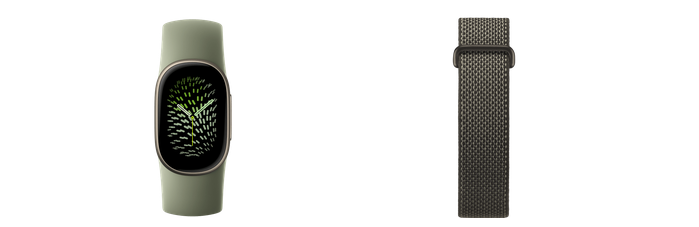
In contrast, the larger Fitbit Edge (1.54 x 1.01 x 0.46 inches) bridges the gap toward a full smartwatch. It features a 1.34-inch oval AMOLED touchscreen, a mechanical side button, and a lightweight version of Fitbit OS capable of displaying on-device health data, phone notifications, and a stripped-down version of Google Maps.
Fitbit Air vs. Fitbit Edge: Core Tracking and AI Features
Both trackers provide a comprehensive baseline of metrics, including continuous heart rate monitoring, sleep tracking, cardio load insights, step counts, irregular heart rhythm notifications, and scores for daily readiness and resilience (stress). They also integrate the AI-driven Health Guardian features, which analyze Google’s data corpus to track metrics like heart health and insulin trends.
Exclusive Hardware on the Fitbit Edge
The $80 premium for the Edge buys significantly more hardware. Beyond the display, the Edge adds the electrical sensors required for on-demand ECG readings, an altimeter to track floors climbed, and an ambient light sensor. It also displays live workout metrics directly on your wrist, whereas Air users must rely on their phones.
Fitbit Air vs. Fitbit Edge: Battery Life and Durability
Both devices are rated for seven days of battery life and share IP68 and 5ATM dust and water resistance ratings. However, utilizing the Edge’s always-on display drops its battery life to roughly two days. To compensate, the Edge supports fast charging, reaching 100% capacity in 90 minutes and yielding a full day’s charge in just 15 minutes when running low.
|
Feature |
Fitbit Air |
Fitbit Edge |
|
Price |
$99 |
$179 |
|
Display |
None (Screenless) |
1.34-inch oval AMOLED touchscreen |
|
Dimensions |
1.37 x 0.66 x 0.32 inches |
1.54 x 1.01 x 0.46 inches |
|
Battery Life |
Up to 7 days |
Up to 7 days (2 days with Always-On Display) |
|
Base Tracking |
Heart rate, sleep, steps, readiness, stress, Health Guardian |
Heart rate, sleep, steps, readiness, stress, Health Guardian |
|
Exclusive Hardware |
None |
ECG sensors, altimeter, ambient light sensor, side button |
|
Smart Features |
App-only interaction |
Fitbit OS, notifications, live metrics, mini Google Maps |
|
Durability |
IP68 / 5ATM |
IP68 / 5ATM |


