
Huawei Pura 90 Plus vs Vivo X300 Pro: Camera Hardware, Charging and Value Compared
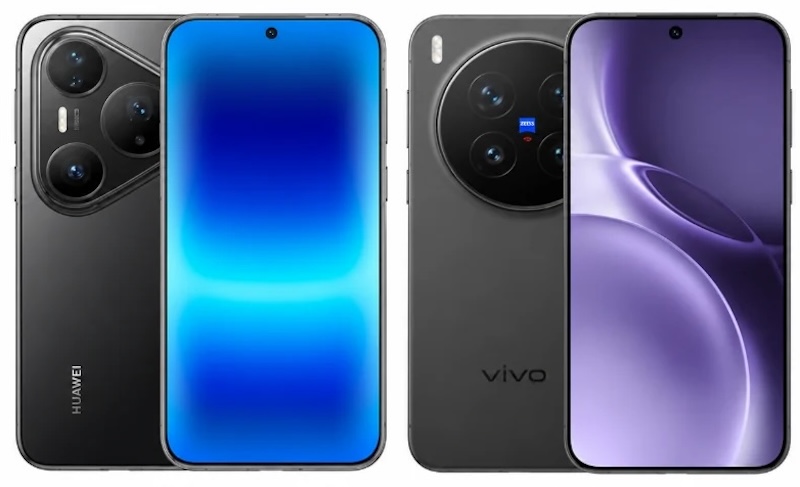
The Huawei Pura 90 Plus and Vivo X300 Pro offer contrasting reasons to spend on a premium smartphone. Huawei combines a large main-camera sensor, variable aperture and high-power charging at a lower listed price. Vivo counters with a high-resolution periscope camera, more extensive video features and higher memory configurations.
Based on the supplied specifications, Vivo offers the broader package for demanding photography and video use. Huawei’s appeal centres on value, particularly for buyers who prioritise its main-camera hardware and charging capabilities.
There are important qualifications, however. Battery capacity varies substantially between Vivo’s global and European versions, while the two phones run different operating systems. Those distinctions may matter more to a purchase than a headline specification winner.
This comparison uses the information provided rather than independent testing. It does not establish real-world differences in performance, photographic quality or battery endurance.
Huawei Pura 90 Plus vs Vivo X300 Pro: Key Specifications
| Feature | Huawei Pura 90 Plus | Vivo X300 Pro |
|---|---|---|
| Dimensions | 163.1 × 76.1 × 8.3mm | 161.2 × 75.5 × 8mm |
| Weight | 220g | 226g |
| Construction | Kunlun Glass 2 front, aluminium frame, glass rear | Armor Glass front, aluminium frame, glass rear |
| Protection rating | IP68/IP69 | IP68/IP69 |
| Display | 6.8-inch LTPO OLED | 6.78-inch LTPO AMOLED |
| Resolution | 2848 × 1276 pixels | 2800 × 1260 pixels |
| Refresh rate | Up to 120Hz | Up to 120Hz |
| PWM dimming | 1440Hz | 2160Hz |
| Listed HDR formats | Not specified for the display | HDR10+, HDR Vivid, Dolby Vision |
| Advertised peak brightness | Not specified | 4,500 nits |
| Processor | Kirin 9025 | MediaTek Dimensity 9500, 3nm |
| RAM | 12GB | Up to 16GB |
| Storage capacities | 256GB, 512GB or 1TB | 256GB, 512GB or 1TB |
| Storage technology | Not specified | UFS 4.1 |
| Software | HarmonyOS 7 | Android 16 with OriginOS 6 |
| Stated major OS updates | Not specified | Up to five |
| Main camera | 50MP, 1-inch-type sensor, variable f/1.6–4.0 aperture, OIS | 50MP, 1/1.28-inch sensor, OIS |
| Telephoto camera | 48MP periscope, 4x optical zoom, OIS | 200MP periscope, 3.7x optical zoom, OIS |
| Ultrawide camera | 40MP | 50MP with autofocus |
| Rear video | 4K; HDR Vivid listed | Up to 8K at 30fps or 4K at 120fps; Dolby Vision and 10-bit Log listed |
| Front camera | 13MP with autofocus | 50MP with autofocus |
| Front video | 4K; frame rate not specified | Up to 4K at 60fps |
| Battery | 5,700mAh | 6,510mAh global; 5,440mAh EU |
| Wired charging | 100W | 90W |
| Wireless charging | 80W | 40W |
| Reverse charging | 18W wired; wireless supported | Wired and wireless; outputs not specified |
| Fingerprint reader | Side-mounted | Ultrasonic, under-display |
| USB | USB-C 3.2, DisplayPort 1.2, OTG | USB-C 3.2, OTG |
| Connectivity | Wi-Fi 7, Bluetooth 6.0, NFC, infrared | Wi-Fi 7, Bluetooth 5.4, NFC, infrared |
| Satellite features | BDS messaging, China only | Optional and market-dependent |
| Indicative price | Around $730 or ₹73,500 | Around $1,000 or ₹110,000 |
Prices are approximate references, not confirmed like-for-like regional offers. Features that are not specified should not automatically be treated as absent.
Design: Vivo Is Smaller, but Huawei Is Lighter
Both phones combine aluminium frames with glass backs and carry IP68/IP69 protection ratings. Huawei uses Kunlun Glass 2 on the front, while Vivo specifies Armor Glass.
Neither protective-glass name establishes a durability winner without comparable testing. The same applies to the shared water- and dust-resistance ratings: they document protection claims rather than guaranteeing identical behaviour under every condition.
Vivo has the smaller body in all three listed dimensions. At 161.2mm tall and 8mm thick, it is shorter and thinner than Huawei’s 163.1mm, 8.3mm design.
Huawei nevertheless weighs less, at 220g against Vivo’s 226g. Buyers therefore face a modest trade-off between external dimensions and weight rather than an obvious ergonomic victory.
Fingerprint-reader placement also differs. Huawei uses a side-mounted sensor; Vivo places an ultrasonic reader beneath the display. That is a meaningful difference in operation, but convenience will depend partly on user preference.
Display: Vivo Lists More Features, Not a Proven Brightness Victory
Huawei’s 6.8-inch LTPO OLED display offers a resolution of 2848 × 1276 pixels, while Vivo’s 6.78-inch LTPO AMOLED panel has 2800 × 1260 pixels. Both reach a maximum refresh rate of 120Hz.
Huawei has slightly more pixels, but the panels are closely matched in size and resolution. The specification gap is not large enough to justify portraying them as fundamentally different classes of screen.
Vivo provides the more extensive documented feature set, including Dolby Vision, HDR10+ and HDR Vivid. It also lists 2160Hz PWM dimming, compared with Huawei’s 1440Hz.
That higher PWM frequency is a specification difference, not a guarantee that every user will find Vivo’s display more comfortable.
Vivo advertises peak brightness of 4,500 nits. Because no equivalent Huawei brightness figure or matching test conditions are supplied, the comparison cannot establish which phone is brighter in normal use or direct sunlight.
Vivo’s display proposition is better documented. Overall quality, however, still needs to be assessed through measurements and viewing tests.
Performance and Software: Different Platforms, Different Considerations
Huawei pairs the Kirin 9025 with 12GB of RAM and up to 1TB of storage. Vivo uses the Dimensity 9500, offers up to 16GB of RAM and specifies UFS 4.1 storage.
The Vivo configuration has more memory headroom at the top end. However, the supplied information contains no benchmark results, thermal measurements or sustained workload tests. It therefore does not quantify a processor-performance advantage.
Huawei’s unspecified storage technology is another limitation in the comparison. Vivo’s UFS 4.1 listing provides useful information, but it is not sufficient to calculate a speed difference without knowing Huawei’s implementation.
The Operating System Deserves Particular Attention
The Pura 90 Plus is listed with HarmonyOS 7, while the X300 Pro runs Android 16 with OriginOS 6.
These are not simply different interface designs. Buyers should establish whether the precise regional version supports the applications and services they need. The supplied information does not resolve that compatibility question.
Vivo also has a stated commitment of up to five major operating-system updates. No equivalent Huawei commitment is provided here. That makes Vivo’s support promise clearer, but it does not establish Huawei’s actual policy.
Battery: Vivo’s Advantage Depends on the Market
Battery capacity is one of the most important regional distinctions in this comparison.
The Vivo X300 Pro is listed with:
-
A 6,510mAh battery in its global configuration.
-
A 5,440mAh battery in its European configuration.
Huawei’s listed capacity is 5,700mAh.
The global Vivo therefore has approximately 14 percent more nominal capacity than Huawei. The EU Vivo, by contrast, has approximately five percent less.
It would consequently be misleading to declare Vivo the battery-capacity winner without specifying the version. Nor do these figures establish runtime: display behaviour, software, processor efficiency and usage remain relevant.
Huawei Has Higher Charging Ratings
Huawei supports 100W wired and 80W wireless charging, compared with Vivo’s 90W wired and 40W wireless ratings.
The difference is particularly pronounced for wireless charging, where Huawei’s listed power is twice as high. That does not mean it charges twice as quickly, since charging curves, temperature limits and battery capacity are not included.
Both phones support reverse wired and wireless charging. Huawei specifies 18W reverse wired output, while Vivo’s outputs are not provided. The available information therefore establishes Huawei’s rating, not a definitive reverse-charging speed advantage.
Main Cameras: Huawei Offers a Larger Sensor and Variable Aperture
Huawei’s 50MP main camera combines a 1-inch-type sensor with optical stabilisation and a variable f/1.6–4.0 aperture. Vivo’s 50MP main camera uses a smaller listed 1/1.28-inch sensor, also with OIS.
That gives Huawei a distinctive main-camera specification. The larger sensor and adjustable aperture are tangible hardware differences, rather than simply a higher megapixel count.
They do not, however, establish superior photographs in every situation. Lens performance, exposure decisions, autofocus and processing would need to be evaluated.
Vivo’s camera system adds Zeiss optics, T* coating, laser autofocus and 3D LUT import. These features broaden its imaging proposition, but branding and processing tools should not substitute for judging the results.
Telephoto and Ultrawide: Vivo Emphasises Resolution and Flexibility
Huawei uses a 48MP periscope camera with 4x optical zoom. Vivo offers a 200MP periscope with 3.7x optical zoom and dedicated macro capabilities.
Vivo has substantially more telephoto resolution, while Huawei has a slightly longer listed optical zoom factor. Neither figure alone determines the quality of distant subjects or portraits.
Vivo also lists a 50MP autofocus ultrawide, compared with Huawei’s 40MP unit. Autofocus is a useful documented feature, but the megapixel difference should not automatically be read as a corresponding quality improvement.
Vivo presents the broader set of specialised camera features. Huawei remains particularly interesting for buyers who prioritise its main sensor and variable aperture.
Video and Selfies: Vivo Has the More Extensive Specification Sheet
Vivo supports rear recording at up to 8K at 30fps and 4K at 120fps, alongside Dolby Vision HDR and 10-bit Log options.
Huawei lists 4K recording with HDR Vivid, optical stabilisation and gyro-based electronic stabilisation. Its maximum 4K frame rate is not supplied, preventing a complete mode-by-mode comparison.
The front cameras also differ. Huawei has a 13MP autofocus camera with 4K recording, while Vivo offers a 50MP autofocus camera and 4K at up to 60fps.
Vivo therefore provides more ambitious documented recording capabilities, particularly for users who film themselves. Its higher front-camera resolution does not independently prove better selfies, but its specified 4K frame-rate options are a concrete advantage in the information available.
Connectivity: Huawei Retains Some Useful Extras
Both phones list Wi-Fi 7, NFC, infrared and USB-C 3.2.
Huawei specifies Bluetooth 6.0, compared with Vivo’s Bluetooth 5.4. It also explicitly lists DisplayPort 1.2 support, which is relevant to buyers interested in wired display output. Vivo’s less detailed USB description does not conclusively establish whether comparable functionality is absent.
Satellite features require equal caution. Huawei’s BDS messaging is identified as China-only, while Vivo’s satellite connectivity is optional and market-dependent. Neither should be assumed available on every unit.
Price: Huawei’s Lower Cost Changes the Comparison
The supplied prices place Huawei at approximately $730 or ₹73,500, compared with around $1,000 or ₹110,000 for Vivo.
That is an indicative difference of $270, or ₹36,500 using the separately quoted rupee figures. These should not be treated as equivalent currency conversions.
Huawei’s lower listed price makes its combination of main-camera hardware and charging power compelling. Vivo asks buyers to pay more for its processing platform, higher memory options, telephoto system and broader video toolkit.
The right comparison still depends on equivalent configurations, regional specifications and application compatibility—not simply the headline price.
Verdict: Vivo for Broader Features, Huawei for Targeted Value
The Vivo X300 Pro offers the more extensive package on paper for buyers prioritising telephoto photography, video recording and higher-end memory configurations. Its global version also has the larger battery.
The Huawei Pura 90 Plus has a strong counterargument: a lower listed price, a larger main-camera sensor, variable aperture and higher wired and wireless charging ratings.
Vivo earns the broader specification-led recommendation, but not an unconditional victory. European buyers should note its smaller battery, while anyone considering Huawei should establish software compatibility before purchase. Those practical details could change the decision more than a comparison-table winner.


