
OnePlus 16 vs. OnePlus 15: Is the 9,000mAh Battery and 200MP Camera Worth Upgrading?
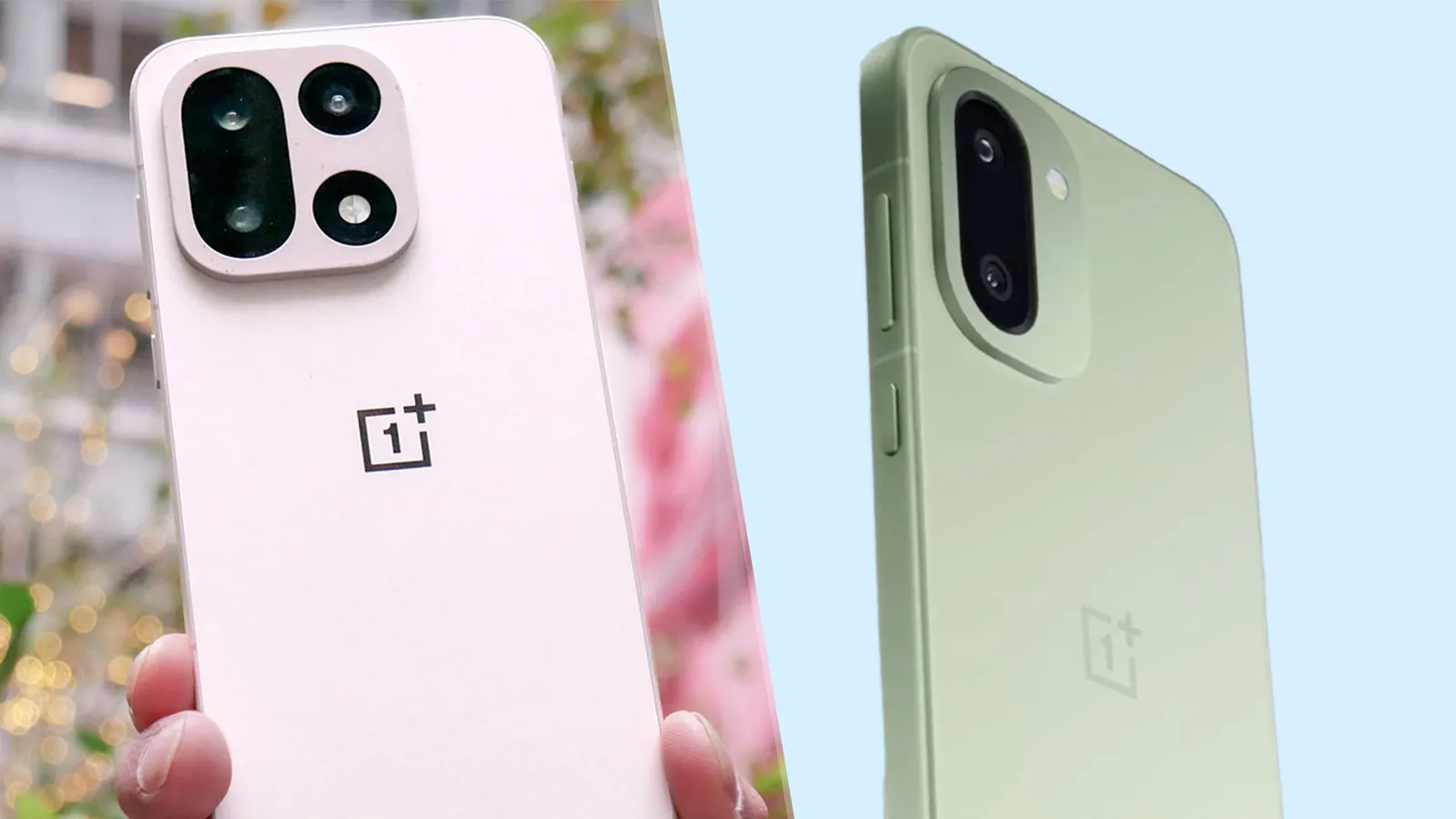
OnePlus has officially unveiled the OnePlus 16, delivering a sweeping set of hardware upgrades designed to push the boundaries of flagship performance, battery life, and mobile photography. Headlined by a massive 9,000mAh battery, a blistering 2nm Snapdragon processor, and a 200MP primary camera, the new device makes a compelling case for power users. However, these advancements come with a few calculated trade-offs—most notably a slight reduction in wired charging speed and optical zoom reach compared to its predecessor.
For current OnePlus 15 owners and prospective buyers alike, the decision hinges on whether these new internals translate to a tangibly better everyday experience. Here is a comprehensive breakdown of how the new OnePlus 16 stacks up against the OnePlus 15.
Performance and Thermal Management
The most significant generational leap lies under the hood. While the OnePlus 15 utilizes Qualcomm’s 3nm Snapdragon 8 Elite Gen 5 (clocked at 4.6GHz), the OnePlus 16 steps up to the 2nm Snapdragon 8 Elite Extreme Gen 6. This new silicon features an all-big-core architecture, with dual prime cores peaking at 5.0GHz and six performance cores reaching 4.0GHz. The inclusion of Adreno Matrix Cores introduces advanced frame generation and upscaling, theoretically vastly improving power efficiency and graphical fidelity.
To manage the thermal load of this new powerhouse, OnePlus has overhauled its cooling infrastructure. The OnePlus 16 ditches the previous Glacier system for a zoned vapor chamber and a highly conductive graphite layer (rated at 2,100 W/m·K). According to OnePlus, this new setup is 40% more effective at heat dissipation, specifically directing thermal energy away from the areas where users grip the phone during intense landscape gaming. This cooling translates to sustained performance, with the updated Wind Chaser Game Core now supporting up to 185fps in compatible titles, up from 165fps on the OnePlus 15.
Display: System-Wide 165Hz Fluidity
Both generations feature a 6.78-inch flat LTPO OLED panel with a 1.5K resolution, 2,000-nit peak brightness, and razor-thin 1.15mm bezels. However, the OnePlus 16 democratizes its high refresh rate. While the OnePlus 15 restricted its 165Hz capabilities primarily to supported games, the OnePlus 16 enables 165Hz fluidity across the entire system UI.
The new display also upgrades to BOE’s latest X4 luminescent material and integrates a dedicated P4 display chip to enhance motion clarity. PWM dimming remains excellent at 3,840Hz, and the panel secures the newer TÜV Rheinland Eye Comfort 6.0 certification.
Battery and Charging: Bigger Capacity, Slower Top-Ups
Battery anxiety is virtually eliminated with the OnePlus 16. It houses a staggering 9,000mAh dual-cell battery—a roughly 23% capacity increase over the OnePlus 15’s 7,300mAh unit. Paired with OPPO’s proprietary energy management chip, OnePlus claims the device can deliver up to 23.8 hours of video playback or 8.1 hours of heavy gaming, while retaining 80% battery health after five years.
The trade-off for this massive cell is charging speed. The OnePlus 16 dials wired charging back to 100W, down from the 120W speeds seen on the OnePlus 15. A full charge now takes approximately 52 minutes, compared to the 40-minute sprint of its predecessor. Both phones retain 50W wireless charging and bypass charging for gaming, though the OnePlus 16 introduces a robust 27W wired reverse charging feature for powering up accessories.
Cameras: The 200MP Era
OnePlus has fundamentally altered its imaging strategy. The OnePlus 16 replaces the 50MP Sony main sensor with a massive 1/1.4-inch 200MP primary shooter equipped with OIS. To maximize this high-resolution sensor, OnePlus introduced a “one shot, three crop” feature, allowing users to extract wide, medium, and close-up compositions from a single capture.
The telephoto lens takes a slight optical step back. Both devices feature 50MP periscope cameras, but the OnePlus 16 reduces the optical zoom to 3x (from 3.5x on the OnePlus 15), relying on sensor cropping for 6x lossless zoom. The 50MP ultrawide lens remains untouched, while the selfie camera sees a sharp upgrade to a 50MP sensor with autofocus, a significant jump from the older 32MP unit.
Gaming Hardware and Software Experience
For mobile esports enthusiasts, the OnePlus 16 introduces custom silicon dedicated entirely to gaming performance. A new G3 network chip slashes cellular latency by a claimed 42%, while the Lingxi T3 touch chip enables a 520Hz multi-finger sampling rate for hyper-accurate inputs. Gyroscope sampling has also quadrupled from 200Hz to 800Hz to eliminate drift in motion-heavy shooters.
On the software front, the OnePlus 16 ships with ColorOS 17 (based on Android 17), officially fully phasing out the OxygenOS moniker globally. The new OS introduces the Tide Engine for memory optimization, AI Notes, and deep cross-device integration with Windows PCs, Macs, and Apple Watches via the OPPO Connect client.
Specifications Comparison
| Feature | OnePlus 16 | OnePlus 15 |
| Processor | Snapdragon 8 Elite Extreme Gen 6 (2nm) | Snapdragon 8 Elite Gen 5 (3nm) |
| Display | 6.78-inch LTPO OLED, 1.5K, BOE X4 | 6.78-inch LTPO OLED, 1.5K, BOE X3 |
| Refresh Rate | 165Hz (System-wide), up to 185Hz in-game | Up to 165Hz (Gaming only) |
| Battery | 9,000mAh | 7,300mAh |
| Wired Charging | 100W (100% in ~52 mins) | 120W (100% in ~40 mins) |
| Wireless / Reverse | 50W Wireless / 27W Reverse Wired | 50W Wireless / No Reverse Wired mentioned |
| Main Camera | 200MP (1/1.4-inch), OIS | 50MP Sony, OIS |
| Telephoto Camera | 50MP Periscope, 3x Optical Zoom | 50MP Periscope, 3.5x Optical Zoom |
| Ultrawide / Front | 50MP / 50MP (Autofocus) | 50MP / 32MP |
| Gaming Tech | 800Hz Gyro, G3 Network Chip, Lingxi T3 | 200Hz Gyro |
| Software | ColorOS 17 (Android 17) | ColorOS 16 |
| Colors | Tomorrow Starlight, Mars Red, Deep Black | Sand Dune, Absolute Black, Misty Purple |


