
Moving Beyond the Prompt: Scaling Indie Content Engines with Banana AI
The novelty of generative AI has largely worn off for the professional creator. We are no longer in the phase where simply generating a “cool” image is a victory. For indie makers, developers, and digital entrepreneurs, the gap between a technical curiosity and a viable business asset is defined by one thing: repeatability. A single high-quality image is an outlier; a hundred images that maintain a cohesive aesthetic, specific composition, and predictable quality constitute a production pipeline.
To move from being a prompt enthusiast to a creative operator, the workflow must shift. It is no longer about finding the “magic words” in a vacuum. It is about architecting a system where tools like Banana AI serve as the engine for a broader content strategy. This requires a transition from discovery-based prompting—where you hope for a good result—to a structured output model where the results are expected and managed.
The Production Trap: Why Random Output Kills Indie Projects
The biggest obstacle to monetizing AI-assisted content is inconsistency. If you are building a brand, a niche asset library, or a series of promotional materials, your visual language needs to be stable. Many creators fall into the “production trap,” spending hours chasing a specific look that they cannot replicate the following day. This lack of control makes it impossible to scale.
An operator mindset prioritizes reliability and speed over the pursuit of a single masterpiece. In a commercial context, an 8/10 image that fits the brand guidelines and is produced in thirty seconds is more valuable than a 10/10 masterpiece that took three hours of “prompt engineering” and cannot be reproduced for the next social tile. When you treat Banana AI Image as a production suite rather than a slot machine, you start evaluating models based on their utility within a specific workflow.
For instance, the Z-Image Turbo model is built for speed, making it ideal for the ideation phase where volume matters. Conversely, Seedream 4.0 or Banana Pro might be reserved for final high-fidelity assets where the details of lighting and texture are paramount. By tiering your output, you stop wasting creative energy on low-stakes tasks.
Architecting the Pipeline with Banana AI Image
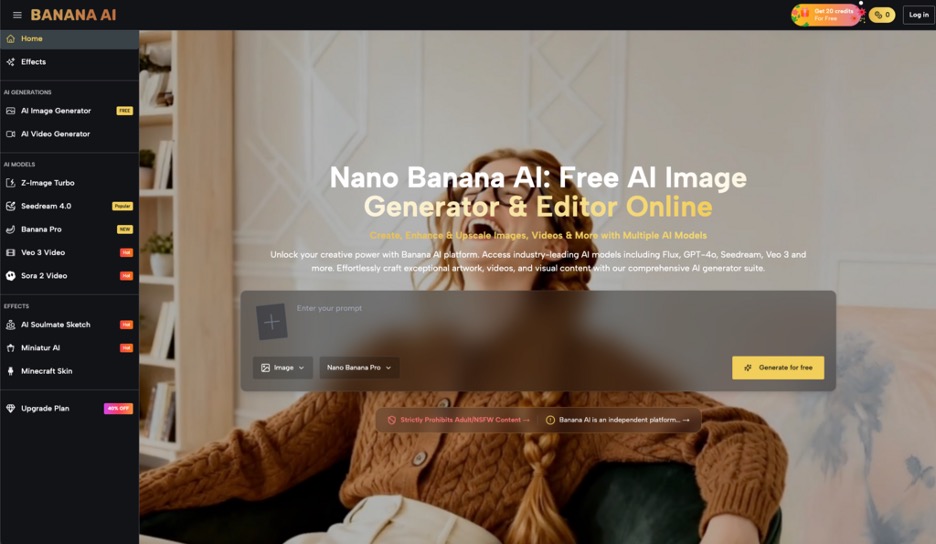
Building a repeatable system starts with understanding the specific strengths of the available model architecture. Banana AI offers a range of specialized tools that allow for a tiered asset strategy. Instead of starting every project with a blank text prompt, successful operators use “Image to Image” or “Sketch” features to maintain structural control.
The Prototyping Phase
Using the Nano model for rapid prototyping allows a creator to burn through concepts without high credit costs or long wait times. At this stage, you aren’t looking for beauty; you are looking for composition. By using the Sketch tool, you can define the boundaries of your visual elements—ensuring that a UI mockup or a character portrait occupies the exact space needed for your final design. This eliminates the guesswork that usually comes with text-only prompts.
Refinement and Consistency
Once the composition is locked, moving the asset into Banana Pro or Seedream 4.0 provides the necessary polish. The key to monetization here is the “Prompt Preset” and “Seed” management. If you find a specific visual style that works for your brand, document the seed and the specific model settings. This allows you to generate secondary assets—such as social media banners or email headers—that feel like they belong to the same universe as your primary product images.
The official API integration also plays a role for those building automated workflows. If you are a developer creating a tool that requires dynamic visual generation, the ability to call these specific models programmatically means you can build “visual identity as a service” into your own products.
Bridge to Motion: Turning Stills into Video Content Systems
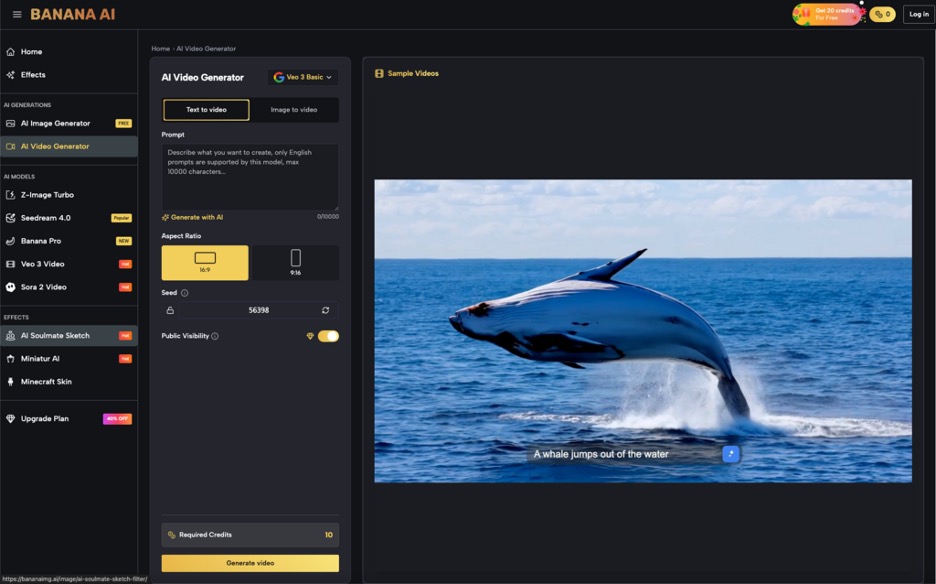
Static images are the foundation, but video is the high-conversion currency of the current creator economy. However, the barrier to entry for video has traditionally been high—requiring either a massive VFX budget or hundreds of hours in post-production. The integration of Veo 3 and basic text-to-video tools within the ecosystem changes this math.
The most efficient workflow for an indie creator isn’t to start with video, but to bridge from image to motion. Taking a high-performing image generated in Banana AI Image and using it as the source for an “Image to Video” generation ensures that the characters and environment remain consistent. This reduces the “jitter” and visual drift that often plagues AI video.
A Note on Limitation: It is important to acknowledge that AI-native motion is still in its formative stages. While Veo 3 can produce stunning atmospheric shots and fluid environmental changes, it remains difficult to execute complex, multi-step human actions with frame-perfect precision. At this stage, the most profitable use of generative video is for high-engagement “hero” backgrounds, social teasers, and atmospheric textures rather than long-form narrative storytelling. Creators who understand this boundary save themselves from the frustration of over-promising on technical capabilities.
Monetization Paths for the Prompt-First Creator
How does this systematized output actually turn into revenue? For the indie maker, the paths are usually split between selling assets, selling services, or building proprietary tools.
- Niche Asset Libraries: There is a significant secondary market for highly specific visual assets. Think beyond generic stock photos. Using specialized models like “Minecraft Skin” or “Miniatur AI,” creators can build deep, themed libraries for specific gaming communities or architectural visualization niches.
- Visual Identity as a Service: Many small business owners want the benefits of AI visuals but lack the time to learn the nuances of model selection. By offering a “Brand in a Box” service—where you provide 50+ cohesive assets using a consistent Seedream 4.0 pipeline—you are selling your expertise as an operator, not just the raw output of the AI.
- Content Arbitrage: Scaling a YouTube or TikTok channel using Veo 3 video assets allows for a “production house of one.” When the cost of production is measured in AI credits rather than animator hours, the math for niche content becomes much more favorable.
Managing the economics of this is crucial. An operator must track the “cost per successful asset.” If a video generation costs 10 credits, and you have a 50% success rate, your real cost is 20 credits per usable clip. Optimizing your prompts and using the “Basic” video models for testing before committing to high-end renders is essential for maintaining a healthy profit margin.
Managing Uncertainty in Generative Workflows
A professional approach to AI requires a sober look at its failures. One of the most significant challenges is the “hallucination tax”—the percentage of time the model produces an output that is technically impressive but practically useless for the specific task.
Expectation Reset: We cannot currently conclude that any generative model will maintain 100% character consistency across disconnected sessions. If you generate a character today and try to put them in a completely different pose tomorrow, there will be drift. Managing this requires “post-production layering.” Instead of trying to get the AI to do everything in one go, creators should use traditional editing tools to composite AI-generated elements. The AI provides the heavy lifting of texture and lighting; the creator provides the structural integrity.
Furthermore, model updates are a double-edged sword. While a new version might offer better resolution, it can also change how it interprets your established prompt templates. A “sovereign” creator maintains a library of reference images (seeds) and prompt histories to ensure they can pivot when the underlying tech shifts.
Developing Your Sovereign Visual Engine
The transition from a user to an operator is complete when you stop viewing Banana AI as a tool for making art and start seeing it as a component of your business’s visual engine. The long-term value doesn’t lie in the images themselves—which are becoming more common—but in your ability to orchestrate the pipeline.
By building a private library of successful seeds, mastering the interplay between Nano’s speed and Pro’s quality, and understanding when to transition into motion with Veo 3, you create a moat. Your competitors might have access to the same models, but they likely don’t have the same repeatable system for deploying them.
In the creator economy, the winners aren’t those with the best single prompt. They are the ones who can produce a thousand high-quality assets on demand, maintain a brand identity across platforms, and keep their production costs lower than their revenue. Treat the AI as your staff, your models as your departments, and your workflow as your product. That is how you scale.
Related Posts
-
 Nokia Mobile to donate Nokia phones to frontliners and COVID-19 patients
-
 Foxconn’s PCB assembling in India will give Nokia phones a price advantage over rivals
-
 Poco HyperOS 3 Upgrade – When Will Your Phone Get Android 16?
-
 Nokia 6, Nokia 5 and Nokia 3 available for pre-order at Finnish operator Elisa