
MediaTek Dimensity 9600 Pro: Full Specs of the 2nm Chip Targeting Apple
Here is the thoroughly rewritten and reformulated article in professional English, maintaining an objective, journalistic tone without the use of bullet points in the main text body, along with the specification table and optimized SEO elements.
A New Era of Mobile Hardware: MediaTek Directly Targets Apple and Qualcomm with Dimensity 9600 Pro Lineup
The high-end mobile processor market is set to experience one of the most compelling shake-ups in recent history late this year. Taiwanese chip designer MediaTek is rapidly preparing for the official launch of its upcoming flagship, the Dimensity 9600 series. However, the most significant development this year is the introduction of a completely new, differentiated model dubbed the Dimensity 9600 Pro. With this move, which directly mirrors the leaked strategy of arch-rival Qualcomm and its upcoming Snapdragon 8 Elite Gen 6 Pro, MediaTek aims to deliver uncompromising performance to challenge the long-standing dominance of Apple and Qualcomm in premium smartphones. Although the official premiere is anticipated in September, comprehensive technology reports and supply chain leaks have already unmasked the architecture behind these advanced chips.
The Battle for the Advanced 2-Nanometer Process and Radical CPU Architecture Changes
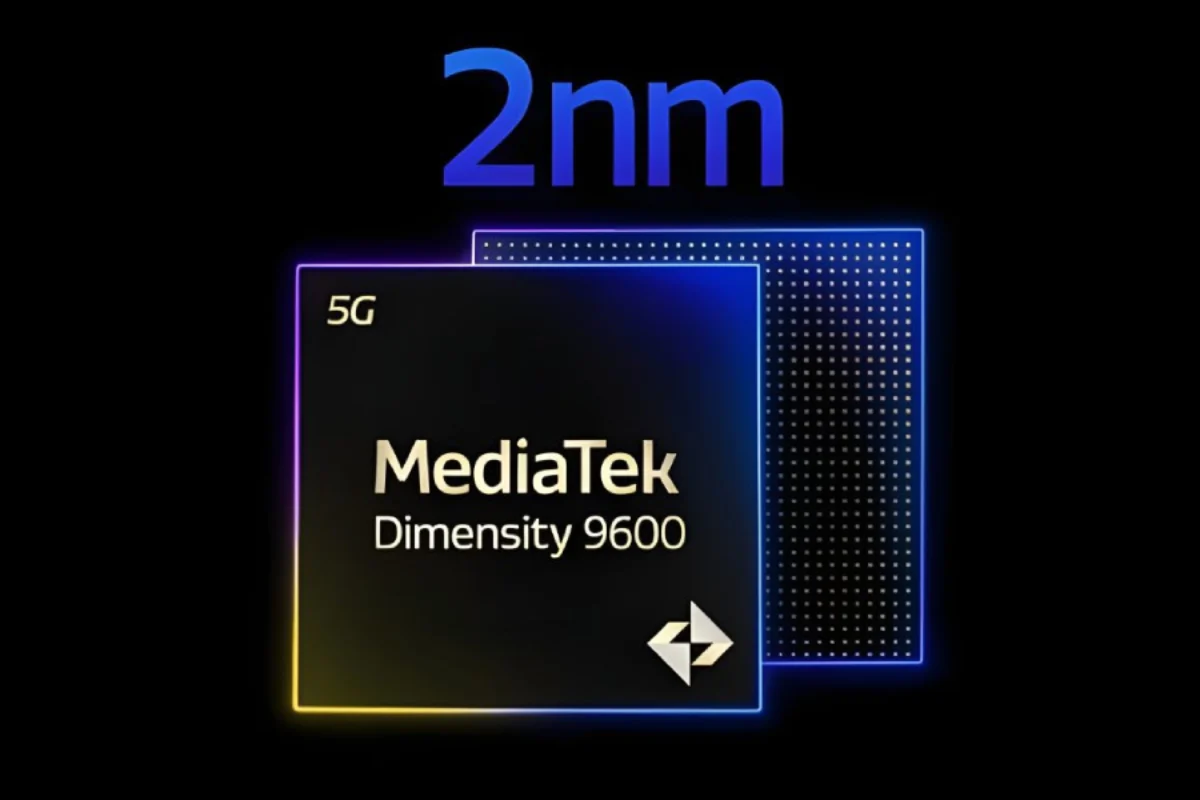
At the very core of the new Dimensity 9600 Pro processor lies the transition to TSMC’s ultra-advanced 2-nanometer (N2P) manufacturing node. According to initial industry analyst estimates, this generational technological leap is expected to yield a 10 to 15 percent bump in raw performance alongside an impressive 25 to 30 percent improvement in energy efficiency compared to current-generation silicon. Nevertheless, production yields remain a critical bottleneck as TSMC’s cutting-edge facilities are currently unable to keep pace with soaring global demand. Consequently, speculation suggests that the standard Dimensity 9600 model might retain a refined 3-nanometer process or utilize a secondary classification of 2-nanometer wafers to keep production costs in check and alleviate logistical strains.
Beyond the advanced node transition, MediaTek is introducing a fundamental restructuring of its CPU core layout. Traditional cluster designs are being abandoned in favor of a bold “2+3+3” configuration. This setup means the chip will house two ultra-powerful primary cores based on Arm’s next-generation Cortex C2-Ultra architecture, known internally under the codename “Canyon.” On the Pro variant, these performance cores are rumored to hit an unprecedented clock frequency of up to 5.0 GHz, while the standard model will operate at a slightly scaled-back frequency in the 4.X GHz range. The remainder of the cluster comprises three high-performance “Gelas-B” cores and three energy-balanced “Gelas” cores, a combination designed to ensure exceptionally fluid multitasking and heavy-load management.
Graphical Revolution at the Hardware Level and OpenAI Collaboration
The gaming capabilities of the Dimensity 9600 series are poised for a massive overhaul courtesy of the new Arm “Magni” graphics architecture. Rather than addressing demanding graphical workloads purely through software-based optimizations, MediaTek is embedding dedicated hardware blocks directly onto the silicon. According to insights shared by prominent tech insider Digital Chat Station, this graphics processing unit is capable of executing hardware-level frame insertion, allowing mobile titles to scale seamlessly from 60 to 120 or more frames per second (FPS). The architecture also integrates native resolution upscaling and vastly improved real-time ray tracing acceleration, yielding significantly more realistic shadows, reflections, and lighting. To eliminate data transmission bottlenecks, the Pro model will exclusively support the latest LPDDR6 RAM and UFS 5.0 storage standards.
The artificial intelligence sector is proving to be equally formidable, with rampant industry rumors suggesting that this silicon suite could power an upcoming smartphone developed in collaboration with OpenAI, focused entirely on edge-AI capabilities. MediaTek is deploying an advanced dual-NPU (Neural Processing Unit) design paired with an intelligent workload coordinator called the Neural Shader Scheduler. This scheduler monitors machine learning pipelines in real time and dynamically routes computational tasks between the GPU and NPU based on real-time power efficiency. Furthermore, the hardware features native support for Arm’s Scalable Matrix Extension 2 (SME2) technology, drastically accelerating complex matrix math required for modern generative AI.
Early engineering sample test runs on the Geekbench 6 platform indicate that the Dimensity 9600 Pro is capable of pulling single-core scores between 4,200 and 4,300 points, while multi-core performance reaches an astonishing 12,000 to 12,500 range. The first wave of commercial smartphones equipped with these chipsets is slated to debut this September, with initial production allocations reportedly locked in for the premium Vivo X500 and Oppo Find X10 series.
Comparative Overview of MediaTek Dimensity 9600 Series Specifications
| Specification / Feature | Standard Dimensity 9600 | Premium Dimensity 9600 Pro |
| Expected Launch | September 2026 | September 2026 |
| Manufacturing Process | 3nm or modified 2nm (TSMC) | Ultra-advanced 2nm N2P (TSMC) |
| Core Configuration | 2x Ultra + 3x Performance + 3x Balanced | 2x Ultra + 3x Performance + 3x Performance |
| Maximum Clock Speed | ~4.X GHz | Up to 5.0 GHz (Cortex C2-Ultra “Canyon”) |
| Graphics Processor (GPU) | Arm “Magni” (Standard core count) | Arm “Magni” (Expanded core count) |
| Gaming Enhancements | Hardware Ray Tracing, AI Upscaling | Hardware Frame Insertion (60 to 120+ FPS), Ray Tracing |
| Supported Memory | LPDDR5X RAM / UFS 4.0 Storage | Next-gen LPDDR6 RAM / UFS 5.0 Storage |
| AI Architecture | Dual NPU, Neural Shader Scheduler | Dual NPU, SME2 Hardware Acceleration |


