
Taiwan Rejects US Plan: “Moving 40% of Chip Production is Impossible”
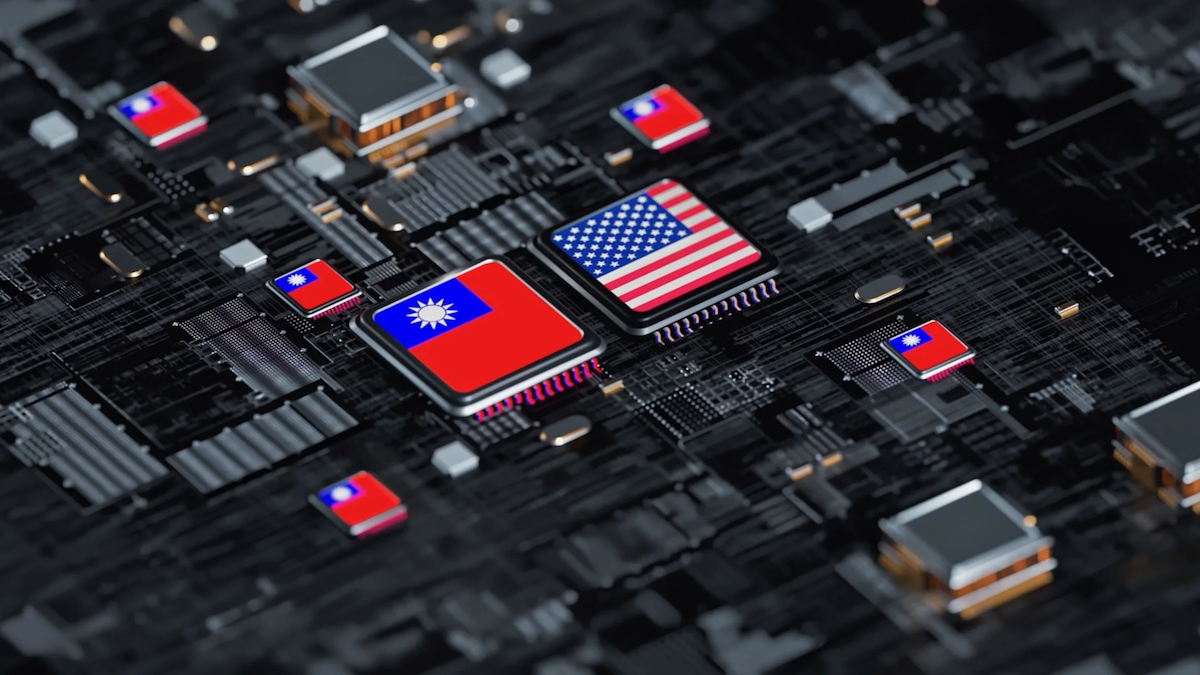
A high-ranking Taiwanese official has categorically dismissed claims by the Trump administration that the island nation will migrate nearly half of its semiconductor supply chain to the United States. The rebuttal highlights the deepening friction between Washington’s aggressive industrial policy and the logistical realities of the global chip market.
“Not Possible” In a candid interview with a local television channel, Taiwan Vice Premier Cheng Li-chiun flatly rejected the notion—floated by US officials as part of a recent trade framework—that Taiwan would transfer 40 to 50 percent of its production capacity to American soil.
“Is it to move 40 or 50% of production to the US? In reality, I clearly told the US side it’s not possible,” Cheng stated. She emphasized that Taiwan’s semiconductor and electronics ecosystem, meticulously built over decades, is simply too vast and interconnected to be uprooted.
“The first point we told the US side is that it’s impossible to allocate based on production capacity. [Taiwan] will only grow larger,” Cheng added, though she conceded that Taiwan remains open to “expanding our US presence.“
The Clash over the ‘Silicon Shield’ Cheng’s comments serve as a direct counter to statements made last month by US Commerce Secretary Howard Lutnick. Lutnick had touted the 40 percent figure as part of a “massive reshoring of America’s semiconductor sector,” framing it as a key victory within the new US-Taiwan trade deal.
However, the disconnect reveals a fundamental strategic divergence. Taiwan currently accounts for 90 percent of the world’s most advanced chip production, primarily through manufacturing giant TSMC, which serves clients like Apple, Nvidia, and AMD. Taipei views this dominance as its “silicon shield”—a critical geopolitical deterrent against a potential invasion by China. Migrating the core of this technology to the US would theoretically weaken that shield.
Investment vs. Migration While the Taiwanese government is holding the line on its most cutting-edge technology, the economic ties remain substantial. TSMC is proceeding with a historic $165 billion investment to construct six fabrication plants in Arizona. These facilities are expected to be pivotal for the US AI sector, specifically for data center infrastructure.
However, as Vice Premier Cheng made clear, these expansions represent an addition to Taiwan’s global footprint, not a subtraction from its domestic core. The US Department of Commerce has yet to respond to requests for comment regarding the disparity between their public claims and Taiwan’s private messaging.


