Jolla Returns with a New 5G Phone Featuring a Replaceable Battery
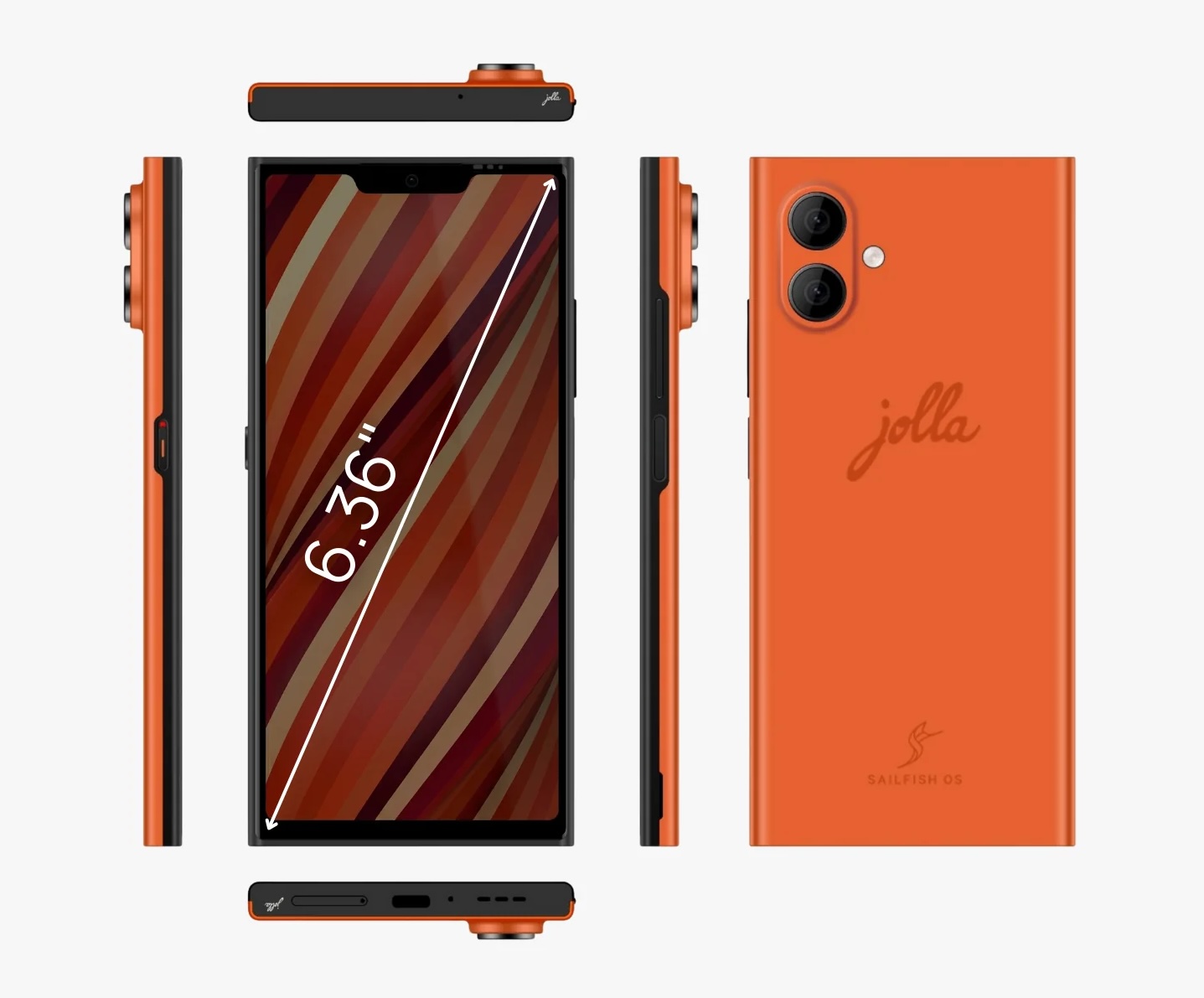
After a significant hiatus from hardware manufacturing, the Finnish technology company Jolla has officially announced its return to the mobile market. Dubbed simply the Jolla Phone, the device is being positioned as a bastion of digital sovereignty—an “independent European Do It Together (DIT) Linux phone” designed to offer a genuine alternative to the Apple and Google duopoly.
While the hardware is modern, the company’s philosophy remains rooted in software freedom. Jolla asserts that this device runs “actual Linux” at its core, rather than a “pseudo-Linux” adaptation.
The Finnish team born from the ashes of Nokia’s MeeGo project has just announced a new Jolla Phone, a device built around an idea that’s become increasingly important: Europe deserves its own independent smartphone ecosystem.
As someone who watched Jolla grow out of the Nokia community, this comeback honestly feels refreshing. With players like Fairphone and HMD pushing for more European-made or Europe-minded phones, Jolla now adds something the others don’t: a completely different mobile OS.
Sailfish OS 5: Privacy as a Priority
The handset will ship with version 5 of Sailfish OS, which Jolla markets as the “only European mobile operating system.” The platform’s primary selling point is its rigid stance on data privacy. The company promises zero tracking, no “calling home,” and no hidden analytics.
Crucially, for users who need access to the broader app ecosystem, the phone supports Android applications. However, it offers the flexibility to “fully de-Google” the device at any time, giving users complete control over their digital footprint.
Hardware: Repairable and Connected
Under the hood, the Jolla Phone is powered by a “high-performance” MediaTek processor, paired with a generous 12GB of RAM and 256GB of internal storage, which is further expandable via a microSD card.
Visually, the device centers around a 6.36-inch FullHD AMOLED display with a pixel density of 390 ppi, protected by Gorilla Glass. The rear camera array features a 50MP primary sensor flanked by a 13MP ultrawide lens, though specifications for the front-facing selfie camera remain under wraps.
In a nod to sustainability and user rights, the phone is powered by a 5,500 mAh user-replaceable battery. The back covers are also interchangeable, with Jolla offering three distinct colorways: Snow White, Kaamos Black, and The Orange.
The “Kill Switch” and Other Features
Perhaps the most distinctive hardware feature is the physical privacy switch. This toggle allows users to instantly cut power to the microphone, camera, and Bluetooth, ensuring absolute privacy on a hardware level.
Additional features include:
-
5G connectivity and Dual-SIM support.
-
Side-mounted fingerprint scanner.
-
NFC capabilities.
-
Guaranteed OS support for a minimum of 5 years.
The “Do It Together” Funding Model
Jolla is adopting a crowdfunding-style approach to production. The device will only move to the manufacturing stage if a threshold of 2,000 pre-orders is met by January 4, 2026. As of this writing, momentum appears strong, with over 1,200 units already secured.
The financial structure is as follows:
-
Down payment: €99 to secure a pre-order.
-
Early Bird Total Price: €499.
-
Standard Retail Price: Estimated between €599 and €699.
Early backers will receive a special edition back cover as a reward. Jolla has committed to fully refunding all down payments if the production target is not met by the January deadline.
Availability
Should the campaign succeed, deliveries are slated for the end of the first half of 2026. The phone will initially launch in the UK, Norway, Switzerland, and the European Union, though it is technically compatible with networks outside Europe.
As someone who has followed the mobile industry, and Nokia’s legacy for years, Jolla’s return feels like a rare example of genuine engineering stubbornness. They survived while Symbian, MeeGo, Ubuntu Touch, Firefox OS, and Windows Phone all disappeared.
Now, in a market dominated by the US and China, Jolla is offering:
-
the only European mobile OS still in commercial use,
-
a privacy-first phone,
-
and a sense of independence that many users claim they want.
Together with Fairphone’s sustainability efforts and HMD’s push toward European manufacturing and design identity, Jolla’s comeback gives Europe something it hasn’t had in a long time — choice.
Will this change the smartphone landscape? Probably not in a big way.
But for people who want something different — something theirs — this could be exactly what they’ve been waiting for.


