Brand Tattoos: When Stickers Become Identity Marks People Wear Everywhere
Branding has always existed on labels, billboards, and phone screens. Recently, however, brand representation has been starting to extend to people, not just through sneakers or T-shirts, but through temporary tattoos, fashion patches, and graphic designs that one can’t necessarily distinguish as their brand or body art. A person can now view a logo as not only a label, but a personal icon that they wear on their skin, sleeves, or even on their water bottles. All of a sudden, branding goes from being an add-on to being an identity reference.
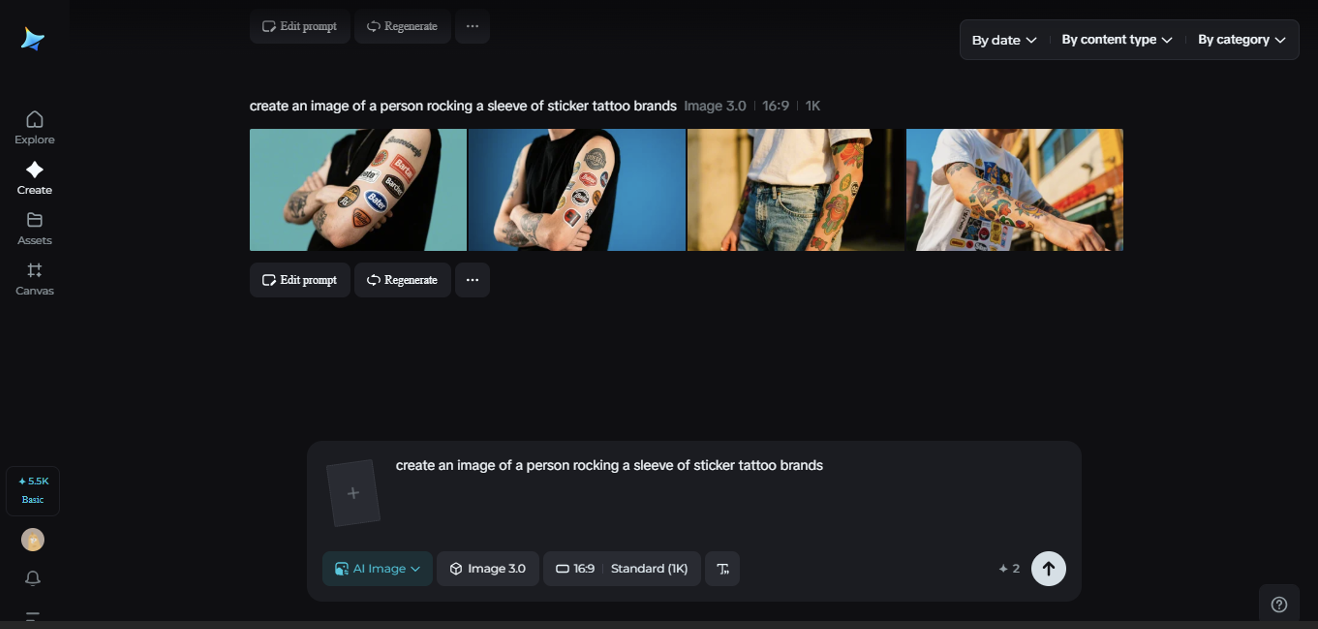
With AI tools like Dreamina, you can go even further by prototyping visually, using testing on how stickers, tattoos, and fashion examples affect everyday fashion. Dreamina’s AI photo generator offers a powerful text-to-image feature, so you can create an image of a person rocking a sleeve of sticker tattoo brands, or a simple patch on a leather jacket, and try to figure out if the ideas connect with people emotionally. That is where the idea of “brand tattoos” becomes interesting.
Fashion or identity?
In contrast to conventional logos on shoes or bags, sticker branding has a rough-and-ready directness. A sticker, be it actual or virtual, isn’t static; it’s spontaneous, renegade, and malleable. But when applied to skin like a tattoo or to fabric like an emblem, it becomes personal.
- Some users approach it as a membership badge: evidence that they belong.
- Some adopt it ironically: attaching a logo simply to demonstrate that they don’t believe in branding all that much.
- A few will even use it as a way to remix culture, layering several brand stickers over one another like a collage of contemporary identity.
This transformation makes logos active experiences instead of passive images.
Why stickers feel different
When a sticker transitions from a laptop to your arm, the stakes are altered. A skin logo, albeit temporary, suggests devotion, passion, or even loyalty. Now, suddenly, the brand isn’t merely a part of your possessions; it’s a part of your body language. With Dreamina’s sticker maker, you can instantly translate these graphics into material mockups, ready for skin, textiles, or accessories. It closes the loop between idea and product: you’re no longer dreaming, you’re holding a part of what’s to come in your hands. This isn’t about permanence alone. It’s about choice. Wearing a brand sticker feels active, as if you’re declaring: “This speaks for me right now.”
From stickers to streetwear
Brands are already trying out limited-time sticker packs, holographic skins, and peelable patches, and the nature of streetwear culture, which is steeped in drops and exclusivity, has stickers as the place to start: cheap enough for everyone to collect, but scarce enough to create some hype. Even further, if it’s a sticker and somewhat of a tattoo, it lives in both worlds as transient and communicative. Just think about:
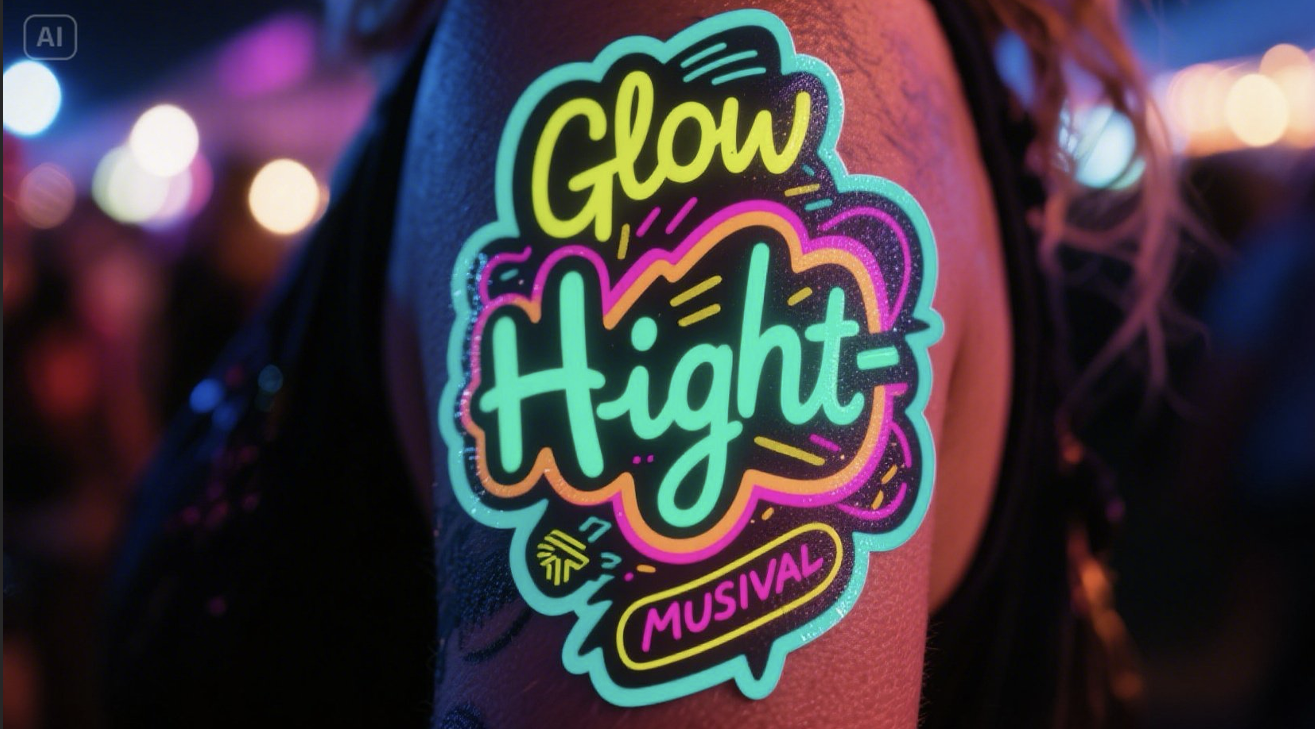
- A glow-in-the-dark sticker adhered to skin to wear to a music festival.
- A patch that is sun sensitive, changes colors, in the sun.
- A removable fabric sticker that you wear on your jackets which you could change out every day.
Visualizing logo futures
Now, how do marketers, creators, or fashion designers validate these concepts prior to making them? That is where tools such as Dreamina excel. You are able to write, visualize, and iterate prototypes within minutes, so you can visualize what “brand tattoos” would look like in practice.
With Dreamina’s AI logo generator, you might investigate new badges that feel raw, gritty, and street-level ready, ideal for sticker use. The best part about this is that you’re not limited to refined corporate badges; you have the freedom to play around with rough drafts, warped letters, or graphic symbols that have a life of your own when translated into wearable stickers.
Dreamina’s 3-Step creative path
To achieve this vision, let’s go through Dreamina’s process. It’s surprisingly easy but effective when you use it for branding experiments.
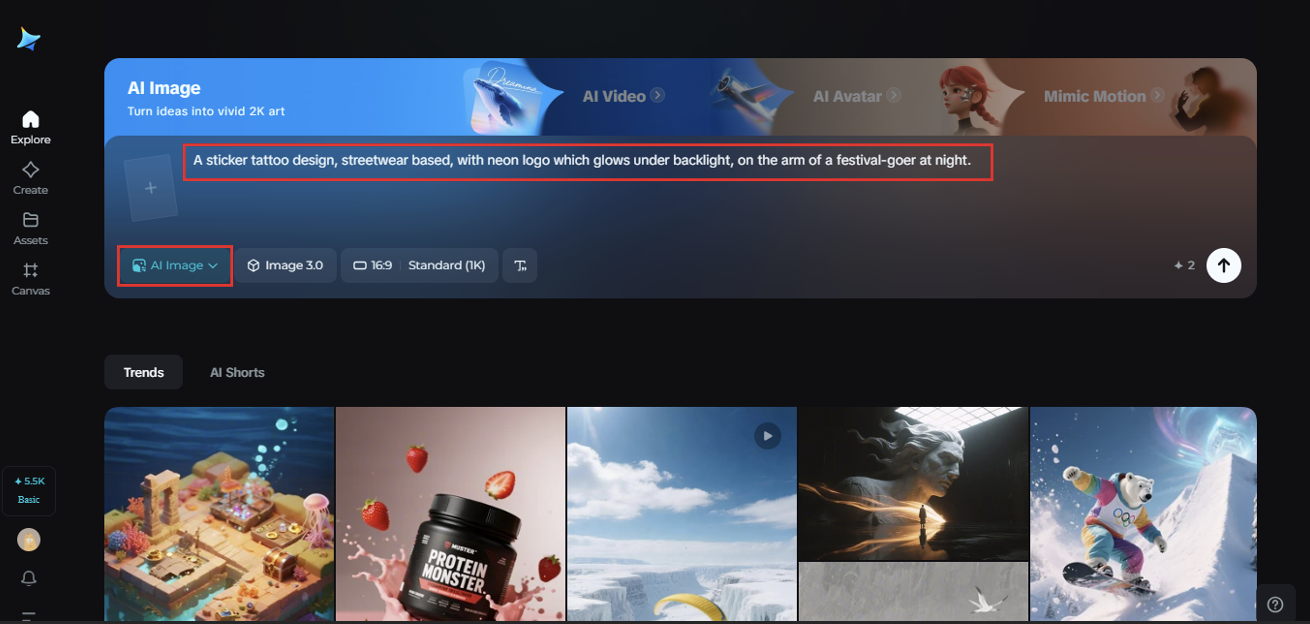
Step 1: Write a text prompt
Navigate to Dreamina and enter a written prompt that is clear in your interpretation and is descriptive. For instance:
“A sticker tattoo design, streetwear based, with neon logo which glows under blacklight, on the arm of a festival-goer at night.”
The more details you provide in your description, the more alike the outcome will be from your idea.
Step 2: Refine parameters and create
Once your prompt is established, adjust the settings. Choose the model you want to use, an aspect ratio suited to your idea and the resolution, sharp 1k for drafts or sharper 2k for more defined detail. After that, tap Dreamina and let the site do image development work for you.
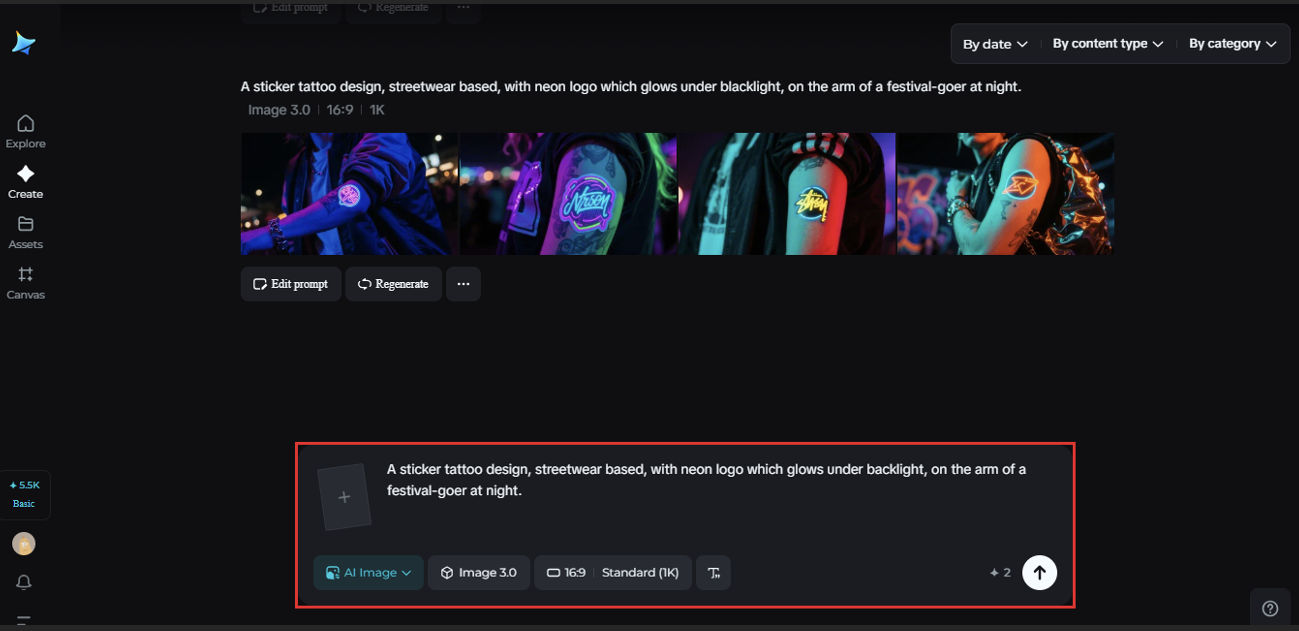
Step 3: Customize and download
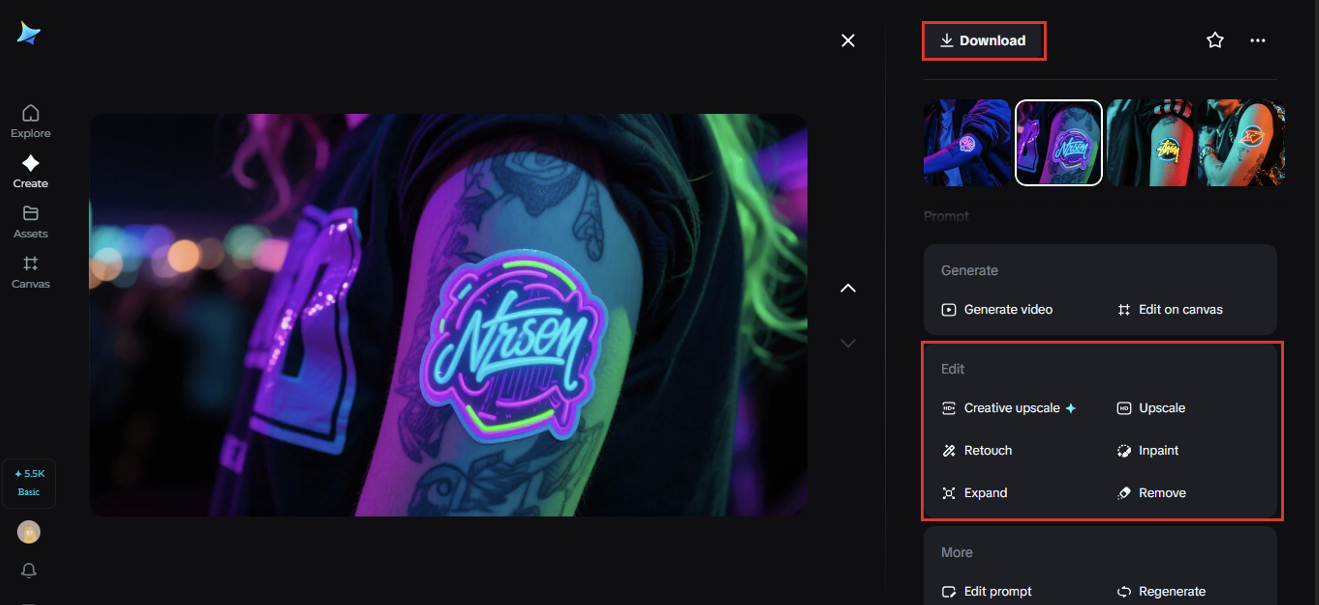
After you have developed your design, use Dreamina’s artistic features to creative upscale, inpaint, expand, remove, or retouch to amend areas you are not satisfied with. For example, do you want to crop around or have the sticker larger? Was the tattoo the right definition of black? Was the background bright enough? Once you are happy with all or part of the design, click on the “Download” icon to save your final image.
Beyond fashion: a cultural shift
If stickers and tattoos merge into branding, then maybe we’re seeing the next level of identity. It’s not about inky logos burned onto skin, it’s about fluid, adaptive imagery that changes with moods, tribes, and occasions. Consumers don’t simply wish to wear brands; they want to remix them, show them, and trade them like cultural currency. Brands that grasp this change will cease trapping logos onto individuals and, instead, create imagery that individuals wish to wear, even if only for a short while.
Closing thoughts
“Brand tattoos” are not a fleeting fad. They’re a glimpse at how branding converges with self-expression, fashion, and fun. From sticker packs to tattoo-influenced designs, the trend implies that individuals yearn for a more direct, malleable connection to the brands they enjoy, or enjoy to mock. And with Dreamina, you don’t just speculate about it. You try. You create. You test how far you can push the concept of logos as living, wearable art. Whether it’s with an AI photo creator, an AI logo creator, or a Sticker generator, the tools are available. What you decide to create, and how dauntlessly you challenge people to wear it, is all up to you.


