
OnePlus 16 vs Samsung Galaxy S26: Which $900 Flagship is Right for You?
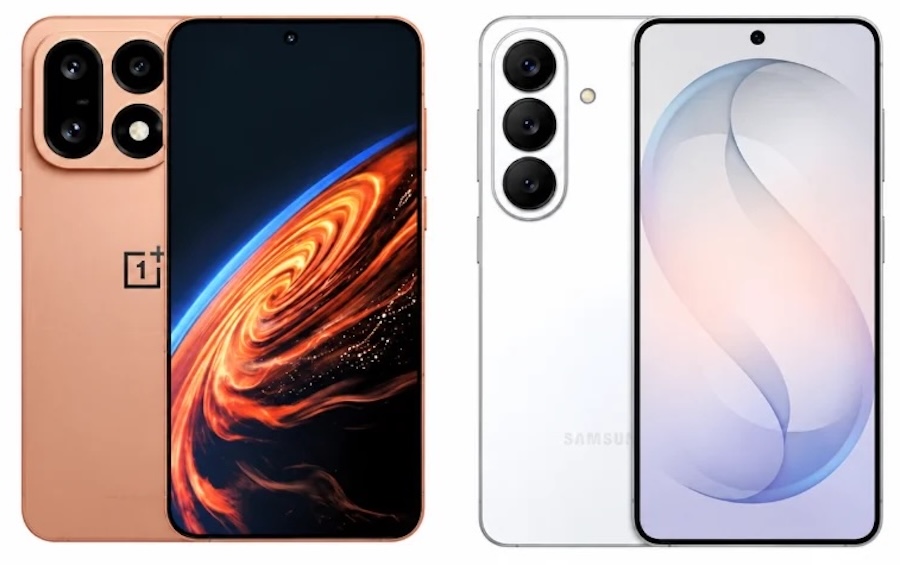
The premium smartphone market is a battleground of competing philosophies, and the latest clash between the OnePlus 16 and Samsung Galaxy S26 perfectly illustrates this divide. While OnePlus throws everything it has into raw hardware power, massive battery capacity, and gaming capabilities, Samsung counters with a highly refined, compact design, dependable everyday usability, and industry-leading software support.
With both devices hovering around the $900 price point, choosing between them isn’t about which phone is objectively better, but rather which phone better aligns with how you use your device. Do you want bleeding-edge specifications and multi-day endurance, or do you prefer the seamless, polished integration of a compact ecosystem?
Here is a detailed breakdown of how the OnePlus 16 and Samsung Galaxy S26 stack up against each other across all major categories.
Design, Build, and Display
Build Quality and Durability
Both smartphones utilize premium materials, but they target different types of users. The OnePlus 16 features a glass front, an aluminum frame, and a choice of glass or glass-fiber reinforced plastic for the rear panel. It also boasts an impressive IP68/IP69K rating, meaning it can withstand high-pressure water jets in addition to standard submersion.
Samsung’s Galaxy S26 opts for a more compact and manageable aesthetic, utilizing Gorilla Glass Victus 2, an Armor Aluminum 2 frame, and standard IP68 water and dust protection.
Display Technology
This is where the two phones diverge significantly. The OnePlus 16 sports a massive 6.78-inch LTPO AMOLED display with a staggering 185Hz refresh rate. This incredibly high refresh rate, combined with Dolby Vision and HDR10+ support, makes it a dream for mobile gamers and media consumers who demand absolute fluidity.
The Samsung Galaxy S26, conversely, features a more compact 6.3-inch Dynamic AMOLED 2X panel. While its refresh rate caps at a still-smooth 120Hz, Samsung claims a peak brightness of 2,600 nits, emphasizing outdoor visibility.
OnePlus wins on sheer size, fluidity, and water-resistance ratings. Samsung wins on outdoor visibility and comfortable everyday handling for compact-phone users.
Performance and Battery Life
Processing Power
The OnePlus 16 is a powerhouse, driven by Qualcomm’s top-tier Snapdragon 8 Elite Extreme Gen 6 chipset. Paired with up to a massive 16GB of RAM and UFS 4.1 storage, it is built for heavy multitasking and demanding 3D games.
Samsung’s Galaxy S26 uses the Snapdragon 8 Elite Gen 5 in selected markets and the Exynos 2600 in others. Both configurations deliver flagship-class performance, but Samsung’s commitment to seven generations of OS upgrades gives it a clear advantage for long-term ownership.
Battery Capacity and Charging
OnePlus completely dominates this category on paper. It packs a gargantuan 9,000mAh silicon-carbon battery, dwarfing the Galaxy S26’s 4,300mAh cell. Furthermore, the OnePlus 16 supports 100W wired charging, 50W wireless charging, reverse wireless charging, and bypass charging.
The Samsung Galaxy S26 supports 25W wired charging, 15W wireless charging, and 4.5W reverse wireless charging.
The OnePlus 16 is the undisputed champion for heavy users needing multi-day battery life and ultra-fast top-ups. Samsung counters with longer software support.
Camera Capabilities
Rear Camera Systems
The OnePlus 16 offers a highly versatile triple-camera array: a 200MP main sensor (with OIS), a dedicated 50MP telephoto lens with 3x optical zoom, and a 50MP ultrawide camera. This setup is capable of recording 8K video at 30fps and 4K at up to 120fps.
The Samsung Galaxy S26 features a 50MP stabilized main camera, a 10MP telephoto lens with 3x optical zoom, and a 12MP ultrawide camera. It supports 8K video recording at 30fps and 4K at 60fps, alongside 10-bit HDR and HDR10+ features.
Selfie Cameras
OnePlus equips its phone with a 50MP autofocus ultrawide front camera, capable of 4K video recording at up to 60fps. Samsung utilizes a 12MP front camera with dual-pixel autofocus, HDR10+ video support, and 4K video recording at 60fps.
OnePlus provides better hardware versatility and higher resolutions across the board. The Galaxy S26 remains a credible alternative for everyday photography, where processing and consistency matter as much as specifications.
Specs Comparison Table
|
Category |
OnePlus 16 |
Samsung Galaxy S26 |
|
Display |
6.78-inch LTPO AMOLED, 185Hz |
6.3-inch Dynamic AMOLED 2X, 120Hz |
|
Processor |
Snapdragon 8 Elite Extreme Gen 6 |
Snapdragon 8 Elite Gen 5 or Exynos 2600 |
|
RAM |
12GB or 16GB |
12GB |
|
Storage |
256GB, 512GB or 1TB |
128GB, 256GB or 512GB |
|
Rear Cameras |
200MP Main + 50MP (3x Telephoto) + 50MP Ultrawide |
50MP Main + 10MP (3x Telephoto) + 12MP Ultrawide |
|
Front Camera |
50MP Ultrawide (Autofocus) |
12MP (Dual-pixel autofocus) |
|
Battery |
9,000mAh |
4,300mAh |
|
Charging |
100W Wired, 50W Wireless |
25W Wired, 15W Wireless |
|
Durability |
IP68/IP69K |
IP68 |
|
Operating System |
Android 17 (OxygenOS 17) |
Android 16 (One UI 9) |
|
Estimated Price |
~$900 |
~$900 |
Final Conclusion
At roughly $900, both smartphones offer premium experiences, but they cater to very different demographics. The OnePlus 16 provides significantly more hardware for the money—boasting a dedicated 200MP main camera, a massive 9,000mAh battery, lightning-fast charging, and a 185Hz display. It is the clear choice for power users and mobile gamers.
The Samsung Galaxy S26, however, justifies its price tag through a compact design, dependable everyday photography, Samsung DeX desktop functionality, and an impressive seven major Android OS upgrades. It remains the superior all-rounder for users who value software refinement and everyday convenience over raw specifications.
Related Posts
-
 Samsung Galaxy S27 Leaks Reveal Premium Hardware Upgrades and Higher Prices
-
 Samsung Drops August 2026 Security Update for Galaxy S23, S23+, and S23 Ultra
-
 Vivo Y19 5G Debuts in India with Rugged Design, AI-Powered Camera, and Budget-Friendly Price
-
 Complete List of OnePlus Eligible Devices for 3 Major OS Upgrades