
The Ultimate Comparison: Vivo X500 Pro vs. Xiaomi 18 Pro: Specs and Features
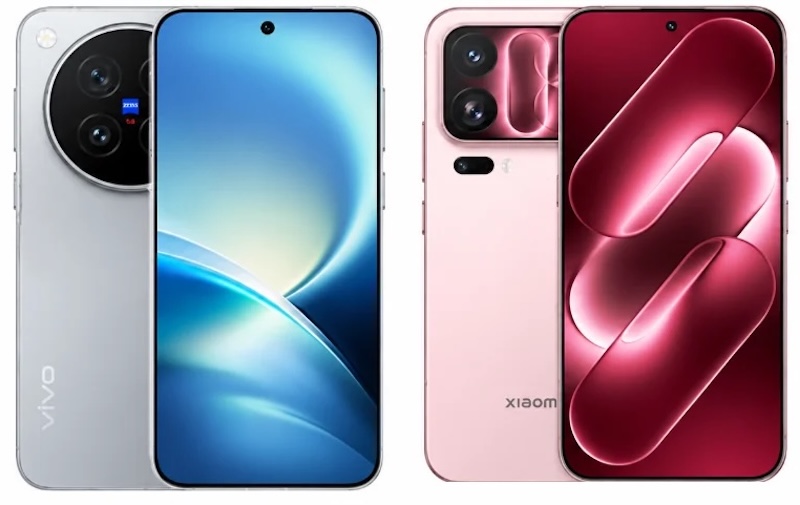
When it comes to pushing the boundaries of smartphone hardware, Xiaomi and Vivo are taking two distinctly different paths to the top. The Xiaomi 18 Pro flexes its engineering muscles with a sky-high resolution camera system, a massive 7,000mAh battery, and a distinctive secondary rear display. Meanwhile, the Vivo X500 Pro counters with Zeiss-tuned optics, professional-grade video capabilities, and a sharper, faster primary screen.
Both devices offer uncompromised premium hardware, but their diverging philosophies mean your choice will ultimately come down to what you prioritize in a daily driver.
Vivo X500 Pro vs: Head-to-Head Specifications
|
Feature |
Xiaomi 18 Pro |
Vivo X500 Pro |
|
Display |
6.4-inch LTPO AMOLED, 120Hz |
6.36-inch LTPO AMOLED, 144Hz |
|
Resolution & Brightness |
1120 × 2436 pixels (4,000 nits) |
1216 × 2660 pixels (4,500 nits) |
|
Processor (2nm) |
Snapdragon 8 Elite Gen 6 |
MediaTek Dimensity 9600 Pro |
|
RAM & Storage |
Up to 16GB / 1TB (UFS 4.1) |
Up to 12GB / 1TB (UFS 4.1) |
|
Rear Cameras |
200MP Main, 200MP Periscope, 50MP Ultrawide |
50MP Main, 64MP Periscope, 50MP Ultrawide |
|
Battery & Charging |
7,000mAh (100W wired, 50W wireless) |
6,510mAh (90W wired, 40W wireless) |
|
Water Resistance |
IP68 |
IP68 & IP69 |
Starting Price (Est.) |
~$1,000 |
~$950 |
Design and Display: Durability Meets Innovation
Both smartphones exude premium craftsmanship with their aluminum frames, but they diverge sharply in utility and durability. Xiaomi shields its 18 Pro with Dragon Crystal Glass 3 and maintains a standard IP68 water resistance rating. Its most polarizing feature, however, is the 2.7-inch secondary display on the rear—a bold addition that offers unique functionality, provided you actually use it.
Vivo opts for a more traditional aesthetic, available with either a glass or reinforced plastic back. What it lacks in secondary screens, it makes up for in ruggedness, boasting an IP69 certification that guarantees protection against high-pressure water jets alongside standard IP68 submersion survival.
On the front, Vivo takes the crown for visual fluidity. Its 6.36-inch LTPO AMOLED panel outpaces Xiaomi with a sharper 1216 x 2660 resolution, a blazing 144Hz refresh rate, and a peak brightness of 4,500 nits. While Xiaomi’s 6.4-inch 120Hz display is spectacular in its own right—supporting 68 billion colors and Dolby Vision—Vivo delivers a slightly more refined canvas for media consumption and gaming.
Performance and Battery: Raw Power vs. Efficiency
Under the hood, both devices represent the bleeding edge of mobile silicon. The Xiaomi 18 Pro is powered by Qualcomm’s 2nm Snapdragon 8 Elite Gen 6, pushing clock speeds up to 5GHz. Paired with up to 16GB of RAM, it is a multitasking powerhouse built for the most demanding mobile gamers. Vivo answers with the 2nm MediaTek Dimensity 9600 Pro and 12GB of RAM. While both offer up to 1TB of ultra-fast UFS 4.1 storage, Xiaomi provides just a bit more memory headroom for power users.
When it comes to endurance, Xiaomi pulls ahead decisively. The 18 Pro packs a colossal 7,000mAh silicon-carbon battery, dwarfing the still-impressive 6,510mAh cell in the Vivo X500 Pro. Xiaomi also leads the charging race, supporting 100W wired and 50W wireless top-ups, compared to Vivo’s 90W and 40W speeds. Vivo does offer the niche benefit of reverse wired charging, but for sheer battery anxiety elimination, Xiaomi is unmatched.
Cameras: The Megapixel War vs. Optical Mastery
The camera systems highlight the starkest contrast between the two brands. Xiaomi leans heavily into sheer resolution, equipping the 18 Pro with a 200MP primary sensor and a staggering 200MP periscope telephoto lens capable of 3.2x optical zoom. Branded in partnership with Leica, this setup offers unparalleled cropping flexibility for photographers who want to re-frame shots in post-production.
Vivo, staying true to its Zeiss partnership, focuses on optical tuning and video prowess. It features a 50MP main sensor, a 64MP periscope telephoto with a longer 3.5x optical reach, and a wider 50MP autofocus ultrawide lens. Where Vivo truly separates itself is in videography, offering mind-bending 4K recording at up to 240fps and extensive 3D LUT support for professional color grading.
For selfie enthusiasts, both phones sport 50MP autofocus front cameras capable of 4K video at 60fps, making either choice excellent for vlogging or social media.
The Verdict: Which Flagship Is Right for You?
Priced around $1,000, the Xiaomi 18 Pro asks for a slight premium over the $950 Vivo X500 Pro.
If your daily routine demands maximum battery endurance, blazing-fast charging, and the bragging rights of dual 200MP cameras—or if you simply love the utility of a rear secondary display—the Xiaomi 18 Pro justifies its higher cost. It is an unashamedly ambitious device built for heavy power users.
However, if you prioritize value, the Vivo X500 Pro is arguably the smarter buy. For $50 less, it delivers a superior 144Hz display, Zeiss-engineered optics, unmatched video recording capabilities, and a more robust IP69 durability rating. Add in Vivo’s promise of five major Android OS updates, and it becomes a highly compelling package for content creators and long-term tech investors alike.


