
OnePlus 16 vs Xiaomi 18 Pro: Bigger Battery or More Ambitious Cameras?
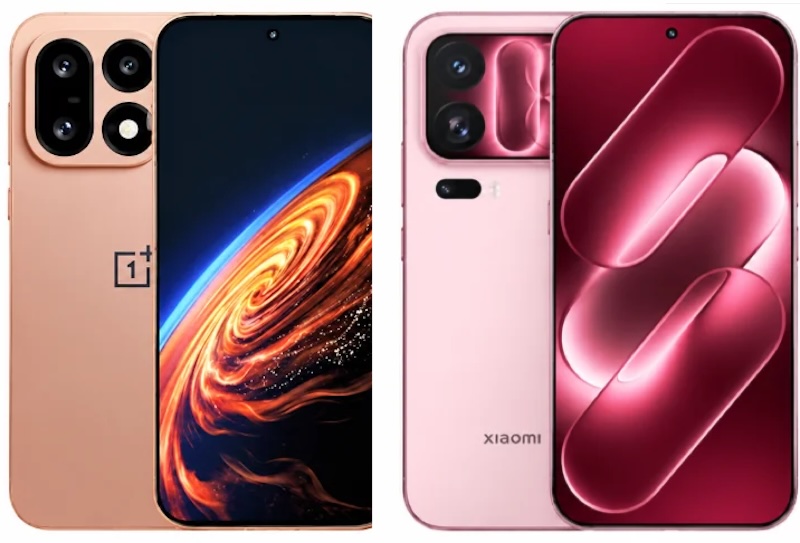
The OnePlus 16 and Xiaomi 18 Pro offer two contrasting interpretations of a premium Android phone. OnePlus prioritises a large display, a high refresh rate and substantial battery capacity. Xiaomi takes a more compact approach, pairing photography-focused hardware with a secondary screen on the back.
Based on the supplied specifications, OnePlus makes the stronger case for value, while Xiaomi offers more distinctive camera and display features. The choice is less about finding a winner in every category than deciding which compromises matter most.
This comparison reflects the specifications and indicative prices provided, rather than independent testing. Claims about actual endurance, image quality and sustained performance therefore remain unproven.
OnePlus 16 vs Xiaomi 18 Pro: Key Specifications
| Feature | OnePlus 16 | Xiaomi 18 Pro |
|---|---|---|
| Construction | Aluminium frame; glass or glass-fibre-reinforced rear options | Dragon Crystal Glass 3 and aluminium frame |
| Protection rating | IP68/IP69K | IP68; stated water resistance up to 6 metres |
| Main display | 6.78-inch LTPO AMOLED | 6.4-inch LTPO AMOLED |
| Maximum refresh rate | 185Hz | 120Hz |
| Listed brightness | 2,000 nits in high-brightness mode | 4,000 nits peak |
| Rear display | None listed | 2.7-inch AMOLED, 120Hz |
| Processor | Snapdragon 8 Elite Extreme Gen 6 | Snapdragon 8 Elite Gen 6 |
| Listed manufacturing process | 2nm | 2nm |
| RAM | Up to 16GB | Up to 16GB |
| Storage | Up to 1TB, UFS 4.1 | Up to 1TB, UFS 4.1 |
| Software | Android 17 with OxygenOS 17 | Android 17 with HyperOS 4 |
| Main camera | 200MP with OIS | 200MP with OIS; 1/1.28-inch sensor |
| Telephoto camera | 50MP, 3x optical zoom | 200MP periscope, 3.2x optical zoom |
| Ultrawide camera | 50MP, 116-degree field of view | 50MP, 102-degree field of view |
| Rear video | Up to 8K at 30fps or 4K at 120fps | Up to 8K at 30fps or 4K at 120fps |
| Front camera | 50MP ultrawide with autofocus | 50MP wide with PDAF |
| Front video | Up to 4K at 60fps | Up to 4K at 60fps; HDR10+ listed |
| Battery | 9,000mAh | 7,000mAh |
| Wired charging | 100W | 100W |
| Wireless charging | 50W | 50W |
| Reverse charging | Wireless; 5W wired | 27W wireless |
| Other listed features | Bypass charging, eSIM, UAV-grade gyroscope | Rear display, UWB, Leica camera system |
| Indicative price | Around $900 or ₹86,000 | Around $1,000 or ₹120,000 |
The dollar and rupee figures should be treated as separate indicative prices, not equivalent currency conversions or confirmed prices for matching configurations.
Design: OnePlus Goes Large, Xiaomi Offers a Smaller Alternative
OnePlus combines an aluminium frame with glass construction, while the supplied description also lists a glass-fibre-reinforced rear variant. Crystal Shield Glass is specified for its glass surfaces.
Xiaomi uses Dragon Crystal Glass 3 and an aluminium frame. Its smaller front display positions the 18 Pro as the more compact option, although screen size alone does not establish how comfortably either phone fits in the hand. Dimensions, weight and balance are not included in the comparison.
Protection claims also require some nuance. OnePlus lists both IP68 and IP69K ratings, while Xiaomi lists IP68 alongside water resistance to a stated depth of 6 metres.
OnePlus therefore has an additional certification, but that does not establish universal superiority in durability. Xiaomi’s immersion claim and OnePlus’s broader rating list describe different aspects of protection, and the supplied information does not include comparative drop or durability testing.
Displays: OnePlus Prioritises Refresh Rate, Xiaomi Adds a Rear Screen
The OnePlus 16 features a 6.78-inch LTPO AMOLED display with a maximum refresh rate of 185Hz. Dolby Vision and HDR10+ support are also listed.
That high refresh-rate ceiling is central to its appeal for gaming and responsive interaction. However, the specifications do not establish how frequently games or applications will run at the panel’s maximum rate.
Xiaomi opts for a smaller 6.4-inch LTPO AMOLED screen running at up to 120Hz. Its more unusual feature is a separate 2.7-inch, 120Hz AMOLED display on the rear, intended for functions such as notifications and camera previews.
The brightness figures are not directly comparable. OnePlus’s 2,000-nit figure is identified as high-brightness mode, whereas Xiaomi’s 4,000-nit figure is described as peak brightness. Those are not matching measurement categories, so they cannot substantiate a simple claim that Xiaomi’s screen is twice as bright.
Display resolutions are also absent from the supplied specifications. As a result, neither sharpness nor overall display quality can be ranked conclusively.
The practical distinction is clearer: OnePlus offers a larger panel with a higher refresh-rate ceiling, while Xiaomi combines a smaller main screen with additional rear-display functionality.
Performance: OnePlus Has Higher-Tier Positioning, Not a Tested Lead
The OnePlus 16 uses the Snapdragon 8 Elite Extreme Gen 6, while the Xiaomi 18 Pro features the Snapdragon 8 Elite Gen 6. Both are listed as 2nm chipsets.
OnePlus’s processor is positioned as the higher-tier option, and the supplied description identifies an Adreno 850 GPU. However, no clock speeds, benchmark results or sustained performance measurements are provided.
That makes OnePlus the more performance-focused proposition on paper, but it does not establish the size of any advantage. Thermal management and power limits are also missing from the comparison.
Memory and storage are evenly matched at the top end. Both phones offer up to 16GB of RAM and 1TB of UFS 4.1 storage, so neither gains an obvious capacity advantage.
Software Comes Down to Interface Preference
Both devices are listed with Android 17. OnePlus pairs it with OxygenOS 17, while Xiaomi uses HyperOS 4.
The supplied information does not specify update commitments, security-support periods or regional software differences. There is therefore no basis here to declare either phone the better long-term software investment.
Battery and Charging: OnePlus Has the Capacity Advantage
The OnePlus 16’s 9,000mAh silicon-carbon battery is 2,000mAh larger than the Xiaomi 18 Pro’s 7,000mAh unit. That represents approximately 29 percent more nominal capacity.
It is a substantial hardware advantage for buyers concerned about running out of power, but it should not be translated directly into an equivalent increase in battery life. Actual endurance will depend on workload, display settings, processing efficiency and software.
Both phones list 100W wired and 50W wireless charging. Matching power ratings do not guarantee matching charging times, especially with different battery capacities.
OnePlus also includes bypass charging, reverse wireless charging and 5W reverse wired charging. Xiaomi counters with a specified 27W reverse wireless output; the OnePlus reverse wireless rating is not provided.
For buyers prioritising capacity and gaming-oriented charging features, OnePlus has the stronger specification sheet. Xiaomi retains the same headline wired and wireless charging ratings, alongside a clearly stated reverse wireless capability.
Cameras: Xiaomi Emphasises Telephoto Hardware
Both phones have 200MP main cameras with optical image stabilisation. Xiaomi’s main sensor is listed as a 1/1.28-inch unit and is described as larger than the OnePlus sensor, although the latter’s dimensions are not supplied.
The telephoto systems show a more explicit difference. OnePlus uses a 50MP camera with 3x optical zoom, while Xiaomi combines a 200MP periscope camera with 3.2x optical zoom.
Xiaomi therefore offers substantially more telephoto resolution, but only a modest increase in the listed optical zoom factor. Its 200MP specification should not be interpreted as four times the photographic quality of the OnePlus camera.
Leica integration further distinguishes Xiaomi’s imaging package. Both phones also list laser autofocus and colour-spectrum sensors.
OnePlus has an advantage in ultrawide coverage. Its 50MP camera offers a 116-degree field of view, compared with 102 degrees on Xiaomi’s 50MP ultrawide, making it the wider option for expansive compositions.
Xiaomi has the more ambitious main-and-telephoto hardware proposition. Whether it produces better photographs across different conditions remains a question for direct testing, not a conclusion that megapixel counts or branding can settle.
Video Specifications Are Closely Matched
Both phones list rear-camera recording at up to 8K at 30fps and 4K at 120fps.
Those shared limits do not establish identical video quality. The supplied information does not explain which lenses support each mode, what restrictions apply or how the phones compare in stabilisation and image processing.
Selfies: Wider Framing or Additional HDR Support
The two devices feature 50MP front cameras with autofocus and 4K recording at 60fps.
OnePlus describes its selfie camera as ultrawide, giving it a wider-framing proposition for groups and environmental selfies. Xiaomi uses a wide-angle camera with phase-detection autofocus and lists HDR10+ video support.
Neither configuration establishes a clear overall winner. Their differences are more relevant to framing and recording preferences than to a proven quality gap.
Audio and Connectivity: Different Extras Rather Than a Clean Sweep
Both phones list stereo speakers and Hi-Res audio support, while Xiaomi additionally specifies Dolby Atmos. That gives Xiaomi another documented audio feature, though it does not prove superior speaker quality.
Wi-Fi 7, Bluetooth 6.0 and NFC are common to both devices. OnePlus lists eSIM support, while Xiaomi lists UWB.
These features serve different priorities and should not be treated as interchangeable. Their presence in the supplied specifications also does not confirm that an unlisted feature is necessarily absent from the other phone.
Pricing: OnePlus Is Cheaper, but the Quoted Premium Varies by Currency
The supplied prices place the OnePlus 16 at approximately $900 or ₹86,000, compared with around $1,000 or ₹120,000 for the Xiaomi 18 Pro.
That produces a $100 difference in the dollar figures and a ₹34,000 difference in the rupee figures. Because those gaps are not equivalent, they should not be presented as a single converted price comparison.
Configuration and regional pricing also remain unspecified. Even so, both sets of figures position OnePlus as the less expensive option.
Its value argument rests on the larger battery, higher-refresh-rate display and performance-oriented chipset positioning. Xiaomi’s premium is tied more closely to its telephoto hardware, Leica integration, rear display and smaller format.
Verdict: OnePlus for Capacity and Value, Xiaomi for Camera-Focused Features
The OnePlus 16 is the more persuasive choice on paper for buyers seeking a large-screen flagship with substantial battery capacity at a lower listed price. Its 185Hz display, higher-tier processor positioning and bypass charging reinforce that focus.
The Xiaomi 18 Pro offers a different set of attractions: a smaller main display, a secondary rear screen, a 200MP periscope camera and Leica imaging features. Those distinctions may matter more than battery capacity to buyers prioritising photography and unusual hardware.
OnePlus has the stronger specification-led value proposition. Xiaomi is the more specialised alternative. A definitive overall winner would require consistent regional prices and direct testing of the cameras, displays, performance and battery life.
Related Posts
-
 Mid-Range Powerhouse: Realme 15 Pro 5G Set to Impress with 7000mAh Battery
-
 Top 5 Upcoming Smartphones in October 2026: Massive Batteries and 200MP Cameras
-
 Samsung Galaxy S27 Leaks Reveal Premium Hardware Upgrades and Higher Prices
-
 Motorola Edge 70 Fusion Price & Specs: A New Mid-Range Powerhouse with 5200 Nits Display