
Samsung Galaxy S26 Ultra vs. Xiaomi 18 Pro Max: 2026 Flagship Comparison
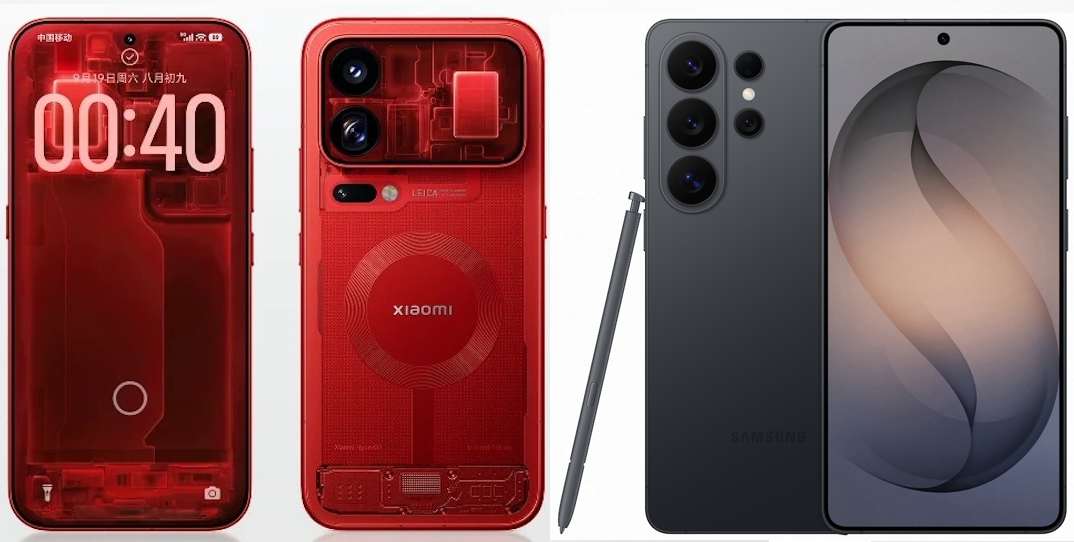
The 2026 flagship smartphone landscape is increasingly defined by a clear divide: Chinese manufacturers aggressively pushing massive camera sensors, colossal batteries, and experimental AI features, while Samsung relies on the familiar refinement of its Galaxy ecosystem. With the Galaxy S27 not expected until next year, Samsung’s current Galaxy S26 Ultra finds itself in an intriguing face-off against the newly arrived Xiaomi 18 Pro Max.
While both devices offer high-end cameras, substantial battery life, and integrated AI, their underlying philosophies could not be more different. Xiaomi is treating the 18 Pro Max as a canvas for experimental hardware, whereas Samsung continues to polish its established, productivity-focused formula.
Hardware and Display Philosophies
The Xiaomi 18 Pro Max takes bold hardware risks, most notably with a 2.9-inch AMOLED secondary display embedded in its rear panel. Capable of hitting 120Hz and 4,000 nits of brightness, this rear screen acts as a hub for a dedicated voice assistant, smart home controls, custom AI avatars, and even interacts with NFC-enabled plush toys. On the front, it sports a 6.9-inch LTPO AMOLED SuperPixel 2.0 display (2624 x 1208) with razor-thin 0.99mm bezels and an innovative hardware-level privacy mode that physically manipulates RGB sub-pixels to narrow the viewing angle.
Samsung’s approach with the Galaxy S26 Ultra is far more traditional. It trades the titanium frame of its predecessors for Armor Aluminum, which improves thermal management, and integrates the signature S Pen into its chassis. While its 6.9-inch Dynamic AMOLED 2X display peaks at a lower 2,600 nits, it utilizes Corning’s Gorilla Armor with an anti-reflective coating for superior outdoor visibility. Samsung also includes a Privacy Display mode, though it relies on software execution rather than Xiaomi’s hardware-level light direction. Despite its conventional build, the S26 Ultra manages to be thinner (7.9mm) and lighter (214 grams) than the Xiaomi.
Camera Systems: Dual 200MP vs. Quad Versatility
Xiaomi anchors its imaging system with dual 200MP sensors. The primary 1/1.28-inch Light Hunter 960L sensor utilizes a Leica Summilux lens and 16-in-1 pixel binning, paired with a 200MP periscope telephoto offering 3.2x optical and up to 12.8x lossless zoom. A 50MP ultrawide with macro capabilities rounds out the trio.
Samsung opts for maximum focal versatility with a quad-camera array. It matches the 200MP primary sensor but surrounds it with a 50MP ultrawide (120-degree field of view), a 50MP periscope lens with 5x optical zoom, and a secondary 10MP telephoto for shorter ranges. By widening the apertures on both the main and telephoto lenses this year, Samsung has significantly improved the S26 Ultra’s light intake for HDR and night photography.
Performance and Endurance
| Feature | Xiaomi 18 Pro Max | Samsung Galaxy S26 Ultra |
| Processor | Snapdragon 8 Elite Extreme Gen 6 (2nm) | Snapdragon 8 Elite Gen 5 for Galaxy (3nm) |
| Cooling | 5,513 mm² ring-shaped vapor chamber | Upgraded conventional vapor chamber |
| Battery Capacity | 8,500mAh silicon-carbon | 5,000mAh |
| Charging Speeds | 100W wired / 50W wireless | 60W wired / 25W wireless |
| Starting Price | ~ $1,045 (China) | $1,299 (Global) |
Under the hood, the Xiaomi 18 Pro Max benefits from Qualcomm’s bleeding-edge 2nm Snapdragon 8 Elite Extreme Gen 6, reaching clock speeds of 5GHz. Samsung utilizes the slightly older 3nm Snapdragon 8 Elite Gen 5, though the company claims substantial year-over-year gains in CPU and GPU performance over the S25 Ultra.
Where Xiaomi definitively pulls ahead on the spec sheet is endurance. It packs an unprecedented 8,500mAh silicon-carbon battery with 100W wired charging. Samsung has stuck to its standard 5,000mAh capacity, offering a modest bump to 60W wired and 25W wireless charging.
Pricing and Market Availability
The Samsung Galaxy S26 Ultra has been available globally since March, starting at $1,299 for the 256GB model and scaling up to $1,799 for the 1TB variant.
The Xiaomi 18 Pro Max presents a highly competitive value proposition, starting at roughly $1,045 (6,999 yuan) in China. Unlike its predecessor, Xiaomi has confirmed the 18 Pro series will see a global launch later this year. However, stateside availability remains highly unlikely, meaning U.S. consumers looking for a 2026 flagship will likely find the Galaxy S26 Ultra to be their most accessible high-end option.


