
Apple A20 Pro Processor Detailed: Faster Gaming for iPhone 18 Pro
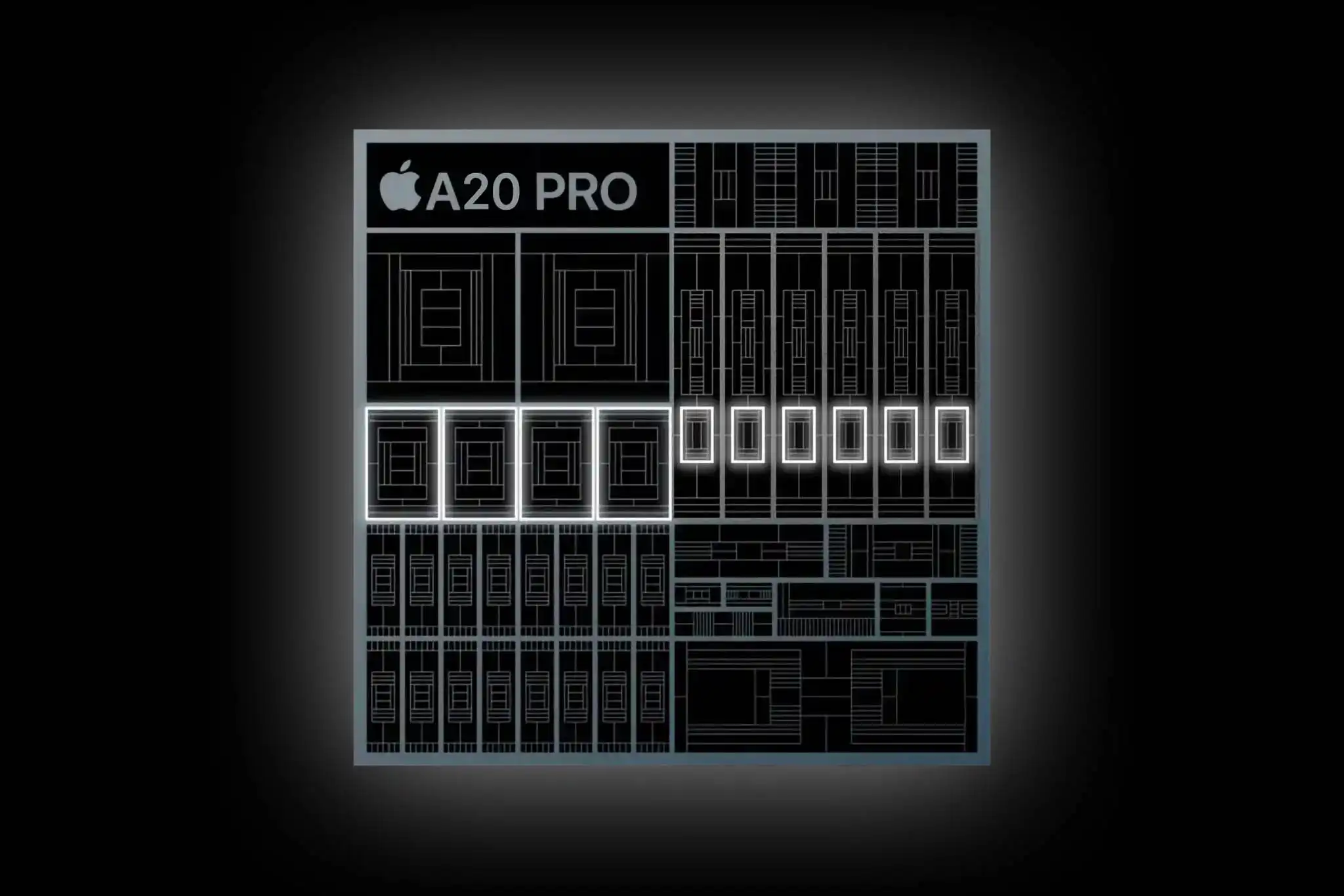
A recent leak originating from Chinese social media has provided a rare, highly detailed glimpse into the silicon architecture of Apple’s upcoming A20 Pro chip. The leaked schematics suggest that the next generation of iPhone processors will feature substantial improvements in graphics performance and memory bandwidth, hardware upgrades perfectly tailored to support increasingly demanding artificial intelligence workloads.
The information surfaced via the Weibo account “白饭炒白米饭,” a source with a credible history of leaking accurate details regarding unreleased Apple hardware. The leaker published images purported to be the solder joint diagram for the A20 Pro, which maps the microscopic contact points where the processor connects to the underlying logic board. By analyzing this layout against previous chip designs, hardware analysts have been able to reverse-engineer a block diagram outlining the major components of Apple’s next flagship processor.
If the diagrams prove accurate, three major architectural shifts are coming to the A20 Pro.
First, the chip will feature a seven-core graphics processing unit, a notable upgrade from the six-core GPU found in the current A19 Pro. Second, Apple is implementing a wider 96-bit memory interface for LPDDR5x RAM, jumping up from the previous 64-bit standard. Finally, while the central processing unit retains a familiar six-core layout—comprising two high-performance cores and four high-efficiency cores—the internal memory allocation has been tweaked.
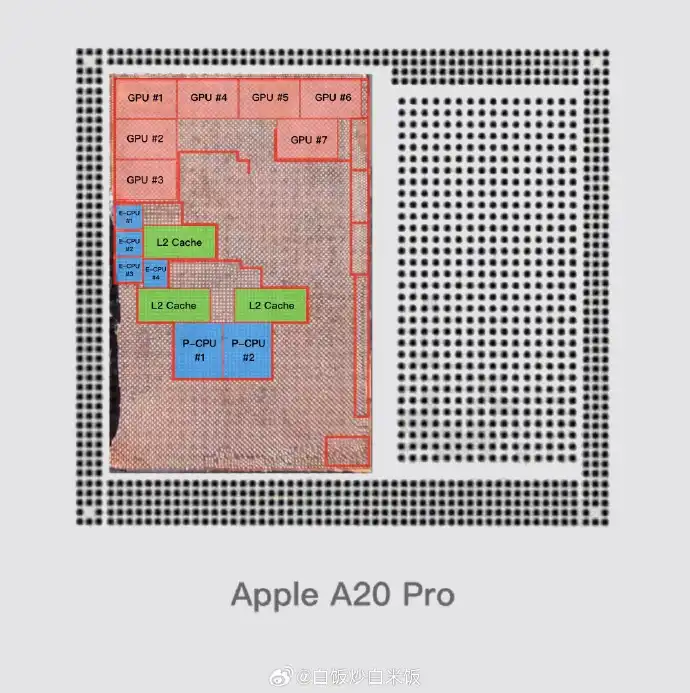
The leaked layout indicates that the four efficiency cores will now share an 8MB L2 cache, representing a 2MB increase over the previous generation. This expanded cache should allow the efficiency cores to process larger data sets much faster. The two high-performance cores will maintain their shared 16MB L2 cache. At this stage, it remains unclear if Apple is introducing an entirely new underlying core architecture, or if these are the highly rumored “Super Cores” circulating in industry whispers.
The move from six to seven GPU cores delivers a baseline hardware increase of roughly 16 percent. Industry observers anticipate that the flagship iPhone 18 Pro and Pro Max models will utilize the fully unlocked seven-core configuration. However, the much-rumored folding iPhone Ultra—a device expected to be heavily constrained by its ultra-thin chassis and complex thermal dynamics—might ship with one GPU core disabled for heat management, mirroring the strategy Apple recently employed with the iPhone Air.
Perhaps the most significant revelation is the widened memory interface. Graphical performance is heavily bottlenecked by memory bandwidth. While Apple is reportedly delaying the adoption of the newer LPDDR6 standard for another year, widening the LPDDR5x interface to 96 bits effectively increases memory bandwidth by a massive 50 percent. Even before factoring in potential clock speed enhancements or architectural refinements, the combination of an extra GPU core and vastly superior memory bandwidth could result in a 20 to 30 percent leap in real-world graphics performance.
This hardware evolution aligns perfectly with Apple’s deepening integration of artificial intelligence. The Cupertino giant shares numerous core architectural traits across its mobile A-series and Mac-bound M-series chips. Investing heavily in memory bandwidth and GPU compute power is a necessary foundational step for executing and training complex AI models directly on the device. Even for consumers indifferent to generative AI, this raw graphical horsepower will translate directly into superior performance for high-end 3D gaming and demanding creative applications.


