
Samsung Galaxy S26 Ultra Was the Best-Selling Android Phone in Q2 2026
Affordable Android phones typically dominate global smartphone sales charts. Lower prices, widespread availability and strong demand in developing markets usually give entry-level and mid-range devices a clear advantage over expensive flagship models.
That makes the latest quarterly smartphone market report particularly notable. Samsung’s Galaxy S26 Ultra, a device priced at around $1,300, reportedly became the world’s best-selling Android phone during the second quarter of 2026.
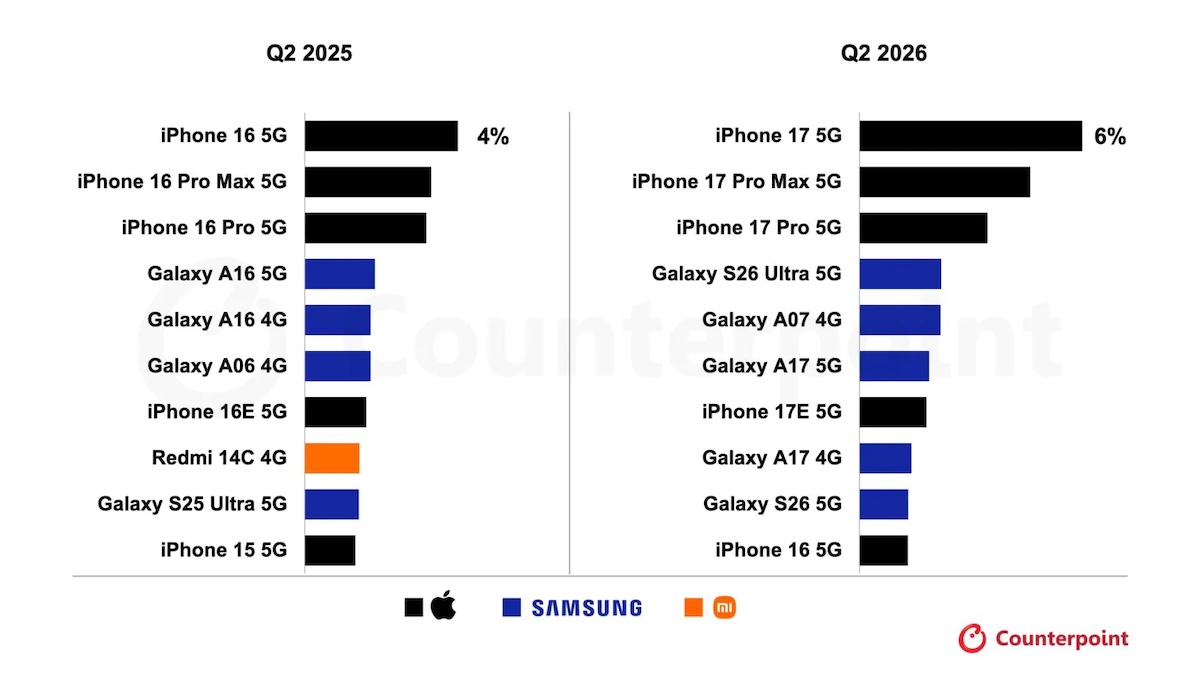
According to Counterpoint Research’s global smartphone market-share data for Q2 2026, the Galaxy S26 Ultra ranked fourth among all smartphones sold worldwide. It was also the highest-ranked Android phone of the quarter, outperforming every budget and mid-range rival on the list.
The result is unusual not only because the S26 Ultra is a premium flagship, but also because high-end Galaxy S devices typically achieve their strongest sales performance during the first quarter of the year, immediately after launch.
Galaxy S26 Ultra moves up the rankings
Samsung’s Galaxy S26 Ultra placed fourth in Counterpoint Research’s Q2 2026 global best-selling smartphone ranking. The base Galaxy S26 also appeared in the top 10, taking ninth place.
That represents a clear improvement over the previous year’s performance. During the second quarter of 2025, the Galaxy S25 Ultra ranked ninth, while the standard Galaxy S25 did not appear among the world’s 10 best-selling smartphones.
The Galaxy S26 Ultra’s fourth-place finish is especially significant because Counterpoint Research describes it as the first “ultra-premium” Android device to lead Android smartphone sales during the second quarter of a year.
In other words, Samsung did not simply place another Galaxy flagship on the chart. It managed to turn its most expensive mainstream smartphone into the quarter’s top-selling Android model.
A later launch helped Samsung
One of the main reasons behind the Galaxy S26 Ultra’s unusually strong Q2 performance appears to be Samsung’s release schedule.
Samsung launched the Galaxy S26 family on February 25, later than its usual flagship timetable. That delay pushed a larger share of early sales into the second quarter, rather than concentrating them in the first three months of the year.
According to Counterpoint Research senior analyst Harshit Rastogi, the later launch “shifted more sales into Q2.” This timing effect likely gave the Galaxy S26 Ultra a significant boost in the rankings.
The result does not necessarily mean that premium devices have suddenly replaced affordable phones as the backbone of Android sales. Budget models remain crucial to the global market, particularly in regions where pricing is the most important factor in a buying decision.
However, it does show that timing can significantly influence quarterly rankings. A delayed flagship launch can keep a high-end device in its strongest sales period for longer, allowing it to compete more effectively against lower-priced models that normally dominate the charts.
Samsung dominates the Android list
Samsung was the only Android manufacturer with several devices in the global top 10 during Q2 2026.
In addition to the Galaxy S26 Ultra and the standard Galaxy S26, three Galaxy A-series phones also reached the list:
-
Samsung Galaxy A07 4G ranked fifth
-
Samsung Galaxy A17 5G placed sixth
-
Samsung Galaxy A17 4G took eighth place
This mix of premium and affordable models highlights the breadth of Samsung’s smartphone strategy. The company was able to compete at the top of the market with the Galaxy S26 Ultra while also maintaining strong sales volumes through lower-cost Galaxy A-series devices.
Counterpoint Research also noted that every Samsung phone included in the top 10 came with a promise of at least six years of software updates. Long-term update commitments are becoming increasingly important in the smartphone market, particularly as users hold on to devices for longer and expect better value from their purchases.
Samsung’s extended-support policy may therefore be helping it appeal to buyers at both ends of the market: customers purchasing a $1,300 flagship and those looking for a more affordable device that will remain supported for years.
Apple still leads overall sales
Despite Samsung’s success with the Galaxy S26 Ultra, Apple retained control of the top of the global smartphone market.
The iPhone 17 was the best-selling phone worldwide in Q2 2026. It was followed by the iPhone 17 Pro Max in second place and the iPhone 17 Pro in third.
Apple’s previous-generation iPhone 16 also remained in the top 10, taking tenth place. That means Apple secured four of the 10 positions in the global ranking, including all three podium places.
Samsung, meanwhile, accounted for five devices in the top 10. The remaining spot was not occupied by a Xiaomi device, despite the company appearing on the chart a year earlier with the Redmi 14C 4G.
A rare win for an Ultra flagship
The Galaxy S26 Ultra’s performance is a rare achievement for an Android flagship in the second quarter. Expensive Ultra-branded phones are typically designed to showcase the latest camera hardware, display technology, processing power and AI features, but their high price limits their potential audience compared with entry-level devices.
Samsung’s result suggests that the combination of a later launch, strong brand recognition, broad availability and long-term software support helped the Galaxy S26 Ultra reach a wider audience than previous models.
Whether Samsung can repeat the result in future quarters remains to be seen. Much will depend on how quickly demand slows after the initial launch window and whether the company retains its later release schedule.
For Q2 2026, however, the Galaxy S26 Ultra achieved something few Android flagships manage: it became the world’s top-selling Android smartphone despite being one of the most expensive mainstream phones on the market.


