
More Than a Skin: The Making of a Cultural Phenomenon in Competitive Gaming
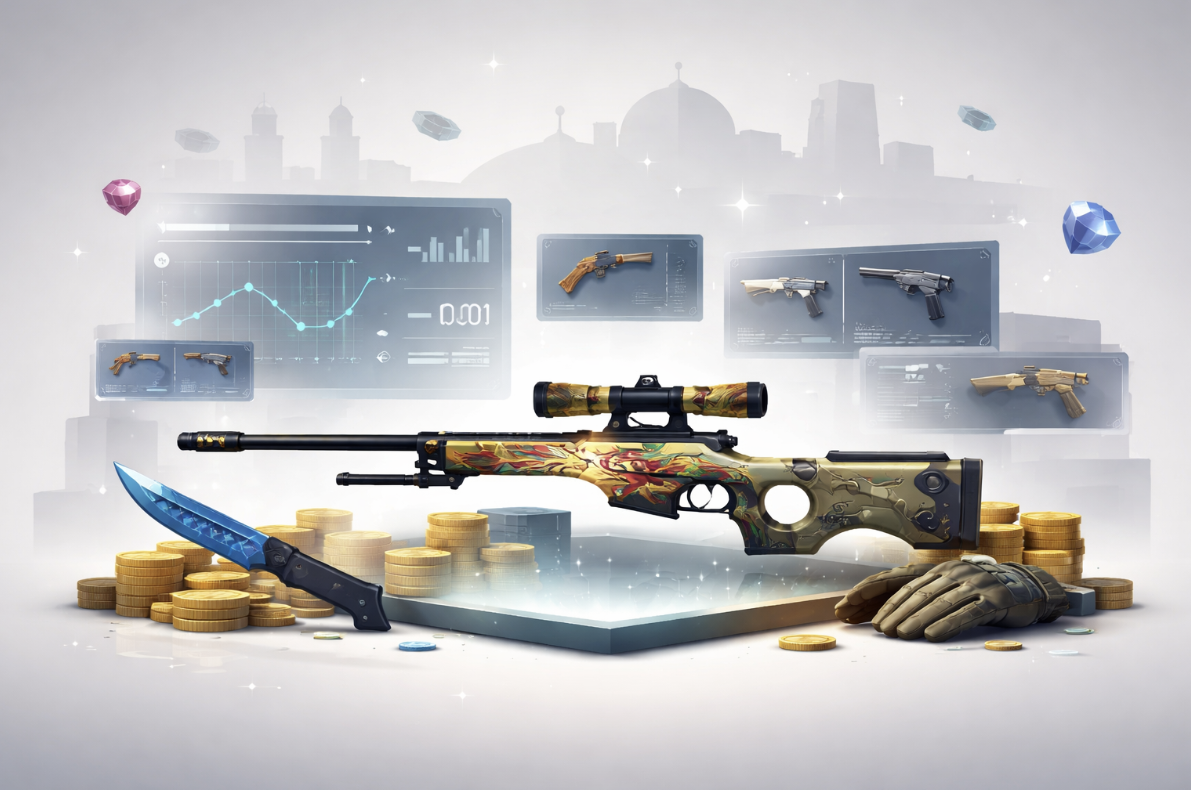
It’s hard to explain to someone who doesn’t game why a collection of pixels shaped like a sniper rifle is worth more than a mid-range sedan. If you zoom out, it looks insane. You have this digital object that offers zero competitive advantage. It doesn’t shoot straighter, it doesn’t reload faster, and it certainly doesn’t make you a better player. Yet, the economy surrounding these cosmetic items has evolved into a technological and financial beast that rivals legitimate stock exchanges.
We aren’t just talking about microtransactions anymore. We are talking about a macro-economy built on the back of float values, pattern indexes, and the kind of supply-and-demand volatility that would give a Wall Street broker an ulcer. At the peak of this insanity sits the legendary AWP | Dragon Lore. It’s the status symbol, the Rolex of the server. When you look up the dragon lore price, you aren’t just looking at a price tag for a game item; you’re looking at a valuation of digital scarcity that has persisted through game engine updates and market crashes. It is the perfect case study for how Valve accidentally created a financial powerhouse.
The Code Behind the Color
To understand why this market exists, you have to look at the underlying technology. At a glance, a skin is just a texture file wrapped around a 3D model. But under the hood of the Source 2 engine, it’s a lot more complex. When an item is dropped or unboxed, the game generates a specific set of data points that serve as that item’s DNA. This is where the tech gets interesting.
Every skin is assigned a “float value”—a floating-point number between 0 and 1. This isn’t just a random tag; it’s a precise coordinate that tells the game engine exactly how much “wear” to render on the weapon. A float of 0.001 might look pristine, while 0.45 looks like it was dragged behind a truck. This technical variable is what drives the obsession. It transforms a standard asset into a unique entity. You don’t just own a skin; you own this specific instance of that skin, with its unique mathematical degradation.
Then there is the “pattern seed.” For certain skins, the texture file is larger than the weapon model. The game randomly places the model onto the texture map based on a seed number. This technology created the “Blue Gem” phenomenon, where a specific seed results in a rare color placement, causing the value to skyrocket compared to an identical item with a slightly different coordinate. It is a brilliant mix of RNG (random number generation) and database management that forces players to inspect the code as much as the art.
The Great Migration: From GO to CS2
The transition from Global Offensive to Counter-Strike 2 wasn’t just a gameplay update; it was a stress test for a billion-dollar digital economy. When Valve announced the move to the Source 2 engine, the panic and excitement were palpable. The big question wasn’t about smoke grenades or tick rates; it was about lighting.
Source 2 utilizes physically based rendering (PBR). This technology changes how light interacts with materials. In the old engine, a skin looked relatively flat. in CS2, materials react to environmental lighting in real-time. Gold textures actually shimmer, and holographic stickers reflect the map’s ambient light. This technological leap caused massive turbulence in the CS2 skins market.
Suddenly, items that looked dull in the old engine were vibrant and highly sought after. The CS2 marketplace saw a frenzy of speculation. Traders were analyzing beta footage frame by frame, trying to predict which texture files would benefit most from the new lighting engine. It was speculation based on graphical rendering tech. The update proved that these assets aren’t static; they are living pieces of software that evolve with the platform.
Navigating the Digital Bazaars
If you want to dive into this ecosystem, you quickly realize that the official channels are only the tip of the iceberg. The steam marketplace CS2 is the default hub, the “walled garden” where transactions are safe but limited. The fees are high, and the money is trapped within the Steam ecosystem (wallet funds). For the casual user, it’s fine. But for the serious collector, it’s a bottleneck.
This limitation gave rise to a sprawling network of third-party platforms. Finding the best CS2 marketplace becomes a meta-game in itself. These external sites use the Steam API to facilitate trades while handling payments through real-world processors. It allows for a level of liquidity that Valve’s native system simply doesn’t support. This is where you see the real volume.
People are constantly hunting for the cheapest CS2 marketplace to arbitrage deals. They might buy an item on one platform where the localized pricing is lower and flip it on another. It’s a decentralized network of CS2 skin marketplace options that functions with surprising efficiency, despite operating in a grey area of regulation. The technology powering these trade bots—scripts that instantly send trade offers based on API calls—is impressive, if occasionally frustrating for the manual user.
The Psychology of the Inspect Key
Why do we care? Why does anyone care about Market CSGO skins or Market CSGO items? It comes down to digital permanence in an impermanent world. In many modern games, you buy a battle pass, you unlock a skin, and it’s account-bound. It’s yours to use, but not yours to own.
Counter-Strike bucked this trend by allowing open trade. The CS2 skins you hold are assets. You can trade them to a friend, sell them for funds to buy a new game, or cash them out on a skin marketplace CS2 . This perception of ownership fundamentally changes how the brain values the item. It triggers the same hoarding and collecting instincts as physical goods.
When you press the inspect key in-game, the camera pans over the weapon. You are admiring the float value, the sticker placement, and the rarity. It’s a flex. In a lobby of ten people, having a rare knife is a social signal. It says you are invested—literally. And because the CS2 marketplace steam tracks historical data, there is always that lingering thought: “This might be worth more next year.” It’s gamified investment, blending the dopamine hit of a frag with the dopamine hit of a capital gain.
The Volatility of Pixels
Of course, it’s not all up and to the right. The market is volatile. A single update from Valve can tank the value of a specific weapon case or skin line. We saw this with the release of CS2, where certain skins didn’t render exactly how people hoped, leading to sell-offs on every CS2 steam marketplace.
Furthermore, the “Rent-seeking” nature of the platform is real. Valve takes a cut, the best CS2 skin marketplace takes a cut, and the payment processor takes a cut. To make a profit, your asset has to appreciate significantly. It’s a high-friction economy. Yet, the volume remains staggering. Millions of dollars change hands daily, not in stock or crypto, but in painted polygons.
The search for the best CS2 marketplace is often driven by a desire to minimize these frictions. Users want lower fees and faster API response times. They want detailed 3D inspection tools that load the skin directly from the game files into a browser window, allowing them to check that float value before they buy. The infrastructure built around these skins is arguably more advanced than the inventory management systems of some actual retail companies.
The Future of Digital Heirlooms
We are entering an era where “digital heirlooms” are a genuine concept. There are accounts with inventories worth more than a house. These items have a history. A specific AWP Dragon Lore might have been used by a pro player in a major final, increasing its provenance and value.
The technology is keeping pace. We are seeing better float analyzers, more secure API integrations, and sophisticated tracking tools that monitor the marketplace CS2 trends in real-time. The barrier to entry is knowledge. You need to understand the tech—how the wear creates scratches, how the lighting engine interacts with normal maps, and how the trade hold system works.
In the end, whether you are browsing the CS2 skins market for a cheap playskin or watching the charts for high-tier investments, you are participating in one of the most fascinating experiments in digital ownership. It’s absurd, it’s risky, and it’s incredibly high-tech. The game creates the demand, but the technology—the databases, the render engines, and the APIs—creates the value.
So the next time you see someone running around Dust 2 with a weapon that costs as much as a semester of college, don’t just see a skin. See the floating points, the seed patterns, and the massive, decentralized economic engine that makes it all possible. It’s not just a game anymore; it’s a marketplace where bullets are free, but the style costs extra.


