
What Is Google Tabletop? Features and Waitlist Explained
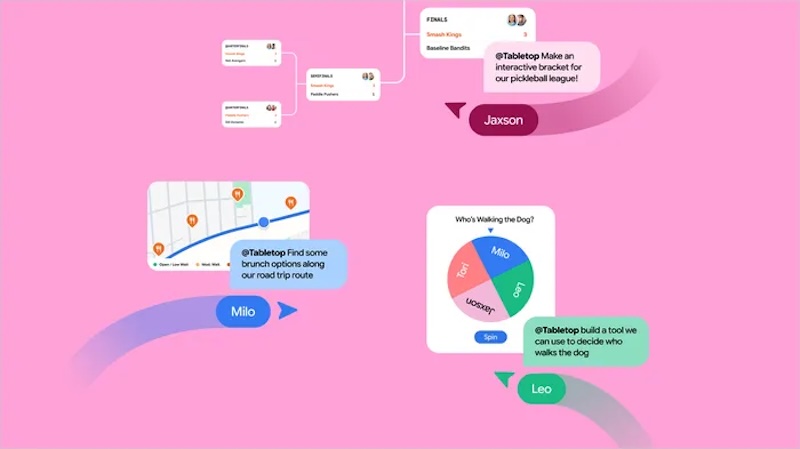
Google has unveiled Tabletop, a new Google Labs experiment designed to make organising activities with other people less scattered and more interactive. Instead of leaving plans buried in a busy group chat, the tool brings links, files and ideas into a shared space where participants can build plans and make decisions together.
The concept addresses a familiar problem: a conversation about a weekend trip or dinner gathering can quickly become a stream of suggestions, unanswered questions and hard-to-find details. Tabletop offers a dedicated place to turn that discussion into something the whole group can use.
From Shared Ideas to Interactive Plans
Tabletop goes beyond collecting information in a static document. Users can add their material, then ask the built-in AI assistant, accessed through @tabletop, to generate interactive planning tools. Starter templates provide another way to get a space up and running.
Google’s examples include trip itineraries, dinner polls, expense splitters and tournament brackets. Rather than requiring one person to assemble every element manually, the experiment uses AI to help turn the group’s information into a workable format.
Once a space is ready, its creator can share an invitation link in an existing group chat. Participants can then open it and collaborate simultaneously, with Google comparing the shared editing experience to working in a Google Doc.
Built for Decisions, Not Just Discussion
The emphasis is on helping groups move from exchanging suggestions to making choices. A dinner poll can give participants a clear way to register preferences, while a shared itinerary can keep the agreed plan in one place. Expense splitters and tournament brackets extend the idea beyond basic event organisation.
The supplied article also describes voting, reactions and real-time changes, alongside possible uses such as family chore charts, potluck planning and scavenger hunts.
That combination gives Tabletop a broader role than a conventional trip planner. It is presented as a flexible workspace for activities that require several people to contribute, coordinate or decide together.
AI Helps Set Up the Space
Tabletop’s AI component is central to creating these customised experiences. Users supply the links, files and ideas, then prompt the assistant to generate the interactive elements they need.
The distinction is important: Google is presenting the tool as a way to help people organise and participate, not as an assistant that independently settles the group’s plans. The shared space remains somewhere participants can review information and contribute together.
Its appeal will depend on whether that setup reduces the effort of organising an activity rather than adding another destination everyone must remember to check.
Access Starts With a US Waitlist
Tabletop is currently rolling out through a waitlist for users aged 18 and older in the United States. It remains a Google Labs experiment rather than a broadly available service.
According to the supplied article, requesting access requires a personal Gmail address. Google has not announced when availability might expand to other countries.
For now, Tabletop offers an early look at how AI-generated tools could support everyday collaboration: keeping the group chat for conversation while giving the actual plan a more structured home.


