
Xiaomi 18 Pro vs. iQOO 16 comparison: Display, cameras, battery and price
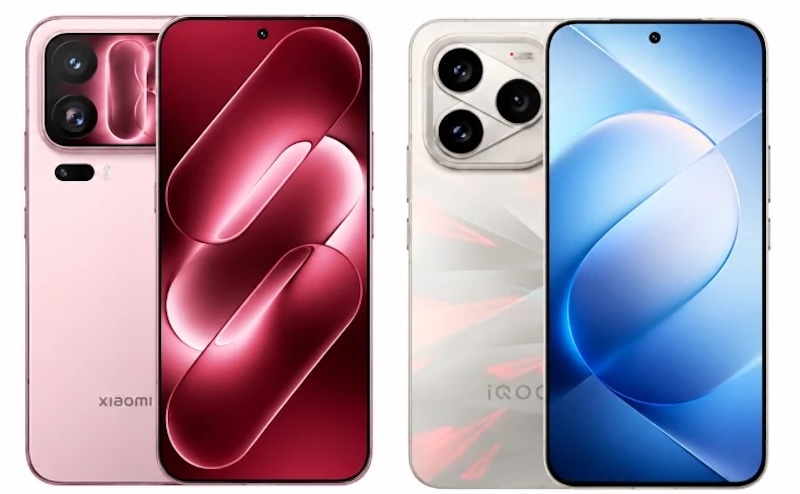
The iQOO 16 and Xiaomi 18 Pro represent two very different ideas of what a 2026 flagship should be. iQOO builds its phone around gaming, display speed and battery endurance; Xiaomi puts its money into photography, premium hardware and everyday versatility. Both use Snapdragon silicon, but the similarities largely end there.
The central question is simple: does iQOO’s performance-first package justify choosing it over Xiaomi’s more complete, camera-focused flagship?
Xiaomi 18 Pro vs. iQOO 16 specs comparison
|
Category |
iQOO 16 |
Xiaomi 18 Pro |
Advantage |
|
Build |
Aluminum frame; glass-fiber reinforced plastic or glass back |
Aluminum frame; Dragon Crystal Glass 3 |
Xiaomi |
|
Water resistance |
IP68/IP69 |
IP68 |
iQOO |
|
Display |
6.85-inch AMOLED, 1440 x 3168, 165Hz |
6.4-inch LTPO AMOLED, 1120 x 2436, 120Hz |
iQOO for gaming; Xiaomi for efficiency |
|
Claimed peak brightness |
10,000 nits |
4,000 nits |
iQOO, on paper |
|
Processor |
Snapdragon 8 Elite Extreme Gen 6 |
Snapdragon 8 Elite Gen 6 |
iQOO, on paper |
|
RAM and storage |
Up to 16GB RAM; up to 1TB UFS 4.1 |
Up to 16GB RAM; up to 1TB UFS 4.1 |
Tie |
|
Main camera |
50MP with OIS |
200MP with OIS and Leica optics |
Xiaomi |
|
Telephoto |
50MP periscope, 3x optical zoom |
200MP periscope, 3.2x optical zoom |
Xiaomi |
|
Selfie camera |
32MP |
50MP with autofocus |
Xiaomi |
|
Rear display |
Not specified |
2.7-inch secondary display |
Xiaomi |
|
Battery |
8,400mAh |
7,000mAh |
iQOO |
|
Wired charging |
100W |
100W |
Tie |
|
Wireless charging |
40W |
50W, plus 27W reverse wireless |
Xiaomi |
|
USB |
USB-C 3.2 |
USB-C 3.2 with DisplayPort |
Xiaomi |
|
Price |
About $800 / ₹83,000 |
About $1,000 / ₹1,20,000 |
iQOO |
Design and display
The iQOO 16 is the more performance-oriented device in both appearance and protection. Its aluminum frame is paired with either a glass-fiber reinforced plastic back or a glass back, depending on the variant. Its IP68/IP69 rating gives it an edge against dust, immersion and high-pressure water jets.
Xiaomi takes a more premium route. The 18 Pro uses Dragon Crystal Glass 3 on the front, an aluminum frame and IP68 protection. Its most distinctive feature is the 2.7-inch rear display, which can support quick interactions and let users frame selfies with the stronger rear cameras.
The display comparison favors iQOO for gaming. Its 6.85-inch AMOLED panel has a 1440p resolution and a 165Hz refresh rate, alongside Dolby Vision and HDR10+. Xiaomi’s 6.4-inch LTPO AMOLED is smaller and runs at 120Hz, but adaptive refresh should make it more efficient in ordinary use.
For competitive gaming and high-frame-rate content, iQOO is the clearer choice. Xiaomi is better suited to buyers who prefer a more compact flagship and value its adaptive display technology and rear screen.
Performance and battery
Both phones offer up to 16GB of RAM and 1TB of UFS 4.1 storage. The iQOO 16 uses the Snapdragon 8 Elite Extreme Gen 6, while the Xiaomi 18 Pro uses the Snapdragon 8 Elite Gen 6. Both run Android 17-based software—OriginOS 7 on iQOO and HyperOS 4 on Xiaomi.
On specifications alone, iQOO has the stronger gaming case. Its higher-tier chipset positioning, 165Hz display and bypass charging make it appealing for long sessions. Bypass charging can supply power directly to the phone during supported gaming, reducing reliance on the battery.
The iQOO’s 8,400mAh silicon-carbon battery is substantially larger than Xiaomi’s 7,000mAh cell. Both support 100W wired charging, but Xiaomi offers faster 50W wireless charging and 27W reverse wireless charging. For travelers and heavy users, iQOO’s capacity advantage may matter more; for accessory convenience, Xiaomi has the edge.
Cameras and video
This is where Xiaomi changes the conversation. The 18 Pro pairs a 200MP main sensor with OIS and Leica optics, a 200MP periscope telephoto with 3.2x optical zoom, and a 50MP autofocus ultrawide. It also supports 4K video at up to 120fps, HDR and LOG recording.
The iQOO 16 uses a more conventional triple-camera setup: a 50MP stabilized main camera, 50MP periscope telephoto with 3x optical zoom, and 50MP autofocus ultrawide. It remains versatile, but Xiaomi’s higher-resolution main and telephoto sensors offer greater cropping flexibility and more ambitious imaging potential.
The selfie comparison also favors Xiaomi. Its 50MP front camera has autofocus, while iQOO uses a 32MP fixed-focus unit. Xiaomi’s rear display adds another advantage: users can frame selfies with the main or telephoto camera rather than relying only on the front sensor.
Image quality will ultimately depend on processing, color tuning and low-light performance. Still, on hardware alone, Xiaomi is the stronger camera flagship.
Price and value
The iQOO 16 is listed at around $800, or ₹83,000, while the Xiaomi 18 Pro costs about $1,000, or ₹1,20,000. That is a meaningful premium, particularly in India.
iQOO spends its hardware budget on gaming performance, a faster display, bypass charging and a larger battery. Xiaomi directs its premium toward a 200MP Leica camera system, advanced video tools, a rear display and faster wireless charging.
For gamers and heavy users, the iQOO looks like the better value. Its strengths are practical and directly useful during extended gaming sessions. For photographers, videographers and buyers who want a more versatile flagship, Xiaomi’s higher price is easier to justify.
Verdict
The Xiaomi 18 Pro is the more complete flagship for buyers who prioritize photography, video and creative flexibility. Its 200MP Leica camera system, high-resolution telephoto, 50MP autofocus selfie camera, rear display and 4K 120fps recording give it a broader range of capabilities.
The iQOO 16, however, is the smarter purchase for gamers and power users. Its 165Hz display, 8,400mAh battery, bypass charging, IP68/IP69 protection and lower price make it the more focused performance phone.
Overall winner: Xiaomi 18 Pro for versatility and imaging. Better value: iQOO 16 for gaming, endurance and performance per rupee.
Related Posts
-
 RedMagic 11 Pro+ and 11 Pro launch: Snapdragon 8 Elite Gen 5, 144Hz AMOLED, under-display camera
-
 Acer to Launch Feature-Packed 5G Smartphones in India on April 15
-
 Vivo X300s Specs: Everything We Know About the New “SuperMax” Flagship
-
 HyperOS 3.1 Update: Xiaomi Eligible Devices and Complete Rollout Schedule