
iPhone Duo vs. Galaxy Z Fold 8: Two compact foldables, different trade-offs
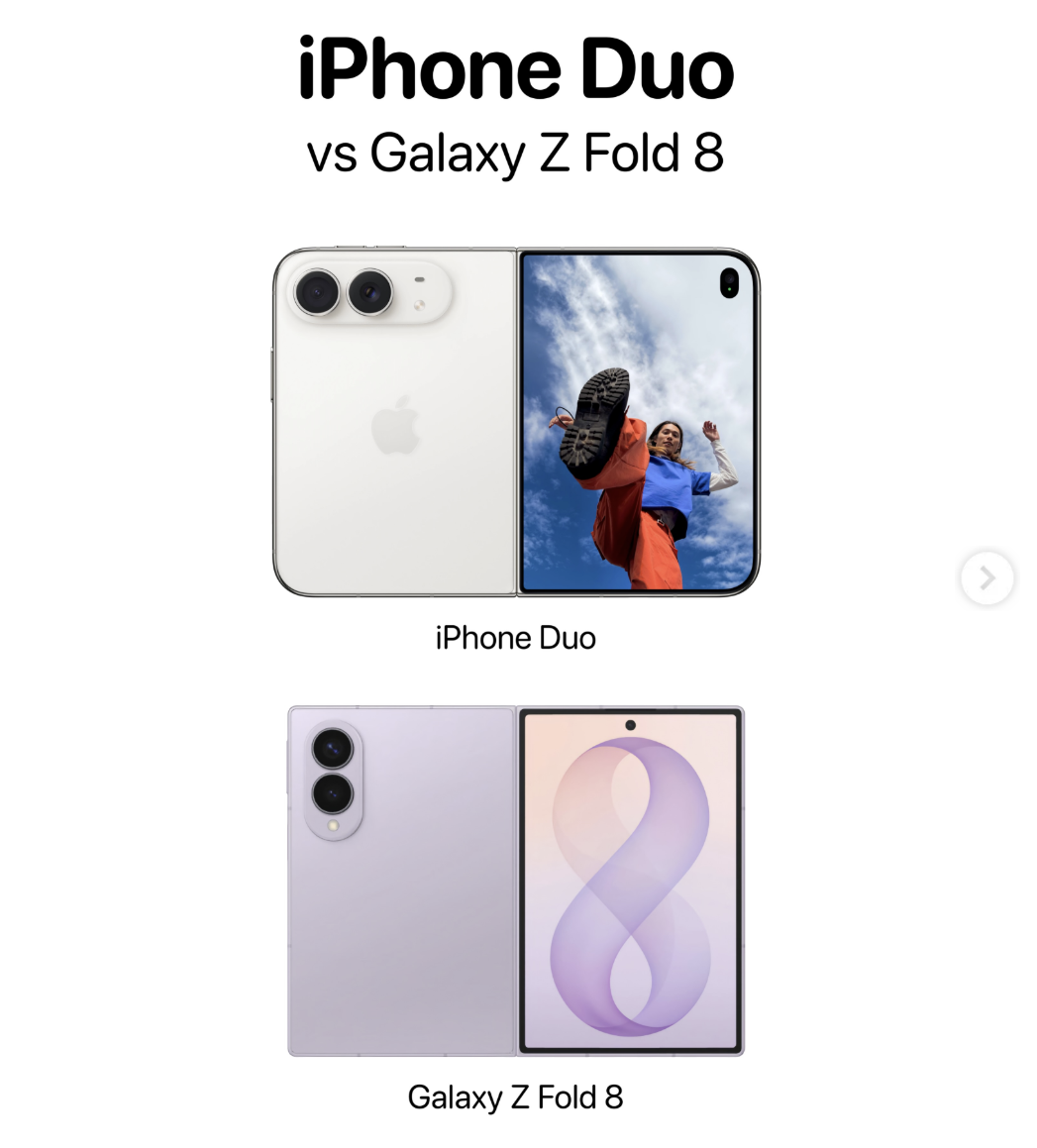
Apple’s first foldable iPhone and Samsung’s Galaxy Z Fold 8 share a similar idea: a compact phone that opens into a 7.6-inch screen. The iPhone Duo starts at $1,999 in the US and goes on sale October 23, while the already-available Z Fold 8 starts at $1,900. Apple offers a matte inner display and stronger rated dust protection; Samsung’s phone is considerably lighter.
iPhone Duo vs. Galaxy Z Fold 8 Specs compared
Apple’s published specifications give the Duo a 2034 × 1398-pixel cover display and confirm an inner under-display camera. Both details differ from figures or omissions in the supplied comparison.
Displays and handling
Both phones offer small cover screens for quick tasks and much roomier inner screens for reading, video and working across apps. The Z Fold 8’s 5.5-inch outer display is only slightly larger than the Duo’s 5.4-inch screen, but their weight difference is substantial: Samsung’s phone is 53g lighter. It is also thinner when open and closed.
The Duo’s matte inner display is designed to reduce glare and make the fold less noticeable. Samsung uses an anti-reflective finish and a display structure intended to minimize its crease. Apple’s approach may appeal to people who often use a tablet-sized screen in bright surroundings, though a direct, extended comparison is needed to judge which display works better in practice.
Durability ratings provide a more definite distinction. IP68 gives the Duo rated protection against dust and water under specified test conditions. The Z Fold 8’s IP48 rating provides water resistance but does not certify protection against fine dust or sand. Neither phone should be treated as permanently waterproof; resistance can diminish with wear.
Cameras and battery life
Neither foldable has a dedicated telephoto camera. Apple pairs a 48MP main camera with a 48MP ultrawide, while Samsung uses 50MP sensors for both roles. The Z Fold 8 has already shown that it can take good everyday photos, but the Duo needs comparable real-world testing before its cameras can be fairly judged.
Battery figures do not offer a straightforward comparison. Samsung lists a 4,800mAh capacity, and reported testing found that the Z Fold 8 could last through a full day. Apple does not publish the Duo’s battery capacity; its claim of up to 24 hours of typical use is not directly comparable with Samsung’s capacity or another reviewer’s endurance test. The Duo’s battery life remains an open question until it is tested under similar conditions.
Which should you choose? iPhone Duo or Galaxy Z Fold 8
The Galaxy Z Fold 8 is the easier phone to assess today. It is already on sale, lighter and thinner, and its cameras and endurance have been tested in everyday use. The iPhone Duo is the natural alternative for someone who wants a foldable without leaving iOS, especially if its matte screen, MagSafe support and IP68 rating are priorities.
At just $99 apart in starting US prices, the choice is less about the headline cost than the experience you want when the phone is folded—and the software you want when it is open.


