
Qualcomm Adreno GPU Gets AI Matrix Cores, 40% Power Savings and 1.45GHz Clock
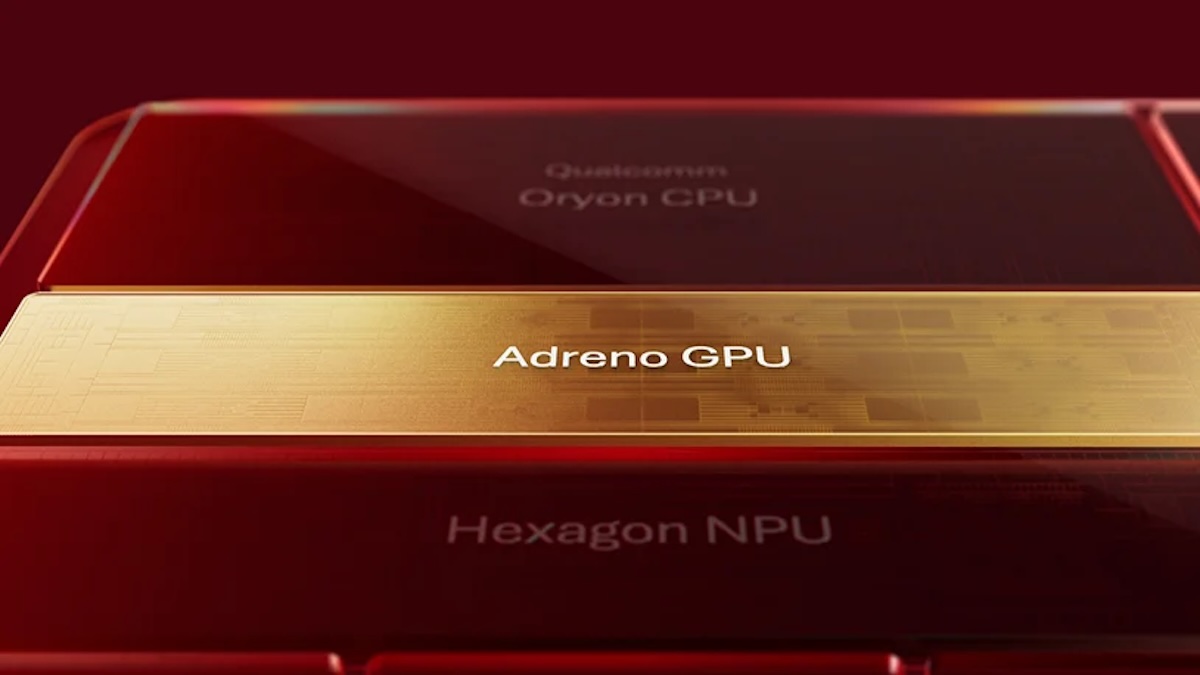
Following earlier disclosures about CPU improvements, Qualcomm has now revealed additional details about its upcoming Adreno GPU. The most significant addition is a new architecture element called the Adreno Matrix Core, designed to accelerate on-device AI workloads with lower latency and improved power efficiency.
Adreno Matrix Cores bring AI to the GPU
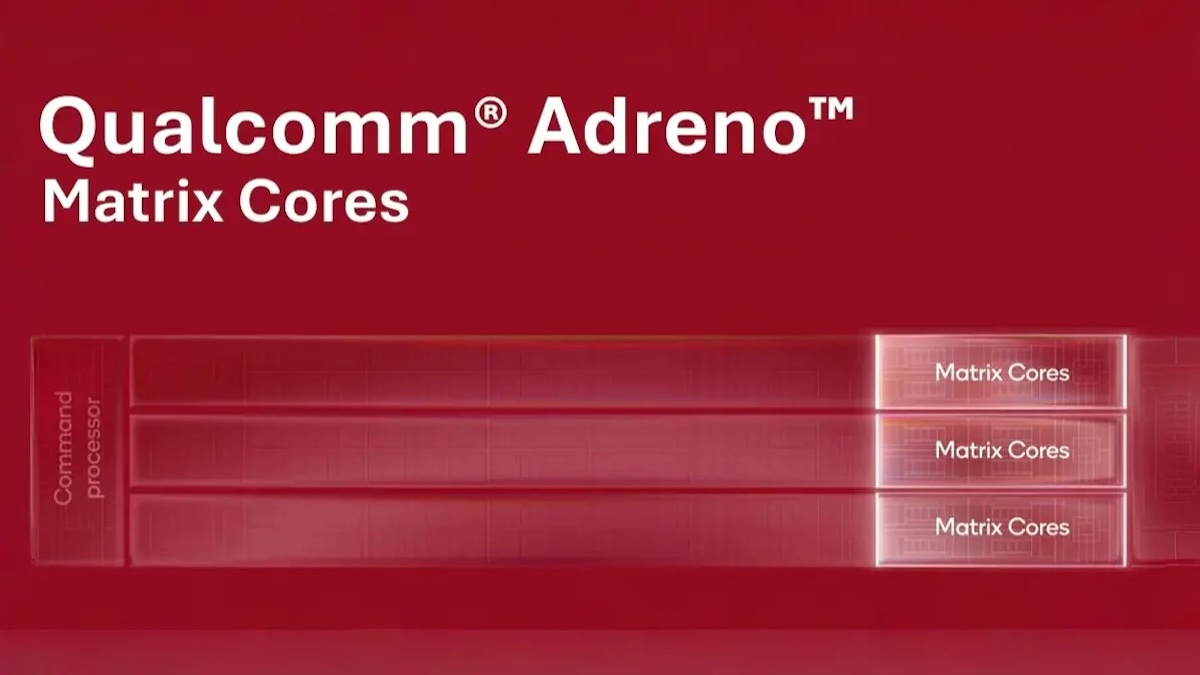
According to Qualcomm’s schematics, the new GPU will incorporate three Adreno Matrix Cores. These cores are specifically engineered to handle local AI tasks, extending the SME matrix approach that Qualcomm first introduced in its CPUs last year. The company is now applying a similar concept to the graphics subsystem to boost AI performance directly on the GPU.
These Matrix Cores form the foundation of Qualcomm’s new Adreno Neural Fusion technology. Compared with previous generations, Neural Fusion is said to:
-
Reduce common image artifacts such as flickering and ghosting
-
Deliver more consistent performance across varying workloads
-
Produce sharper details in rendered images
-
Cut power consumption by up to 40% in certain scenarios
Matrix Cores for Gaming benefits: frame generation and upscaling
For gamers, the practical impact of Neural Fusion should be most visible in:
-
Improved frame generation
-
More advanced image upscaling
Qualcomm has already confirmed that both Unreal Engine and Unity will support these features, which should simplify adoption for developers and accelerate the arrival of compatible games.
Three-slice GPU architecture and higher clocks
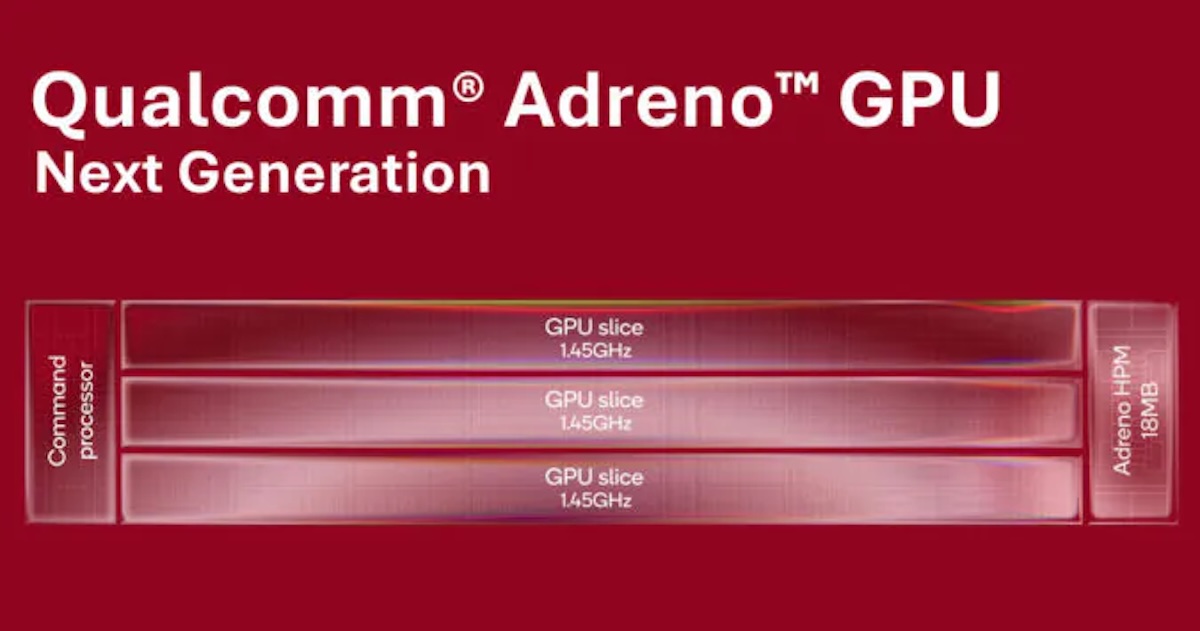
At the architectural level, the next-generation Adreno GPU adopts a three-slice design. This approach divides shader cores and related hardware into separate sections, allowing the system to allocate power and performance more precisely depending on workload demands.
Key specifications and improvements include:
-
GPU clock speed of 1.45 GHz, up from 1.2 GHz on the Snapdragon 8 Elite Gen 5
-
18 MB of Adreno high-performance memory
-
Approximately 12% better energy efficiency compared to the previous generation
The broader platform also integrates:
-
Qualcomm X105 modem
-
FastConnect 8800 connectivity suite
CPU context: 5GHz Oryon and FlexCache
Earlier CPU details remain relevant to the overall performance picture. The upcoming processor will feature an Oryon CPU capable of reaching 5 GHz, marking the first time a smartphone chip has crossed that threshold. It will also use a FlexCache architecture designed to handle instruction data more efficiently.
Taken together, the Snapdragon 8 Elite Gen 6 series appears poised to deliver a substantial leap in both CPU and GPU performance. As always, the ultimate test will be how effectively smartphone manufacturers optimize their software and thermal designs to fully exploit the chip’s capabilities.


