
Samsung Exynos 2700 Reportedly Outperforms Qualcomm’s Next Flagship Chips
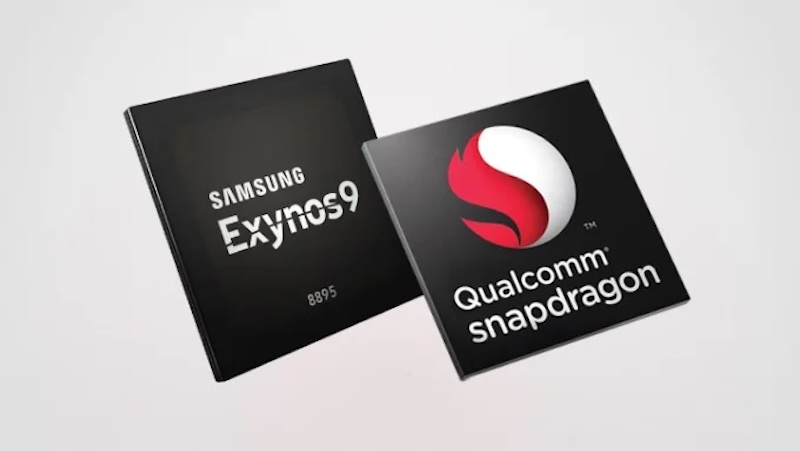
Samsung’s upcoming Exynos 2700 processor could represent a major turning point for the company’s in-house mobile chipset strategy. A new report claims that the next-generation Exynos platform has outperformed Qualcomm’s expected Snapdragon 8 Elite Gen 6 and Snapdragon 8 Elite Gen 6 Pro chips in several internal tests, including CPU performance, power efficiency and AI processing.
The Exynos 2700 is widely expected to power at least some Galaxy S27 models, depending on the market. That prospect may raise concerns among users who remember earlier Exynos-powered Galaxy flagships, which often struggled to match their Snapdragon counterparts in sustained gaming performance, heat management and battery efficiency.
If the latest figures are accurate, Samsung could be preparing its most competitive Exynos processor yet. However, the numbers come from internal testing and should be treated with caution until independent comparisons are available.
Exynos 2700 reportedly leads in multicore testing
According to a report citing industry sources, Samsung evaluated the Exynos 2700 against Qualcomm’s upcoming Snapdragon 8 Elite Gen 6 family and found that its own processor delivered stronger results across multiple categories.
The most striking claim concerns Geekbench 6.5 multicore performance. The Exynos 2700 reportedly achieved a score that was 19 percent higher than the standard Snapdragon 8 Elite Gen 6. It was also said to outperform the more advanced Snapdragon 8 Elite Gen 6 Pro by 9.5 percent.
On paper, those figures would put Samsung in an unusually strong position. Qualcomm has traditionally held a reputation for delivering superior flagship Android performance, particularly in demanding workloads such as gaming, graphics processing and sustained operation under load.
A 19 percent advantage in multicore performance would be particularly significant, as modern smartphones increasingly rely on multiple CPU cores for demanding activities such as high-resolution video processing, image editing, multitasking and local AI features.
Still, benchmark results do not automatically translate into a better phone. Performance claims need to be measured in real devices, under comparable conditions, with the same cooling systems, display settings, software versions and battery levels.
Efficiency could be the more important story
Raw benchmark scores may attract the most attention, but Samsung’s claimed efficiency gains could matter even more for Galaxy S27 buyers.
The report says the Exynos 2700 delivered 5 percent better peak performance than the Snapdragon 8 Elite Gen 6 Pro while using around 12.7 percent less power. It also allegedly performed 24 percent better during low-power testing.
If those results reflect real-world behaviour, the Exynos 2700 could potentially offer better sustained performance, lower heat output and improved battery life. These are areas where Samsung’s previous Exynos processors have faced criticism, particularly when compared with Snapdragon-equipped versions of the same Galaxy flagship.
Gaming performance depends on far more than a processor’s peak output. A chip must maintain its speed without overheating, aggressively throttling or draining the battery at an alarming rate. A processor that performs slightly below its peak but remains stable for long periods can provide a better experience than one that delivers record-breaking benchmarks for a few minutes before reducing performance.
Samsung’s reported efficiency improvements therefore deserve close attention. If the company has genuinely reduced power consumption while raising performance, it may have addressed one of the most persistent concerns surrounding Exynos-powered Galaxy devices.
Exynos 2700: AI performance is also reportedly stronger
Artificial intelligence is becoming a central part of modern flagship smartphones, from image generation and live translation to voice processing, personal assistants and camera enhancement.
The report claims that the Exynos 2700 performed better than Qualcomm’s Snapdragon 8 Elite Gen 6 Pro in AI-related tasks. Samsung’s chip was reportedly 18 percent faster at generating responses and 5 percent faster at recognising and processing user prompts.
These gains could be important for the Galaxy S27 series, especially if Samsung continues to expand AI features throughout its software. Faster on-device processing could make AI tools feel more responsive while reducing reliance on cloud-based services.
That said, AI benchmarks can be particularly difficult to compare. Results may depend on the model used, the precision level, the software framework and whether a workload is optimised specifically for a particular neural-processing unit. Until both platforms are tested using identical workloads, Samsung’s claimed advantage remains unproven.
A promising claim, but not a final verdict
The Exynos 2700 could become a genuine milestone for Samsung’s semiconductor division if it can outperform Qualcomm’s next flagship chips in independent tests. It would signal that Samsung is no longer merely trying to close the gap with Snapdragon but is capable of competing at the very top of the Android market.
However, Samsung has made ambitious performance claims for Exynos processors before. Previous generations have occasionally shown strong early benchmark figures, only for retail devices to reveal weaker sustained performance, higher temperatures or less impressive efficiency than expected.
Internal comparisons should always be viewed carefully. Companies can choose the test conditions, software builds and workloads that present their hardware in the most favourable light. The decisive test will come when Exynos 2700-powered Galaxy S27 models and Snapdragon 8 Elite Gen 6 devices are available for side-by-side testing.
Until then, the reported results are encouraging for Samsung fans, but they are not yet proof that the Exynos 2700 has finally surpassed Qualcomm’s flagship silicon.


