
Huawei Pura 90s Pro and Pro Max Go Global With 200MP Telephoto Cameras and 5G
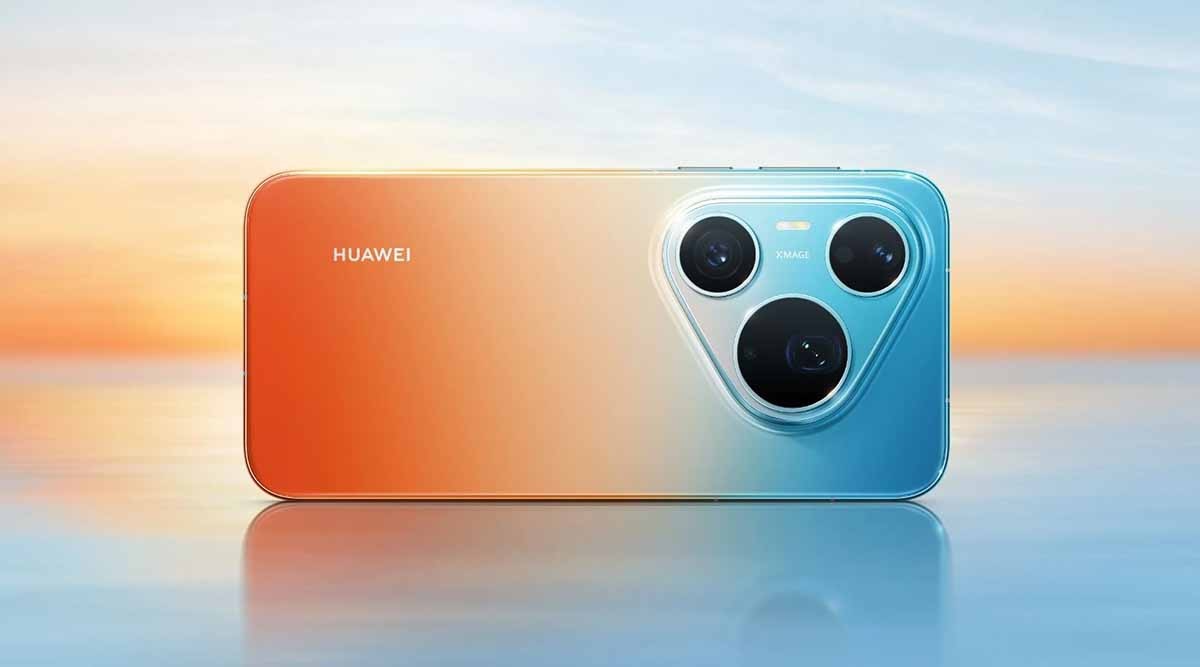
Huawei first introduced the Pura 90 Pro and Pura 90 Pro Max in China earlier this year. The new Pura 90s variants bring closely related hardware to international buyers, with a phased rollout beginning in selected Asian markets and a dedicated Middle East launch scheduled for July 16.
The Pura 90s Pro and Pro Max follow the same overall formula, but Huawei has clearly positioned the Max as the more ambitious imaging model. Differences extend beyond display size to telephoto camera hardware, charging speeds, durability glass and overall dimensions.
Both devices use Huawei’s Kirin 9030S processor, a new HiSilicon chip succeeding the Kirin 9020 used in the preceding Pura 80 generation. Huawei has not yet disclosed extensive technical detail about the chipset, so its real-world performance and efficiency will need independent testing.
Pro Max Targets Photography
The Huawei Pura 90s Pro Max introduces what Huawei describes as the industry’s first 200MP RYYB telephoto sensor. RYYB camera sensors replace some conventional green sub-pixels with yellow ones, a design Huawei has used for years to improve light capture in difficult lighting conditions.
The 200MP sensor measures 1/1.28 inches and sits behind an f/2.6 lens with fixed 4x optical zoom. Unlike the Pura 80 Ultra’s more complex switchable-lens system, Huawei has opted for a fixed optical configuration this time. The company says the phone can reach 20x telephoto video through real-time RAW processing, while the lens also supports macro photography and CIPA 7.0-rated stabilisation.

The main camera uses a 50MP, 1/1.28-inch RYYB sensor with LOFIC technology, designed to extend dynamic range. Its optical image stabilisation-equipped lens has a variable aperture ranging from f/1.4 to f/4.0 across ten settings. The setup is completed by a 40MP RYYB ultra-wide camera with an f/2.2 aperture.
The standard Pura 90s Pro also includes a 4x telephoto camera, although its sensor is a 50MP unit rather than a 200MP one. It uses an optically stabilised f/2.1 lens and supports close-range macro shots from as little as 5 cm away.
Its main camera is based on the same 50MP, 1/1.28-inch RYYB sensor format as the Pro Max, but omits LOFIC technology. The ultra-wide camera is also scaled back to a 12.5MP RYYB sensor paired with an f/2.2 lens.
Larger Displays, Stronger Protection
The Pura 90s Pro has a 6.6-inch flat LTPO display with a 1Hz to 120Hz refresh rate and 1,256 x 2,760-pixel resolution. It is protected by second-generation Kunlun Glass.


