
Galaxy Z Fold 8, Z Fold 8 Ultra, and Galaxy S26 Ultra compared side by side
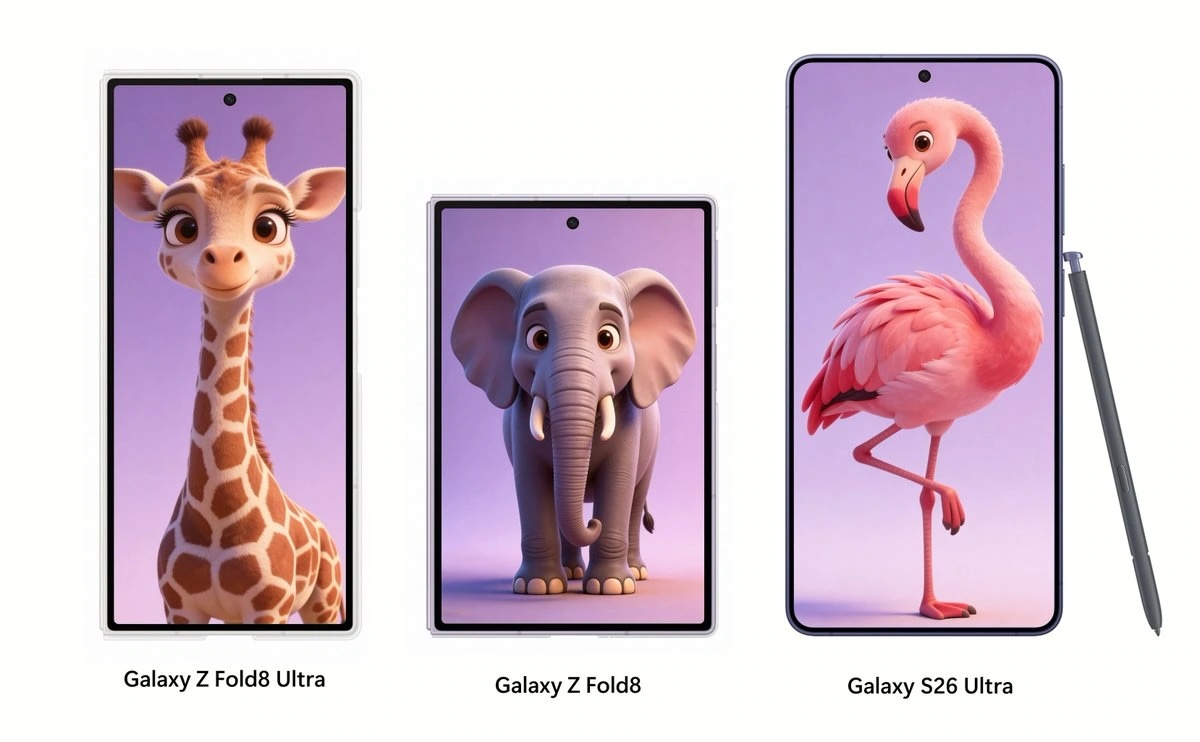
A newly surfaced comparison image is drawing attention to the striking size differences between Samsung’s next premium flagships. The image, reportedly showing the Galaxy Z Fold 8, Galaxy Z Fold 8 Ultra, and Galaxy S26 Ultra side by side, suggests that Samsung is pushing its foldable line even further away from the dimensions of a conventional flagship phone.
The biggest takeaway is not simply that the foldables are larger, but that they appear to serve a very different purpose in Samsung’s product strategy. The Galaxy S26 Ultra still looks positioned as the company’s traditional top-tier slab phone, built around a familiar narrow and tall body. By contrast, the Galaxy Z Fold 8 line appears designed to prioritize screen real estate and productivity, especially when unfolded into a tablet-like format.
Reported dimensions from comparison listings help explain why the contrast is so noticeable. The Galaxy S26 Ultra is listed at around 163.6 x 78.1 x 7.9 mm, while the Galaxy Z Fold 8 is said to measure roughly 158.4 x 143.2 x 4.2 mm when unfolded, or 158.4 x 72.8 x 8.9 mm when folded. That means the Fold model is dramatically thinner when open, but also much wider in its expanded state, giving it a form factor that sits closer to a compact tablet than a standard smartphone.
Display size reinforces the same story. Current comparison databases point to the Galaxy S26 Ultra using a 6.9-inch main display, while the Galaxy Z Fold 8 is associated with an 8-inch to 8.2-inch foldable inner panel and a secondary outer screen in the mid-6-inch range. In practical terms, that puts the foldable in a different usage category, one aimed less at one-handed convenience and more at multitasking, media, and split-screen work.
The mention of a Galaxy Z Fold 8 Ultra adds another layer of interest. While detailed specifications remain less clear, the branding alone suggests Samsung may be trying to create a new internal hierarchy inside its foldable family, potentially mirroring the Ultra identity it has long used for its highest-end conventional flagships. If so, the side-by-side image may be less about pure size comparison and more about signaling that Samsung wants foldables to stand as a separate premium class rather than a niche alternative.
As always with early visual leaks, a degree of caution is necessary. The image and dimension comparisons may not reflect final retail units, and Samsung has not officially confirmed the full positioning of every model. Even so, the emerging picture is fairly consistent: the Galaxy S26 Ultra remains the refined flagship phone for users who want a classic premium experience, while the Z Fold 8 family appears built for those who want their phone to behave more like a pocket tablet.


