
Your next Android phone may need 12GB RAM for Google’s latest AI features
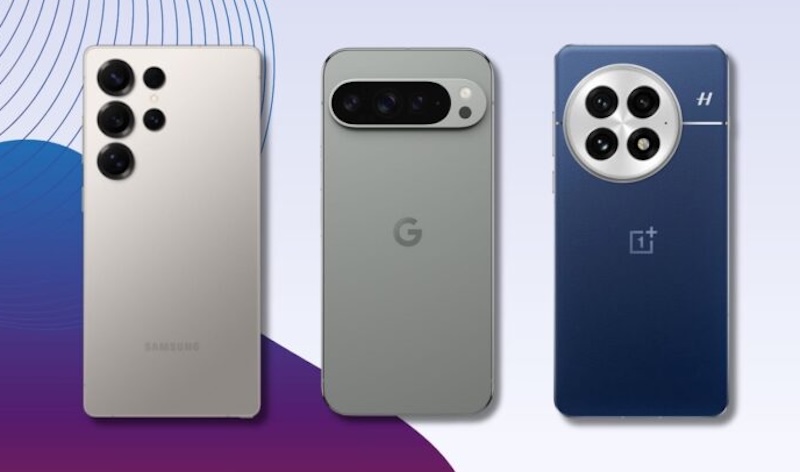
In 2026, the RAM discussion around smartphones is no longer just about smooth multitasking. Google’s latest on-device AI push has effectively raised the meaningful threshold to 12GB, turning memory capacity from a nice-to-have specification into a practical requirement for the next generation of Android AI features.
12GB RAM is the new standard
For years, smartphone RAM followed a fairly predictable logic: 4GB was the entry point, 6GB felt comfortable, and 8GB was enough for most people to stop thinking about memory altogether. That logic is now beginning to shift, not because day-to-day smartphone use suddenly became dramatically heavier, but because on-device AI is starting to place very different demands on modern hardware.
At the most basic level, RAM is the phone’s short-term working memory. It holds apps, browser tabs, and active processes while they are in use, which is why more RAM generally means fewer reloads and smoother multitasking. For conventional smartphone use in 2026, 8GB still remains adequate for many users, while Google’s baseline for full Android services now starts at 6GB. The issue is that “adequate for everyday use” is no longer the same as “ready for the newest local AI features.”
That distinction became more important after Google introduced Gemini Intelligence, a new on-device AI layer designed to power features such as Rambler voice cleanup, custom widget generation through Create My Widget, and more advanced cross-app automation. Because these tasks are meant to run locally instead of relying entirely on the cloud, Google has attached stricter hardware requirements to the experience.
According to the published criteria, Gemini Intelligence requires at least 12GB of RAM, a flagship-grade chipset, Gemini Nano v3, Android AICore support, and long-term software commitments from the device maker, including at least five major Android upgrades and six years of security updates delivered at least quarterly. In practice, that makes 12GB the new minimum that matters for users who want access to Google’s most advanced on-device AI tools, even if it is not yet essential for ordinary smartphone use.
The RAM figure is important, but it is not the only barrier. Gemini Nano v3 appears to be the requirement that excludes the largest number of otherwise capable devices. As several reports have noted, many recent premium phones still run Nano v2, which means they do not currently qualify for Gemini Intelligence despite offering flagship chips and, in some cases, substantial memory.
That includes a number of expensive 2025 phones. Reports indicate that the Pixel 9 family, Samsung’s Galaxy S25 series, the Galaxy Z Fold 7, the Galaxy Z Flip 7, and the OnePlus 13 are among the devices currently left out because they remain on Nano v2 instead of v3. Google has not confirmed whether some of these models will later be updated to Nano v3, so their long-term status remains uncertain.
By contrast, the list of devices currently associated with Nano v3 support is dominated by newer 2026 launches. Reported examples include the Pixel 10 family, Galaxy S26 series, Galaxy Z Fold 8 and Z Flip 8, OnePlus 15 and 15R, Honor Magic 8 Pro, iQOO 15, Realme GT 7T, several OPPO and Vivo flagships, and select Xiaomi models such as the Xiaomi 15 series, Xiaomi 15 Ultra, and Xiaomi 14T Pro. The pattern is clear: most phones that qualify today are either very recent flagships or products launched with Google’s new AI requirements already in mind.
Apple’s approach is somewhat simpler. Apple Intelligence requires 8GB of RAM, which means support begins with the iPhone 15 Pro and iPhone 15 Pro Max, while subsequent generations such as the iPhone 16 family are also expected to meet that standard. Compared with Google’s current Android requirements, Apple’s threshold is lower, even though its support is still limited to relatively recent premium devices.
The broader takeaway is that RAM is becoming a more strategic specification again. For ordinary use, 8GB still remains enough for many people, but for buyers who want their next phone to support the latest generation of on-device AI, 12GB is quickly becoming the safer benchmark on Android.


