
Why Are Infinix Mobile Prices Rising in Pakistan? Market Facts and Price Trends
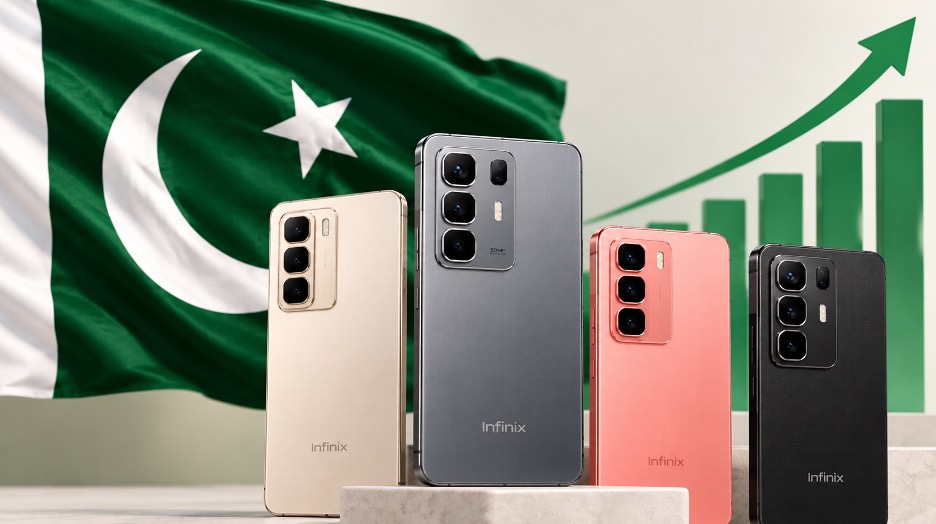
For years, Infinix has been one of the most popular mobile brands in Pakistan. The reason was simple: they offered big screens, large batteries, and good cameras at prices that students, office workers, and daily commuters could easily afford. A dependable phone from their Smart or Hot series could easily be bought for Rs. 15,000 to Rs. 25,000.
However, over the past couple of years, prices across the entire mobile market have climbed sharply. Today, entry-level Infinix phones cost between Rs. 25,000 and Rs. 35,000, while popular mid-range models now sit between Rs. 50,000 and Rs. 75,000. Premium and gaming models even cross Rs. 85,000 to Rs. 150,000.
Many consumers wonder why this is happening, especially since Infinix assembles phones inside Pakistan. The reality comes down to three main reasons: a direct 18% sales tax, currency exchange rates on imported parts, and significant hardware upgrades.
1. The 18% Sales Tax: A Big Shift for Budget Phones
The biggest and most direct reason for the price increase is the recent change in government tax policy.
In the past, smartphones priced under $200 (around Rs. 55,000) had special concessionary tax rates under the Ninth Schedule of the Sales Tax Act. Under that system, budget phones paid a low, fixed sales tax of roughly Rs. 1,680 to Rs. 3,000 per device. This fixed tax kept retail prices stable and affordable for everyday buyers.
Recently, the government ended these fixed tax slabs and introduced a flat 18% sales tax on all mobile phones, regardless of their price:
- On an entry-level smartphone priced at Rs. 25,000, an 18% sales tax immediately adds Rs. 4,500 to the bill.
- On a mid-range phone costing Rs. 50,000, the sales tax adds Rs. 9,000.
- On top of this, withholding tax (WHT) of 5.5% to 11% is collected at different stages of supply, adding further to the retail cost.
Because tax is now calculated as a percentage instead of a small fixed rupee amount, every single phone automatically costs thousands of rupees more at checkout.
2. Why Locally Assembled Phones Still Depend on the US Dollar
Infinix phones sold in Pakistan carry the “Assembled in Pakistan” tag, leading many buyers to believe they should be protected from currency changes. However, local plants only assemble Completely Knocked Down (CKD) and Semi-Knocked Down (SKD) kits imported from abroad.
Pakistan does not produce processors, camera sensors, or mobile screens locally. Critical components—like MediaTek processors, Samsung camera sensors, and AMOLED displays—must be purchased from global suppliers in US Dollars.
When these component kits arrive at Pakistani ports, customs duties and taxes are calculated based on the prevailing dollar exchange rate. When the rupee weakens, the cost of importing these parts rises immediately. Even though local workers put the phone together in Karachi or Lahore, the base cost of parts is directly tied to the international market.
3. Real Price Comparison: Past Models vs Current Models
To see how much prices have changed, look at the actual official launch prices of popular Infinix models in Pakistan over recent product cycles:
| Category | Previous Models & Launch Price | Recent Models & Official Price
|
| Smart Series
(Entry Level) |
• Smart 6: Rs. 17,999
• Smart 7: Rs. 21,999 |
• Smart 8: Rs. 22,999
• Smart 9: Rs. 26,999 |
| Hot Series
(Everyday All-Rounder) |
• Hot 12: Rs. 26,999
• Hot 30: Rs. 34,999 |
• Hot 40 Pro: Rs. 44,999 – Rs. 48,999
• Hot 50 Pro: Rs. 49,200 (8GB/256GB) • Hot 50 Pro Plus: Rs. 58,999 |
| Note Series
(Mid-Range) |
• Note 12: Rs. 39,999
• Note 30 Pro: Rs. 64,999 |
• Note 40: Rs. 54,999
• Note 40 Pro: Rs. 74,999 (AMOLED, 70W charging) • Note 40 Pro+ 5G: Rs. 89,999 – Rs. 94,999 |
| GT & Zero Series
(Gaming & Premium) |
• Zero 30: Rs. 59,999 – Rs. 64,999 | • Zero 40 (4G): Rs. 62,999
• GT 20 Pro: Rs. 79,999 – Rs. 84,999 • Zero Flip: Rs. 234,999 |
According to market monitoring of the latest Infinix mobile price in Pakistan, the baseline cost of buying a new phone has gone up by roughly 50% to 70% compared to three years ago.
4. Upgraded Features: Basic Phones Are No Longer Made
Taxes and currency rates are not the only factors. The phones themselves have changed significantly. A few years ago, a budget phone came with 32GB storage, 2GB RAM, a basic 60Hz display, and slow 10W micro-USB charging.
Today, consumer needs have increased, and basic specifications have been upgraded:
- Higher Storage and Memory: Apps like WhatsApp, banking services, and ride-sharing require more room. Because of this, 64GB and 128GB have become the new minimum standards, replacing older 32GB chips.
- Smoother Displays: 90Hz and 120Hz refresh rates are now standard even on budget Smart series phones, while Note series devices feature curved AMOLED screens with in-display fingerprint sensors.
- Faster Charging: Old 10W chargers are gone. Modern models now include 33W, 45W, or even 70W fast chargers right in the box, which adds to the packaging and manufacturing cost.
5. How Pakistani Buyers Are Handling Higher Prices
Because a new smartphone now represents a noticeable investment, consumer habits in markets like Hafeez Centre in Lahore, Saddar in Karachi, and online platforms have evolved:
- Checking Authenticity and Warranty: With higher prices, buyers avoid gray-market or opened boxes. When browsing Infinix phones in Pakistan, customers look for officially sealed boxes with PTA approval and a valid 12-month Carlcare warranty.
- Holding Phones Longer: Instead of changing phones every year, users now keep their handsets for two to three years.
- Using Installment Plans: Many retail shops and online stores now offer monthly installment options (BNPL) to help buyers spread out payments for phones above Rs. 40,000.
Conclusion
The days of finding a full-featured new smartphone for Rs. 15,000 in Pakistan are over. The price increases seen across Infinix’s lineup are driven by real economic realities: an 18% sales tax, import costs on CKD kits, and better hardware across every series. While phones cost more today, buyers also receive much faster processors, clearer screens, and quicker charging than older budget models ever offered.

