
Xiaomi 18 Pro Max vs Honor Magic 9 Pro Max: Specs, Cameras, and Price Compared
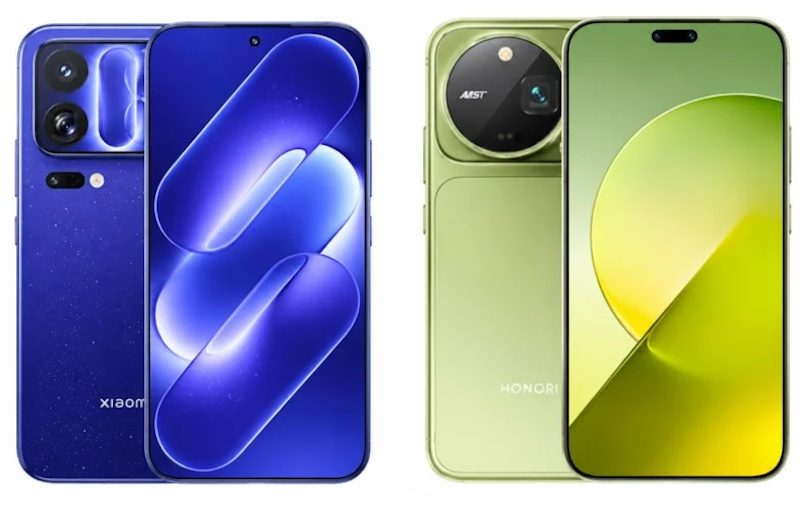
The ultra-premium smartphone market in 2026 is defined by excess, and the Xiaomi 18 Pro Max and Honor Magic 9 Pro Max are two of its most extravagant contenders. Both devices are engineered around Qualcomm’s cutting-edge 2nm Snapdragon 8 Elite Extreme Gen 6 chipset, groundbreaking dual-200MP camera arrays, and massive silicon-carbon batteries. However, beneath the shared silicon, these flagships present fundamentally different visions of top-tier mobile technology: Xiaomi experiments with secondary screens and Leica-tuned optics, while Honor doubles down on extreme durability, battery endurance, and aggressive pricing.
Design and Display Integration
Xiaomi takes a highly unconventional approach to its chassis by integrating a 2.9-inch AMOLED secondary display on the rear panel, allowing users to check notifications, control media, or frame high-res selfies without activating the main screen. The front is protected by proprietary Dragon Crystal Glass 3, and the device carries a standard IP68 rating. Honor opts for a more traditional aesthetic but reinforces its build with an IP69K rating, meaning the phone is entirely sealed against high-pressure, high-temperature water jets.
For the primary viewing experience, Honor takes a slight lead in raw visual fidelity. Its 6.8-inch LTPO OLED panel features a sharper 1.5K-class resolution (1320 x 2868), an anti-reflective coating, and an astounding claimed peak brightness of 10,000 nits. Xiaomi’s larger 6.9-inch LTPO AMOLED display peaks at 4,000 nits, which remains exceptionally bright but falls short of Honor’s extreme metric.
Performance, Battery, and Longevity
Both smartphones are powered by Qualcomm’s 2nm Snapdragon 8 Elite Extreme Gen 6 processor paired with the Adreno 850 GPU, ensuring they can effortlessly handle 2026’s most demanding mobile games and local AI workloads. Where they diverge is in power management and software lifecycle.
Honor squeezes a colossal 8,800mAh silicon-carbon battery into the Magic 9 Pro Max, edging out Xiaomi’s already massive 8,500mAh cell. Both phones support 100W wired fast charging, but Honor extends its lead with 80W wireless charging speeds compared to Xiaomi’s 50W. Furthermore, Honor promises seven major Android OS updates for the Magic 9 Pro Max, positioning it as a significantly better long-term investment than Xiaomi.
Cameras
Both manufacturers have adopted a dual-200MP strategy for their primary and telephoto shooters, but their lens selections cater to different types of creators.
Honor’s setup boasts superior raw hardware specifications. Its 200MP main camera features a brighter f/1.6 aperture, pulling in more light than Xiaomi’s f/1.7 equivalent. Honor’s 200MP periscope lens also offers a slightly longer 3.5x optical zoom and utilizes a larger sensor, while its 50MP ultrawide covers a vast 122-degree field of view. On the front, Honor includes a TOF 3D sensor alongside a 55MP selfie camera, enabling secure biometric facial mapping.
Xiaomi counters with the prestige of Leica optics and advanced videography features. The 18 Pro Max is the clear choice for mobile filmmakers, offering 8K video capture at 30fps and Dolby Vision HDR recording—formats Honor does not support.
Xiaomi 18 Pro Max vs Honor Magic 9 Pro Max: Pricing and Verdict
At approximately $1,200, the Xiaomi 18 Pro Max demands a substantial premium for its rear display, Leica partnership, and 8K video capabilities. The Honor Magic 9 Pro Max undercuts it significantly at roughly $950, despite offering a sharper main display, a larger battery, faster wireless charging, and superior water resistance.
For buyers who specifically need Xiaomi’s rear-screen convenience or professional-grade video codecs, the 18 Pro Max remains a highly specialized tool. However, for consumers seeking the absolute best combination of ultra-premium hardware, extended software support, and value, the Honor Magic 9 Pro Max easily stands as the more logical purchase.
|
Feature |
Xiaomi 18 Pro Max |
Honor Magic 9 Pro Max |
|
Main Display |
6.9-inch LTPO AMOLED (1208 x 2624), 120Hz, 4,000 nits peak |
6.8-inch LTPO OLED (1320 x 2868), 120Hz, 10,000 nits peak |
|
Secondary Display |
2.9-inch Rear AMOLED |
None |
|
Processor |
Snapdragon 8 Elite Extreme Gen 6 (2nm) |
Snapdragon 8 Elite Extreme Gen 6 (2nm) |
|
RAM & Storage |
Up to 16GB RAM / 1TB UFS 4.1 |
Up to 16GB RAM / 1TB UFS 4.1 |
|
Rear Cameras |
200MP Main (f/1.7), 200MP Periscope (3.2x), 50MP Ultrawide (102°) |
200MP Main (f/1.6), 200MP Periscope (3.5x), 50MP Ultrawide (122°) |
|
Front Camera |
50MP with Autofocus |
55MP with TOF 3D Sensor |
|
Battery |
8,500mAh Silicon-Carbon |
8,800mAh Silicon-Carbon |
|
Charging |
100W Wired, 50W Wireless, 27W Reverse Wireless |
100W Wired, 80W Wireless, 27W Reverse Wired/Wireless |
|
Durability |
IP68, Dragon Crystal Glass 3 |
IP68 / IP69K |
|
Software |
Android 17 (HyperOS 4) |
Android 17 (MagicOS 11), 7 years of OS updates |
|
Estimated Price |
~$1,200 |
~$950 |
Related Posts
-
 Xiaomi HyperOS 4 Stable Update Rolls Out: The List of Eligible Devices and Features
-
 Oppo Unveils ColorOS 17: A Massive Leap Forward in AI, Performance, and Ecosystem Synergy
-
 Vivo Y600i Specs and Price: A Budget Powerhouse with an 8,000mAh Battery
-
 Google and Qualcomm are bringing 4 years of OS and security updates for Android smartphones