
Vivo V80 vs. Motorola Edge 70 Pro+ Comparison: Which Phone is Better?
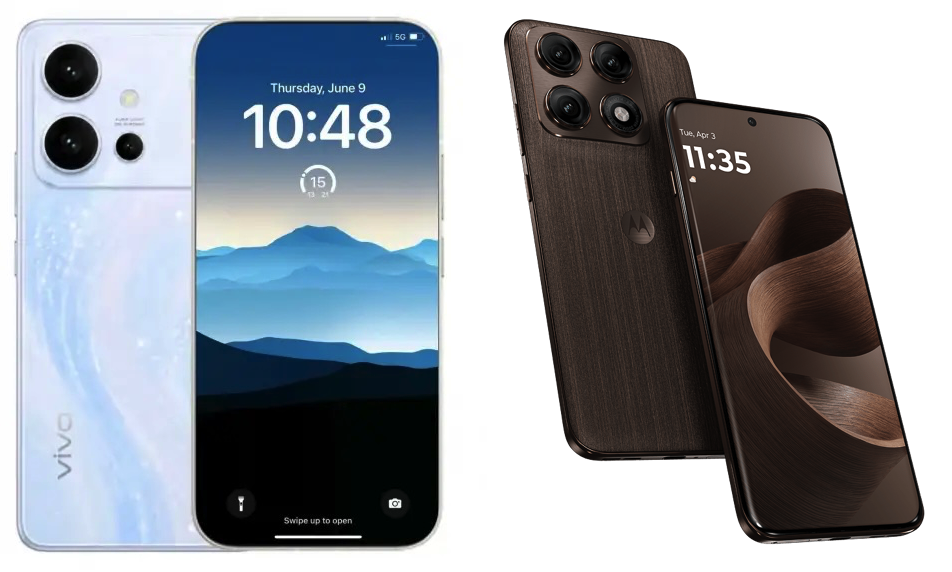
Vivo has officially pushed its V-series into a more premium tier with the launch of the Vivo V80 in India. Starting at Rs 62,999 for the 8GB + 128GB base model and scaling up to Rs 69,999 for the 256GB variant, the V80 represents a massive Rs 24,000 price hike over its predecessor, the V70, for the same configuration.
This aggressive pricing strategy fundamentally alters where the V-series sits in the smartphone market, moving it away from traditional mid-range skirmishes and straight into the premium arena. But does the V80 offer enough raw value to justify the premium tax? To find out, we stacked it against a formidable heavyweight in a similar—and remarkably more aggressive—price bracket: the Motorola Edge 70 Pro+.
The Price of Premium
When it comes to value, the contrast between these two devices is stark. While the Vivo V80 peaks at Rs 79,999 for its top-tier 512GB model, Motorola’s Edge 70 Pro+ undercuts it significantly. Available since June 11, the Edge 70 Pro+ is priced at Rs 47,999 for a robust 12GB + 256GB configuration, with offers bringing its effective price down to an enticing Rs 44,999.
Vivo does attempt to sweeten the deal ahead of its October 13 launch. Buyers can leverage up to 10% in instant cashback or exchange bonuses—bringing the base model’s effective price to around Rs 56,700—alongside bundled Google One cloud storage, discounted V-Shield protection, and extended warranties. Still, the V80 demands a significantly higher investment.
Design and Display
Aesthetically, both brands take entirely different approaches. The Motorola Edge 70 Pro+ is an exercise in sleek design. Measuring a remarkably thin 7.19mm and weighing just 190g, it features a plastic frame shielded by Gorilla Glass 7i on the front, complemented by unique back finishes inspired by silk, twill, and wood. Its display is a sprawling 6.8-inch AMOLED panel boasting a 2772 x 1272 resolution, 10-bit color, 100% DCI-P3 coverage, and an astonishing peak brightness of 5,200 nits.
The Vivo V80 opts for a slightly more compact footprint with a 6.59-inch AMOLED display (2750 x 1260 resolution) and a premium glass back. While its peak brightness maxes out at an impressive 5,000 nits, it introduces high-end eye comfort features like 4320Hz PWM dimming and a minimum brightness of just 1 nit. Both phones offer buttery-smooth 144Hz refresh rates and HDR10+ support, though Vivo limits its 144Hz capability to selected applications. Notably, Vivo adds extra unboxing value by including a charger, case, and pre-applied screen protector.
The Camera Shootout
Photography is the main battleground here. Vivo leverages its ZEISS partnership to deliver a highly capable triple-camera array. It’s headlined by a 50MP Sony LYTIA 700V main sensor with OIS and a 50MP Sony IMX882 telephoto lens with 3x optical zoom, supported by an 8MP ultrawide shooter. The V80 excels in portraiture, offering dedicated 85mm and 100mm framing options, and features a wide 50MP front-facing camera with autofocus and a 92-degree field of view.
Motorola, however, refuses to be outgunned. The Edge 70 Pro+ packs three 50MP sensors on the rear: a primary lens, a periscope telephoto lens with 3.5x optical zoom, and a vastly superior 122-degree ultrawide lens. It also outpaces the Vivo in videography flexibility, offering 4K at 60fps with HDR10+ and stunning 4K slow-motion at 120fps.
Under the Hood: Power and Endurance
On paper, Motorola holds a definitive edge in raw hardware. The Edge 70 Pro+ is powered by the MediaTek Dimensity 8500 Extreme, mated to 12GB of cutting-edge LPDDR5X RAM and ultra-fast UFS 4.1 storage. Thermal management is handled by a massive 4,600 mm² vapor chamber.
Vivo opts for Qualcomm’s Snapdragon 7 Gen 4, paired with 8GB of older-generation LPDDR4X RAM and UFS 3.1 storage. Neither device offers expandable memory.
Where Vivo reclaims ground is battery capacity. The V80 houses a massive 7,200mAh cell with 90W wired charging. Motorola equips the Edge 70 Pro+ with a smaller 6,500mAh silicon-carbon battery, but compensates with unmatched versatility: it supports 90W wired charging, 15W wireless charging, and reverse wireless charging—features completely absent on the Vivo.
Software, Durability, and Connectivity
In the software department, Vivo’s OriginOS 7 (based on Android 17) promises impressive longevity with up to six years of security updates. Motorola’s Edge 70 Pro+ launches with Android 16 and promises three OS upgrades along with five years of security patches.
Both devices are built to survive the elements, boasting elite IP68 and IP69 dust and water resistance ratings. Motorola takes durability a step further with MIL-STD-810H military certification, though it’s worth noting neither brand covers liquid damage under warranty. Connectivity is another win for Motorola, which features Wi-Fi 6E, Bluetooth 5.4, wireless audio support, and NFC. Vivo matches the NFC capability and throws in an infrared blaster and stereo speakers.
The Final Verdict
If you are judging strictly by hardware-to-price ratio, the Motorola Edge 70 Pro+ is the undeniable winner. For Rs 44,999 (with offers), it delivers a superior processor, faster RAM and storage, a high-res 50MP ultrawide camera, a periscope zoom lens, and wireless charging. Its only real compromises are a plastic frame and a slightly smaller battery.
The Vivo V80, conversely, is a tougher sell at its Rs 62,999 starting price. While it offers a phenomenal ZEISS-tuned camera system, a massive 7,200mAh battery, a brilliant display, and an industry-leading security update policy, it charges flagship money for mid-tier RAM and storage specifications. Unless Vivo’s specific software features and ZEISS portrait mastery are absolute must-haves for your daily use, Motorola simply offers more smartphone for considerably less money.
Vivo V80 & Motorola Edge 70 Pro+ Specification and Starting Price (India)
|
Specification |
Vivo V80 |
Motorola Edge 70 Pro+ |
|
Starting Price (India) |
• 8GB + 128GB: Rs 62,999 • 8GB + 256GB: Rs 69,999 • 8GB + 512GB: Rs 79,999 |
• 12GB + 256GB: Rs 47,999 (Effective Rs 44,999 with bank offers) |
|
Display |
6.59-inch AMOLED, 2750 x 1260 px, 144Hz, 5,000 nits peak brightness, 4320Hz PWM dimming, HDR10+ |
6.80-inch AMOLED, 2772 x 1272 px, 144Hz, 5,200 nits peak brightness, 10-bit color, HDR10+ |
|
Dimensions & Weight |
7.69 mm thickness, 203 g |
7.19 mm thickness, 190 g |
|
Build & Protection |
Glass back, IP68 / IP69 dust & water resistance |
Plastic frame, Gorilla Glass 7i front, IP68 / IP69 + MIL-STD-810H certified |
|
Processor |
Qualcomm Snapdragon 7 Gen 4 |
MediaTek Dimensity 8500 Extreme |
|
RAM & Storage |
8GB LPDDR4X |
UFS 3.1 |
|
Cooling |
Standard cooling setup |
4,600 mm² Vapor Chamber |
|
Rear Cameras |
• Main: 50MP Sony LYTIA 700V (OIS) • Telephoto: 50MP Sony IMX882 (3x optical zoom) • Ultrawide: 8MP |
• Main: 50MP (OIS) • Telephoto: 50MP Periscope (3.5x optical zoom) • Ultrawide: 50MP (122° FOV) |
|
Front Camera |
50MP with Autofocus (92° FOV) |
50MP |
|
Video Recording |
4K @ 60fps |
4K @ 60fps (HDR10+), 4K slow-mo @ 120fps |
|
Battery & Charging |
7,200 mAh, 90W wired FlashCharge |
6,500 mAh silicon-carbon, 90W wired, 15W wireless, reverse wireless |
|
Software & Support |
OriginOS 7 (Android 17), up to 6 years of security updates |
Hello UI (Android 16), 3 OS upgrades, 5 years of security updates |
|
Connectivity |
5G, Wi-Fi, Bluetooth 5.4, NFC, IR Blaster, Stereo Speakers |
5G, Wi-Fi 6E, Bluetooth 5.4, NFC, Wireless Audio Support |
Related Posts
-
 Galaxy S26 leak: slimmer chassis, Qi2 magnets, and familiar triple camera
-
 Vivo X300 vs Vivo X300 FE comparison: balanced flagship or endurance champion?
-
 Honor MagicOS 11 Rollout Schedule: Eligible Devices, Beta Details, and Features
-
 Qualcomm launches Snapdragon 8s Gen 4 – a new chip for midrange phones