
Why Character Drift Kills Launch Assets (and How to Stop It)
Last quarter, a product lead at a growing software firm showed me their upcoming launch deck. On the first slide, their brand mascot looked like a sleek, approachable professional. By the fourth slide—a promotional video for LinkedIn—the same character had gained ten pounds, changed eye color, and seemed to have aged five years.
This is “character drift,” and it is the single biggest reason product teams still hesitate to fully commit to generative media. In a world where brand trust is built on consistency, having a subject that morphs across different touchpoints feels amateur. It signals that you aren’t in control of your tools.
For professional-grade launch assets, we have to move past the “slot machine” method of prompting—where you pull the lever and hope for a decent result—to a controlled, repeatable pipeline. By leveraging specific model weights in Nano Banana Pro and utilizing structural editing tools, teams can finally maintain a stable visual identity from the initial hero image to the final social clip.
The Identity Crisis in Generative Media
The core problem is that most generative models are designed for variety, not persistence. When you ask for a “woman in a lab coat,” the model pulls from a massive latent space of what it thinks a lab coat and a woman look like. If you prompt it again, it draws a slightly different set of pixels.
For a one-off blog header, this doesn’t matter. For a multi-asset campaign involving a landing page, five Instagram ads, and a demo video, it’s a disaster. If your recurring subject looks different in every frame, the audience’s subconscious registers a “glitch” in the brand’s reality. This psychological friction erodes the credibility of the product you are trying to launch.
We are currently in a transitional phase where the “perfect” one-click consistency button doesn’t exist. Anyone telling you that AI can currently generate twenty different scenes with 100% pixel-perfect identity consistency without manual intervention is likely overpromising. However, by using a disciplined workflow centered on Banana Pro tools, we can get close enough that the human eye no longer objects.
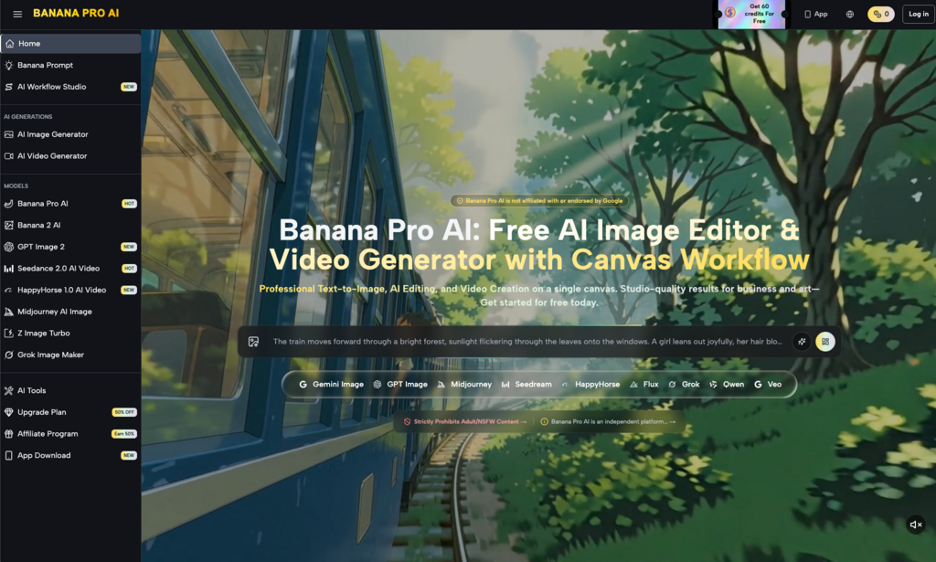
Anchor Your Identity with Nano Banana Pro
The foundation of any consistent campaign is the “Primary Asset.” This is the first high-fidelity generation that defines the subject’s DNA. This is where Nano Banana excels over broader, more erratic open-source models.
When you are building your subject in Nano Banana Pro, you shouldn’t just prompt for a “character.” You need to build a descriptive “anchor” that describes permanent physical traits in clinical detail. Instead of “a young man,” you might use “a 30-year-old man with a sharp jawline, an asymmetrical undercut of dark brown hair, and a small mole above the left eyebrow.”
These specific descriptors serve as weights that narrow the model’s focus. By keeping this “Identity String” identical across every prompt, you force the model to prioritize those features.
The Seed Management Factor
One common mistake is ignoring the seed. While a seed won’t guarantee identity across different poses, it provides a stable mathematical starting point. When working within the Banana AI ecosystem, saving your successful seeds is the first step toward building a library of reusable assets. If you find a lighting setup and a face structure that works, that seed becomes the cornerstone of your campaign.
Surgical Corrections with the AI Image Editor
Even with the best prompting, the model will eventually hallucinate. It might change the color of the subject’s shirt or misinterpret the way light hits their hair. This is where most teams give up and try to re-roll the prompt.
That is a waste of time. Instead, professional workflows involve moving the generation into the AI Image Editor for surgical intervention.
The AI Image Editor allows for in-painting—the process of masking a specific area of an image and asking the AI to regenerate only that section. If your character’s face is perfect but their clothing has shifted from a navy blazer to a black hoodie, you mask the hoodie and prompt for the correct attire. This ensures that the environment and the subject’s posture remain unchanged while you fix the drift.
Furthermore, we often see “lighting mismatch” when moving a character into different backgrounds. A subject generated in a sunny park will look out of place in a neon-lit office. By using the editing tools within Banana Pro, you can adjust the global lighting and shadow patterns of the subject to match the new scene, preventing that “pasted-on” look that characterizes low-quality AI work.
Bridging the Gap from Static Stills to Motion
The difficulty of maintaining identity doubles when you move from static images to video. This is the “uncanny valley” of character consistency. In a video clip, if a character’s face morphs even slightly during a turn of the head, the viewer immediately identifies it as fake.
To combat this, we shift from text-to-video to an image-to-video workflow. By using your “Anchor Image” (the one refined in the AI Image Editor) as the initial frame for your video generation, you give the motion model a specific set of pixels to animate.
However, there is an element of uncertainty here that every team must account for: temporal consistency in AI video is still a developing science. In my experience, clips longer than four seconds tend to see the character’s identity begin to “dissolve” as the model loses track of the original reference. The tactical workaround is to generate shorter, high-impact bursts of 2–3 seconds and use them as “stings” in your launch video. This keeps the identity stable while still providing the visual dynamism of motion.
Where the Tech Fails: Managing Expectations
It is important to be realistic about what these models can and cannot do. While Nano Banana Pro is remarkably capable at maintaining facial structures, there are specific areas where the technology still struggles:
- Intricate Patterns and Branding: If your character is wearing a shirt with a specific, complex logo or a very fine plaid pattern, the AI will almost certainly scramble it during different angles. For launch assets, it is often better to keep clothing simple and add branding in post-production using traditional design tools.
- Fine Jewelry and Accessories: Eyeglasses and specific pieces of jewelry are prone to morphing. A character might have thick-rimmed glasses in one shot and wire-rimmed ones in the next.
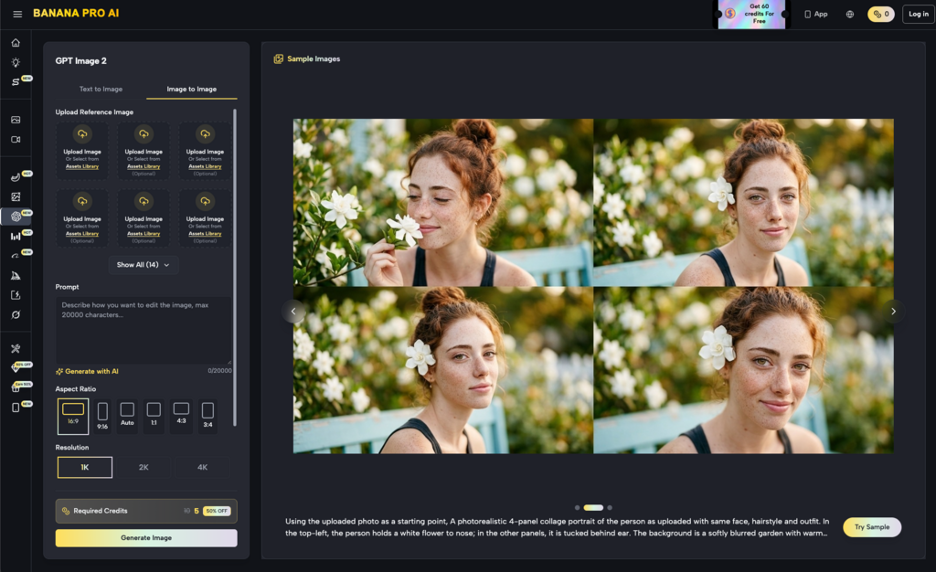
- Complex Physics: Any motion involving the character interacting with their own hair or face (like tucking hair behind an ear) often results in “melting” artifacts.
Because of these limitations, we advise teams to aim for “visual rhyme” rather than “visual cloning.” Your goal is for the audience to recognize the character instantly, even if a button on their jacket has moved three millimeters to the left.
A Repeatable Pipeline for Launch Visuals
To turn these insights into an operational workflow, your product team should follow a “Character Bible” approach. Before you generate a single asset for the public, you should have a documented set of parameters:
- The Master Identity String: A 50-70 word description of the subject that is never changed.
- The Reference Seed: A specific seed number that produces the most consistent results for your subject’s face.
- The Environment Palette: A set of prompts that define the lighting and color grade of the campaign.
The workflow then becomes:
- Generate base images using Nano Banana Pro using the Identity String.
- Select the best iterations and move them into the AI Image Editor to fix minor drift or clothing errors.
- Use these “clean” images as the starting frames for video generation.
- Perform final color grading in a video editor to unify the look of the generated clips with your UI recordings or live-action footage.
By treating AI as a component of a larger creative pipeline—rather than a magic wand—product teams can produce launch assets that feel intentional, professional, and, most importantly, consistent. The tools within the Banana Pro suite provide the control necessary to bridge the gap between “cool AI experiment” and “market-ready campaign.”


