
iPhone 20 Leaks: Quad-Curved Display, Custom Camera Sensors, and 2nm Chips
As Apple prepares to unveil the iPhone 18 Pro and iPhone 18 Pro Max on Wednesday, September 9, early reports suggest this year’s lineup will be a familiar iteration. Beyond incremental internal updates—including the new A20 Pro chip and refined vapor chamber cooling—the physical design closely mirrors last year’s iPhone 17 Pro.
However, supply chain leaks indicate that Apple is saving its most ambitious technological leap for next fall, when it introduces a radically redesigned 20th-anniversary model, expected to skip the “iPhone 19” moniker entirely in favor of the iPhone 20.
The Biggest Redesign Since the iPhone X
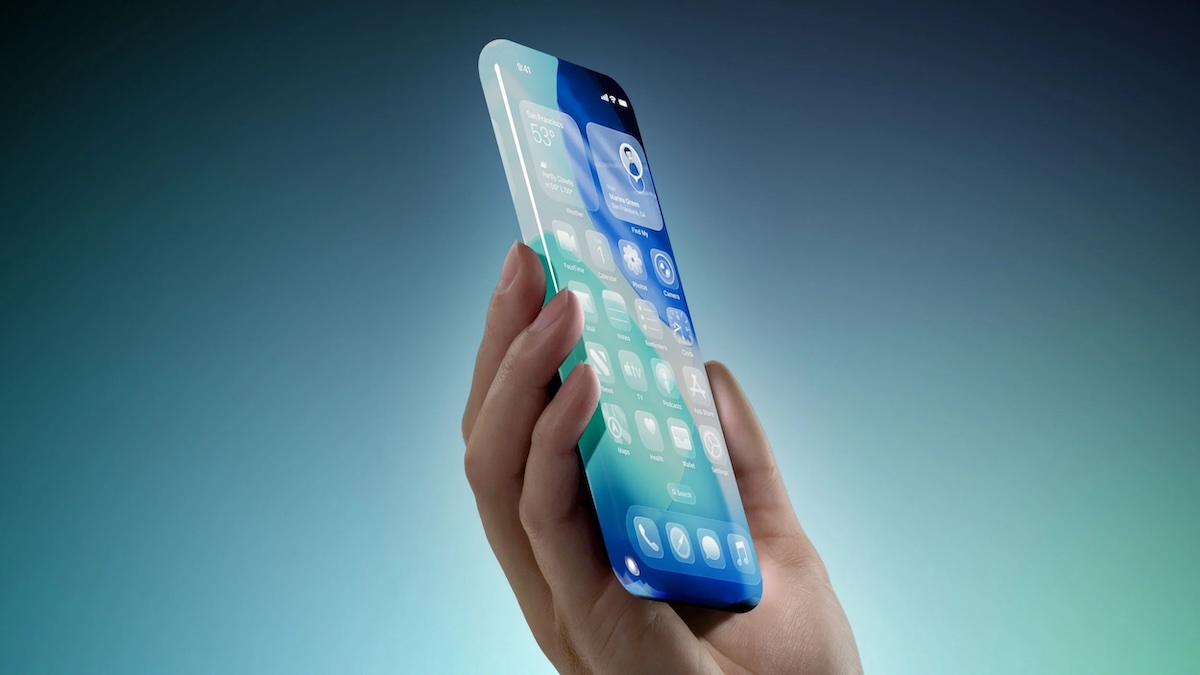
Marking two decades since Steve Jobs introduced the original iPhone, the 2027 anniversary edition represents the most comprehensive redesign since 2017’s iPhone X. Apple is reportedly collaborating with Samsung on an “equal-depth quad-curved” OLED display that curves away on all four edges. During normal use, the glass conceals the underlying metal frame, creating a seamless, borderless visual effect.
To complement this new form factor, Apple is adopting Color Filter on Encapsulation (COE) OLED technology. This process significantly reduces the thickness of the display stack while allowing more light to pass through, boosting screen brightness while reducing overall power draw.
Under-Display Face ID and Custom Apple Camera Optics
The visual signature of modern iPhones—the Dynamic Island cutout—may finally reach the end of its line. Apple is actively testing under-display Face ID hardware paired with an under-screen selfie camera, aimed at delivering a completely uninterrupted display surface.
On the optics front, Apple is developing its first proprietary stacked image sensor to replace the Sony hardware it has relied on for over a decade. Prototypes indicate the sensor incorporates Lateral Overflow Integration Capacitor (LOFIC) technology. By allowing individual pixels to store varying amounts of light, the sensor could deliver up to an unprecedented 20 stops of dynamic range, dramatically reducing blown-out highlights and crushed shadows in challenging light.
Key Anticipated Upgrades: iPhone 20 vs. Current Standard
| Feature | Expected iPhone 20 Specification |
| Display & Form Factor | Quad-curved borderless glass; concealed metal chassis |
| Display Tech | COE OLED panel (thinner, brighter, higher power efficiency) |
| Display Sizes | Expanded 6.4-inch (Pro) and 7.0-inch (Pro Max) options |
| Front Hardware | Under-display Face ID and under-screen camera (No Dynamic Island) |
| Primary Camera | Custom Apple stacked sensor with LOFIC tech (up to 20 stops dynamic range) |
| Physical Controls | Solid-state haptic buttons integrated into the frame (no moving parts) |
| Processor & Memory | 2nm A21 Pro chip with stacked High Bandwidth Memory (HBM) for AI |
| Battery Tech | Silicon anode chemistry for higher energy density in the same footprint |
Solid-State Buttons and 2-Nanometer Silicon
Under the hood, the anniversary model is expected to introduce the second-generation 2-nanometer A21 Pro processor. To accelerate on-device artificial intelligence tasks, Apple is evaluating vertically stacked DRAM (High Bandwidth Memory) to dramatically increase memory bandwidth.
Additionally, Apple is testing a complete replacement of its mechanical side keys. The Side, Volume, Action, and Camera Control buttons could be replaced with solid-state, haptic-feedback surfaces embedded directly into the frame, providing tactile responsiveness without physical moving parts. Powering the system is a new silicon anode battery, capable of storing more lithium ions per gram for extended battery life without adding bulk.
A Reality Check on Timelines
While these leaks paint a picture of a landmark smartphone, a full year remains before any official launch. Apple’s internal hardware roadmaps shift frequently, and technologies as complex as under-display Face ID have historically faced development delays. Nevertheless, if even half of these features materialize in 2027, holding onto your current device for one more year might prove to be a smart strategy.


