
Xiaomi Xring O3 Breaks 5 Million AnTuTu Points as New Flagship Chip Launches
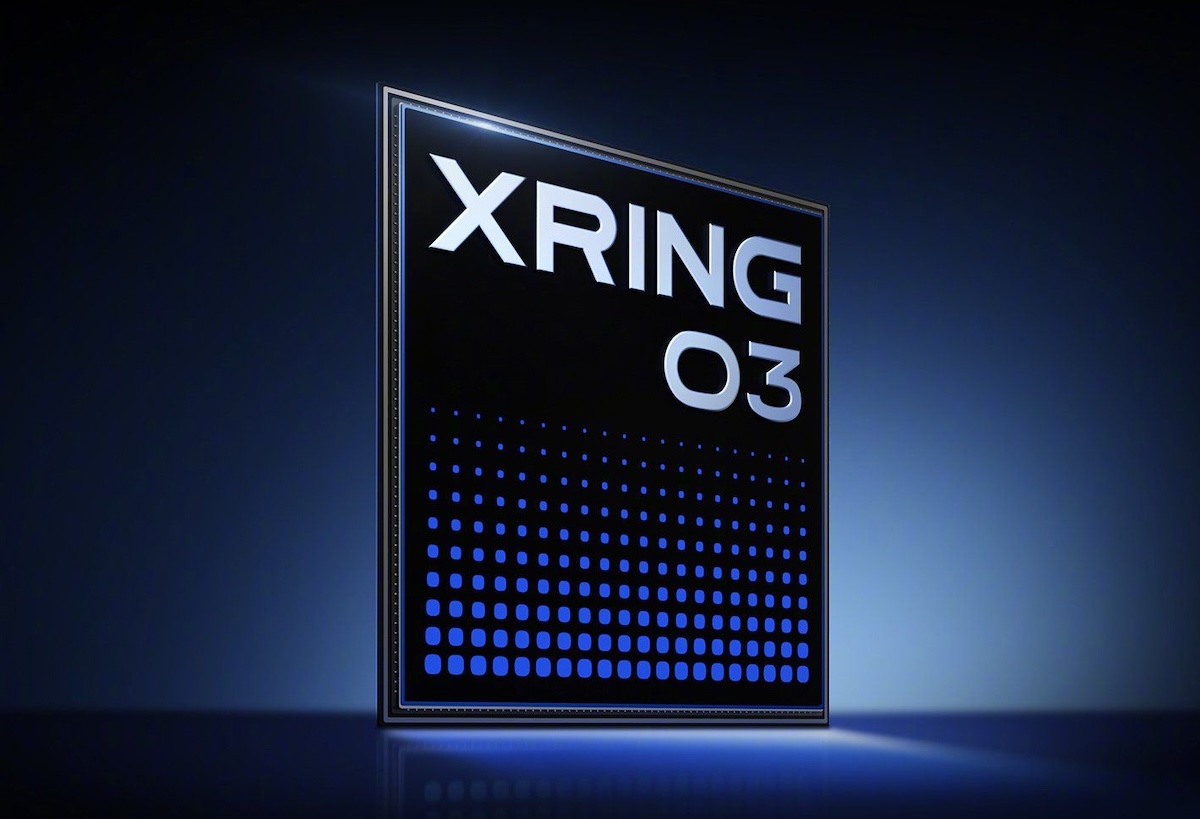
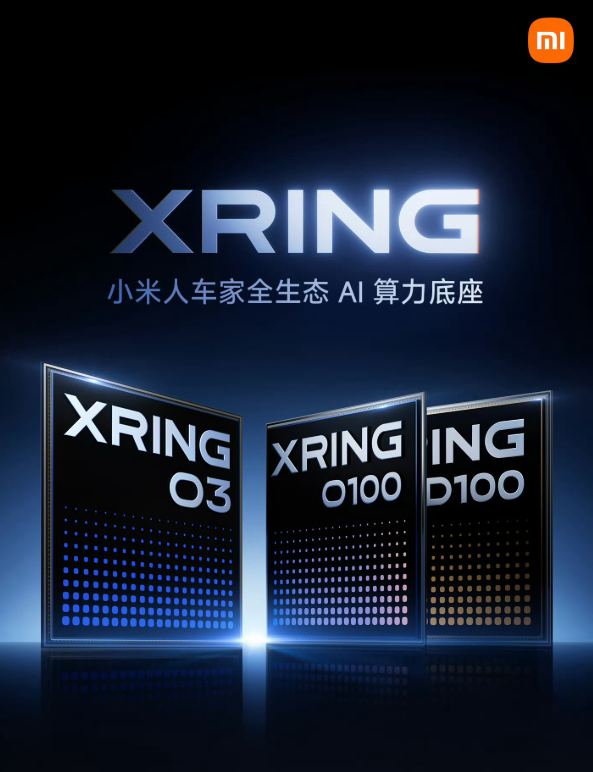
Xiaomi has expanded its in-house silicon ambitions with the introduction of three new chipsets designed for different areas of its growing technology ecosystem. The new lineup includes the flagship Xring O3 mobile processor, the AI-oriented Xring O100 and the Xring D100 for intelligent driving systems.
The most attention-grabbing announcement is the Xring O3. Xiaomi claims the new 3nm smartphone chip achieved an AnTuTu score of 5.22 million points, making it the first mobile SoC to break the five-million-point barrier in the benchmark.
Xring O3 targets flagship mobile performance
The Xring O3 is built on a 3nm process and uses a 10-core CPU architecture. Xiaomi claims that the processor delivers up to 60% higher performance than its predecessor or reference baseline, although the company has not specified the exact comparison platform.
Graphics are handled by a new 16-core G2-Ultra NX GPU. Xiaomi says the GPU can deliver up to 85% stronger graphics performance while improving power efficiency by 64%.
If those figures hold up in independent testing, the Xring O3 could become one of the most capable mobile platforms available for gaming, high-resolution video processing and demanding on-device AI workloads. As always, benchmark claims should be treated carefully until retail devices are tested under sustained real-world conditions.
First Xiaomi mobile chip with LPDDR6 support
The Xring O3 also marks Xiaomi’s first mobile processor to support LPDDR6 memory. The company claims memory bandwidth of up to 113.8GB/s, which could improve multitasking, gaming performance, AI processing and image handling.
For AI-related tasks, Xiaomi rates the chipset at 200 TOPS of tensor performance and 3.13 TFLOPS of vector performance. The company also claims a 45% increase in NPU performance.
Rather than relying solely on a dedicated neural processing unit, Xiaomi says AI acceleration is spread across several parts of the chip, including the CPU, GPU, ISP, DPU and ADSP. Static latency is rated at 82ns.
Xiaomi reportedly spent 459 days developing the Xring O3, underlining the scale of effort required to build a modern flagship mobile processor from scratch.
Xiaomi 18 Fold and Pad 9 Pro Max confirmed
Xiaomi has confirmed that the Xring O3 will power two upcoming products: the Xiaomi 18 Fold and Xiaomi Pad 9 Pro Max. Both devices are scheduled to launch in China in September.
The Xiaomi 18 Fold is expected to showcase the chip in a high-end foldable smartphone, where performance efficiency and thermal control are especially important. The Pad 9 Pro Max, meanwhile, could benefit from the platform’s high graphics throughput and AI capabilities for productivity, entertainment and multitasking.
Xring O100 is built for local AI
Alongside the flagship smartphone processor, Xiaomi introduced the Xring O100, an AI-focused chip built on a 6nm process.
The O100 uses a near-memory AI architecture designed to reduce the bottlenecks that can occur when AI processors repeatedly move large volumes of data between the chipset and memory. Xiaomi combines vertical chip-and-memory stacking with millions of high-speed vertical channels to deliver bandwidth of up to 1.22Tbps.
Xiaomi expects the Xring O100 to support on-device AI processing across smartphones, connected cars and robotics. The goal is to enable more advanced AI features locally, without requiring every task to be sent to cloud servers.
Xring D100 focuses on intelligent driving
The third chip, Xring D100, is designed for intelligent driving systems. Xiaomi calls it its first domestic 3nm AI processor for this category.
The Xring D100 includes a 20-core CPU and a 16-core NPU. It supports up to 160GB of unified memory and is said to be capable of running AI models containing as many as 200 billion parameters locally.
Development of the chipset has reportedly been completed, with commercial deployment planned for 2027. If Xiaomi meets that target, the D100 could become a core part of the company’s wider automotive strategy, particularly as it expands its presence in electric vehicles and AI-powered driving technologies.
Xiaomi Xring chip specifications
Xiaomi’s silicon strategy is expanding
The three-chip announcement shows that Xiaomi is no longer treating custom silicon as a limited smartphone experiment. The company is now building chips for flagship mobile devices, local AI processing and automotive intelligence.
The Xring O3 is the immediate headline act, especially because of its claimed 5.22 million AnTuTu score and LPDDR6 support. But the O100 and D100 may be more strategically important over time, as Xiaomi attempts to build a connected ecosystem spanning phones, tablets, robots, smart vehicles and AI services.
The key test now is execution. Xiaomi will need to demonstrate that the Xring O3 performs consistently in retail devices, while the O100 and D100 must prove that the company can turn ambitious technical claims into reliable commercial products.


