
Snapdragon 8 Elite Gen 6 Pro: Early AnTuTu Benchmark Explained
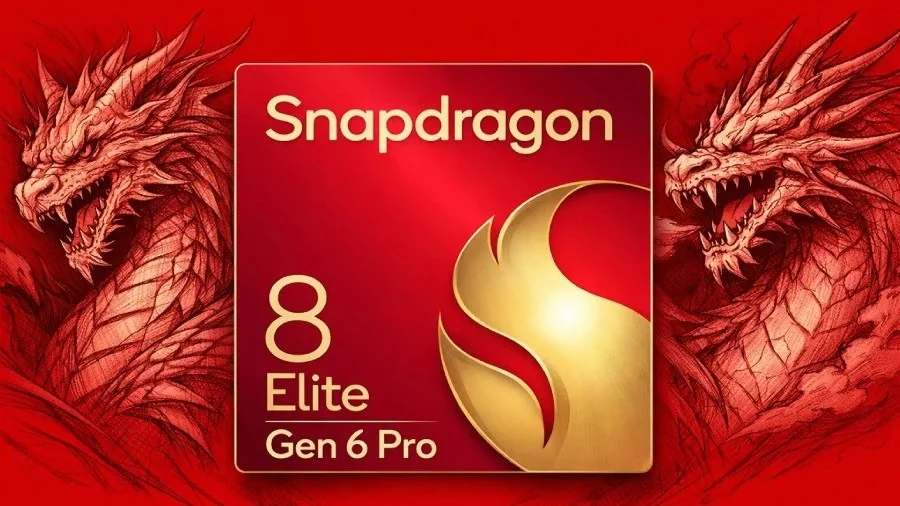
Qualcomm’s next ultra-premium smartphone chip may have surfaced in an early AnTuTu benchmark, and the alleged result is predictably enormous. A device believed to use the Snapdragon 8 Elite Gen 6 Pro reportedly scored 4,835,412 points in AnTuTu V11.1.4, potentially offering an early indication of what the company’s first 2nm flagship platform could deliver.
The figure appeared in a screenshot shared by well-known tipster Digital Chat Station. According to the image, the tested device used Qualcomm’s SM8975 platform and achieved 1,368,930 points in the CPU test and 1,854,826 points in the GPU category. The graphics processor is listed as the Adreno 850.
Earlier reports have linked the SM8975 model number to the Snapdragon 8 Elite Gen 6 Pro, while the reportedly lower-tier Snapdragon 8 Elite Gen 6 is associated with the SM8950 designation. The two chips are expected to form Qualcomm’s next flagship mobile platform family, although Qualcomm has not yet formally announced either processor.
If accurate, the leaked AnTuTu score would place the Snapdragon 8 Elite Gen 6 Pro ahead of current Snapdragon 8 Elite Gen 5 flagship devices, which have already crossed the 4.5-million-point mark in the same benchmark. That would represent a gain of roughly 6 percent in overall synthetic performance.
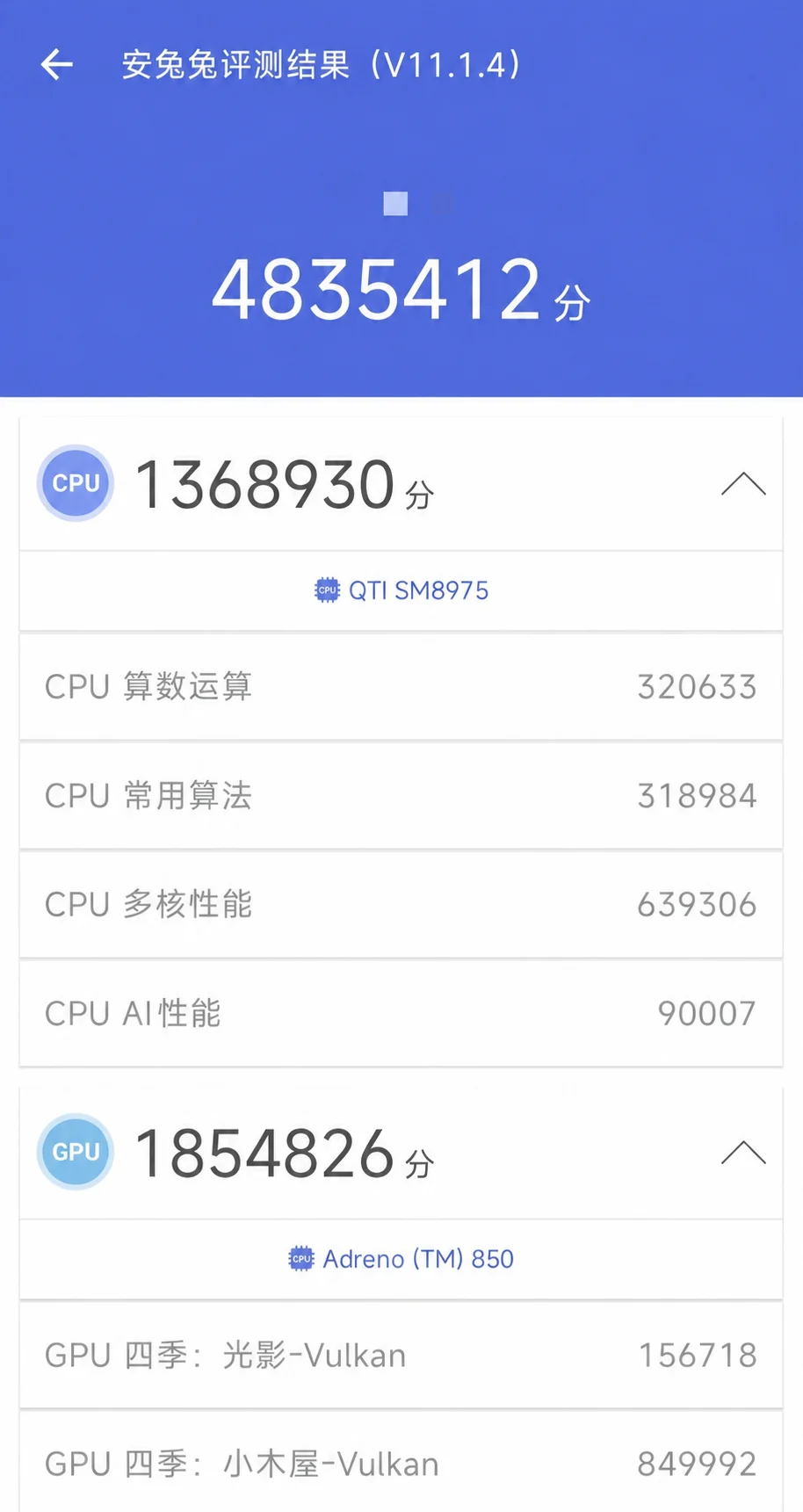
However, the result should be approached with considerable caution. AnTuTu reportedly said that it could not retrieve the score through its own backend, meaning the benchmark cannot currently be independently verified. Screenshots are easy to share and much harder to validate, especially before commercial devices reach reviewers and consumers.
For now, the test is best viewed as an intriguing leak rather than confirmed evidence of final Snapdragon 8 Elite Gen 6 Pro performance.
A More Powerful GPU Could Define the Pro Model
The alleged benchmark aligns with previous reports that Qualcomm will further separate its standard and Pro-class flagship chips.
Both the Snapdragon 8 Elite Gen 6 and Snapdragon 8 Elite Gen 6 Pro are expected to use a 2nm manufacturing process and an eight-core, 2+3+3 CPU arrangement. However, the Pro version is tipped to receive the more capable Adreno 850 GPU, 18MB of graphics memory and support for LPDDR6 RAM. The standard model is reportedly limited to the Adreno 845 GPU, 12MB of graphics memory and LPDDR5X memory support.gizmochina+1
The Pro platform is also rumoured to include additional Matrix ALU hardware and an AI Frame Fusion feature. According to leaked information, this could enable AI-assisted upscaling and frame generation in mobile games, potentially improving perceived frame rates without demanding the same level of native rendering performance.gizmochina
That would make the Snapdragon 8 Elite Gen 6 Pro particularly attractive for gaming-focused flagships, foldables and ultra-premium “Ultra” or “Pro Max” devices. It could also help explain why the chip is expected to cost significantly more than its standard counterpart. Reports suggest the platform may be reserved for only the most expensive Android phones rather than being adopted across every 2026 flagship.phonearena+1
Still, specifications remain unofficial. Clock speeds, power efficiency, thermal behaviour and real-world battery impact are all more important than a leaked benchmark image, and none can be properly judged until final retail hardware is available.
Which Phones Could Use It?
The Snapdragon 8 Elite Gen 6 series is widely expected to appear in the next wave of Chinese flagship smartphones.
Honor has confirmed that the Magic 9 series will launch in China on September 28. Current expectations suggest the regular Honor Magic 9 could use the previous-generation Snapdragon 8 Elite Gen 5, while higher-end Pro versions may move to the newer Snapdragon 8 Elite Gen 6 platform.
Honor may not be first, however. Xiaomi’s forthcoming Xiaomi 18 series is widely tipped as an early candidate to debut Qualcomm’s next-generation silicon. Other expected adopters include the iQOO 16, OnePlus 16 and future Red Magic gaming phones, although precise chip selection could vary between standard, Pro and region-specific versions.tbreak+1
There is also a question over whether these phones will use the standard Snapdragon 8 Elite Gen 6 or the more expensive Pro variant. Earlier reporting suggests that some manufacturers could choose the standard chip to contain costs, while reserving the Snapdragon 8 Elite Gen 6 Pro for top-spec models with advanced cooling systems, high-refresh-rate displays and LPDDR6 memory.notebookcheck+1
Performance Means Little Without Efficiency
A score close to 4.84 million points would certainly create headlines, but it would not automatically make the Snapdragon 8 Elite Gen 6 Pro a better chip in daily use.
Synthetic benchmarks measure peak performance under specific conditions. They do not, on their own, reveal how much power a phone consumes, how quickly it heats up, whether it throttles during long gaming sessions or how efficiently it handles normal tasks such as photography, messaging, navigation and video streaming.
The transition to a 2nm process could offer meaningful gains in efficiency, but the Pro chip is also expected to have a larger, more ambitious graphics subsystem and potentially more expensive memory support. Those upgrades could increase raw performance while placing greater demands on cooling and battery capacity.
Manufacturers will therefore need to balance benchmark leadership with sustained performance. A phone that posts record-breaking numbers for five minutes before becoming uncomfortably warm is less impressive than one that delivers stable performance over an hour of gaming, recording or intensive AI processing.
If the leaked result proves genuine, the Snapdragon 8 Elite Gen 6 Pro could set a new Android benchmark when it arrives in late-2026 flagships. Until Qualcomm confirms the platform and independent testing begins, though, the 4.84-million AnTuTu score remains an interesting claim—not a final verdict.
Related Posts
-
 Oppo A7 Pro Specs and Price: A Sub-$300 Battery Powerhouse Arrives September 11
-
 Xiaomi HyperOS 4 Update: Super Xiao AI Gets Cross-Device Sync and Expert Mode
-
 Vivo Android 16 Update: Full List of Eligible Devices and Rollout Schedule
-
 Tecno Pova 8 Pro Tonino Lamborghini Limited Edition: Full Specs & Details