
Google Pixel 11 Pro XL Benchmarks Leak: First Look at Tensor G6 Performance
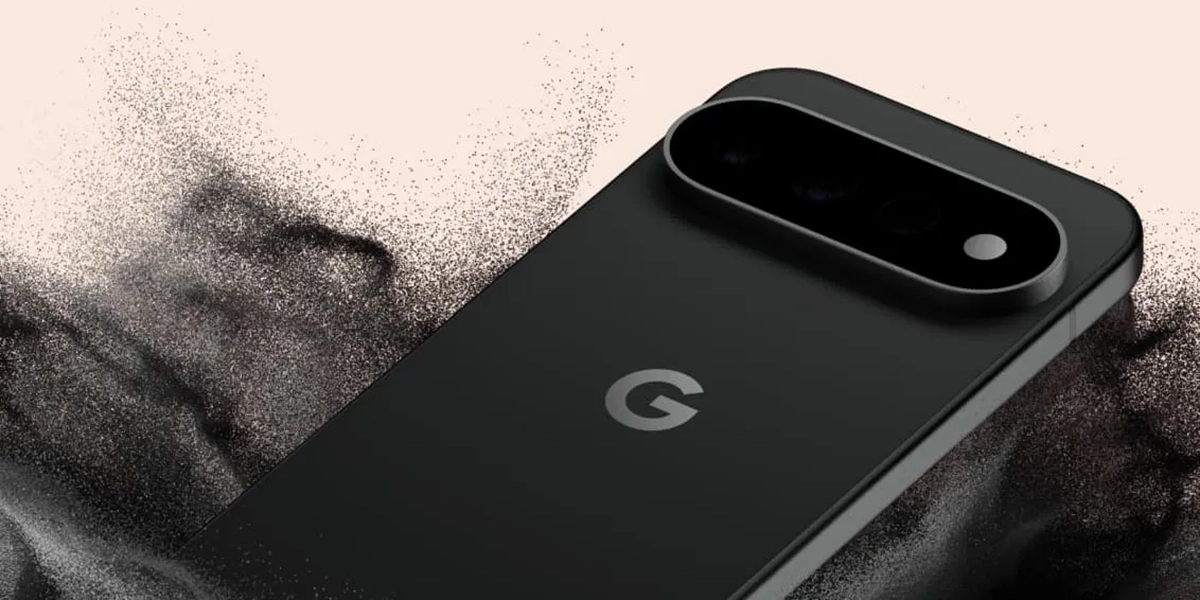
With Google’s highly anticipated Pixel 11 series unveiling just days away, the rumor mill has delivered a crucial final piece of the puzzle: early performance metrics for the upcoming Tensor G6 chipset. A newly surfaced Geekbench listing for the Google Pixel 11 Pro XL is giving tech enthusiasts a sneak peek at what to expect under the hood of Google’s next-generation flagship.
Performance: A Steady Evolution, Not a Revolution
According to the leaked benchmark, the Pixel 11 Pro XL achieved a single-core score of 2,112 and a multi-core score of 5,196.
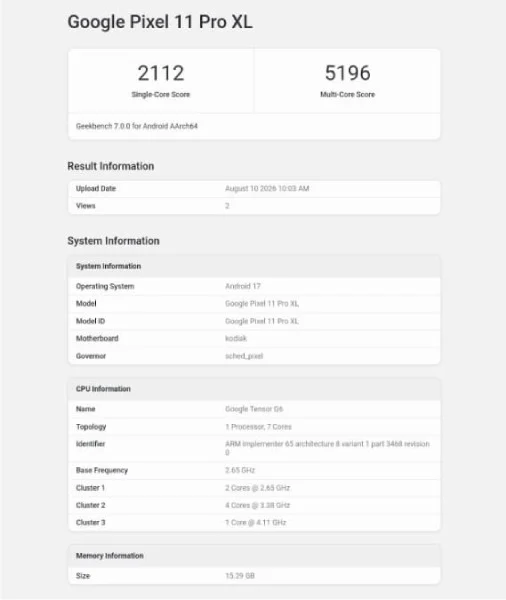
While these figures represent a massive leap from an early, heavily throttled prototype spotted in February—which scored a dismal 845 and 2,657, respectively—they do not suggest a dramatic generational leap over the outgoing Tensor G5. However, as is customary with pre-release hardware, these numbers should be taken with a grain of salt. Retail units running finalized, optimized software often yield notably higher results.
Unpacking the 7-Core Architecture
The Geekbench listing also corroborates earlier industry murmurs regarding the Tensor G6’s somewhat unconventional internal architecture. The silicon shifts to a unique 7-core configuration, distributed as follows:
-
1x Prime Core: Clocked at a blazing 4.11GHz for peak performance tasks.
-
4x Performance Cores: Running at 3.38GHz to handle heavy sustained workloads.
-
2x Efficiency Cores: Clocked at 2.65GHz for background tasks and battery preservation.
On the memory and graphics front, the test device was equipped with a hefty 16GB of RAM—solidifying expectations for the “Pro XL” tier—and is powered by a PowerVR C-Series CXTP-48-1536 GPU, a component previously tipped in supply chain leaks.
The Countdown to Launch
Unsurprisingly, the benchmarked device was running Android 17, giving us a glimpse into the software ecosystem that will power Google’s 2026 hardware lineup.
With retail packaging already surfacing on social media and the official launch event just around the corner, the tech world won’t have to wait long. We will soon see exactly how Google’s custom silicon and deep AI integration stack up against the rest of the smartphone industry’s heavyweights.


