
Samsung Exynos 1680 Official: 4nm Chip Brings RDNA 3 GPU and 19.6 TOPS AI
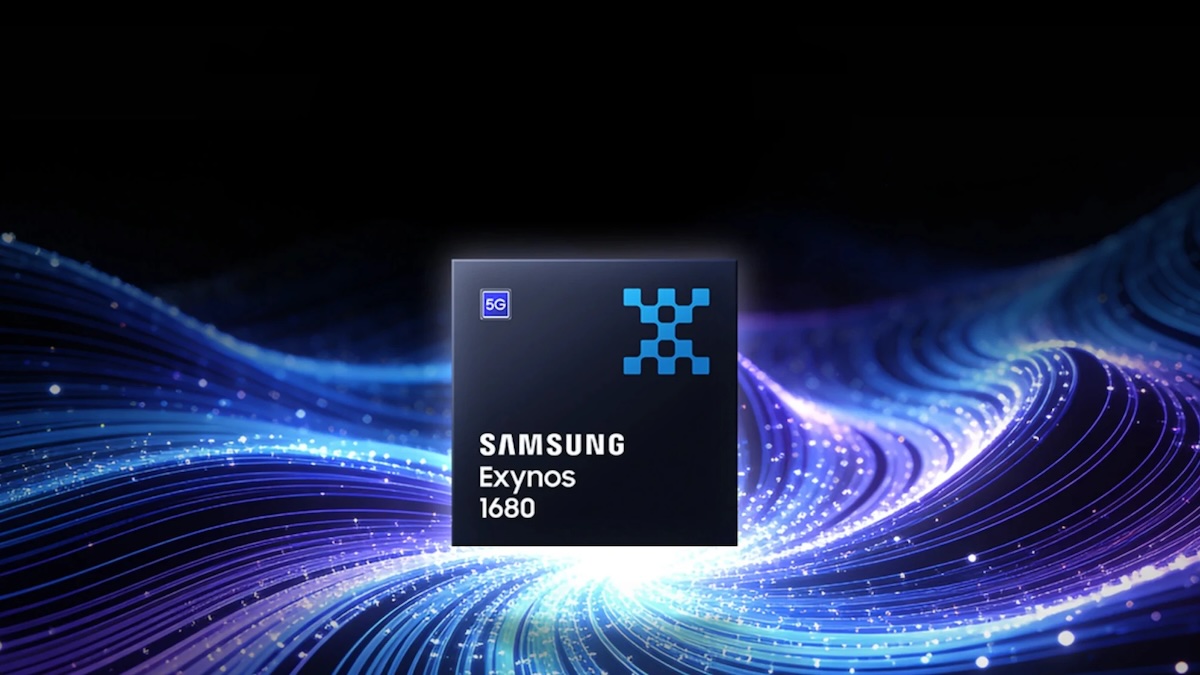
Samsung has unveiled the Exynos 1680, positioning it as a meaningful step forward for its mid-range smartphone portfolio. Rather than focusing on a dramatic redesign of the formula, the new chip appears aimed at improving the everyday experience through a more capable CPU layout, stronger graphics, and upgraded AI processing.
The Exynos 1680 is built on Samsung’s advanced 4nm EUV process and uses an updated octa-core tri-cluster design with one big core, four mid cores, and three efficiency cores. Samsung says this revised structure replaces one little core with a mid core compared with its predecessor, a change intended to improve multitasking while maintaining energy efficiency. Benchmark details linked to the chip indicate clock speeds of up to 2.91GHz for the prime core, 2.6GHz for the performance cluster, and 1.95GHz for the efficiency cores.
Graphics are another area of improvement. Samsung has equipped the chip with the Xclipse 550 GPU based on AMD’s RDNA 3 architecture, and the company says the upgraded GPU design delivers a 16 percent performance increase over the previous generation. That should translate into steadier gaming performance and smoother visual responsiveness on supported devices.
AI is also a major part of the Exynos 1680 story. Samsung states that the chipset’s NPU can deliver up to 19.6 TOPS, enabling more advanced on-device AI workloads and faster local processing for tasks such as imaging and other smart features built into the software experience.
The platform also strengthens Samsung’s imaging ambitions in the mid-range segment. Official specifications confirm support for camera sensors up to 200MP, while Samsung highlights improved image processing, stronger low-light noise reduction, and AI-assisted enhancement for photos and video. In practical terms, that gives Samsung more room to bring premium-style camera features to devices below its flagship line.
Taken together, the Exynos 1680 looks like a well-rounded upgrade rather than a radical departure. If Samsung pairs the chip with effective software tuning, the Galaxy A57 could benefit from smoother multitasking, better gaming stability, and more capable AI-assisted photography in day-to-day use.


