
OnePlus 15 vs. Pixel 10: Why Raw Power Beats Smart Software
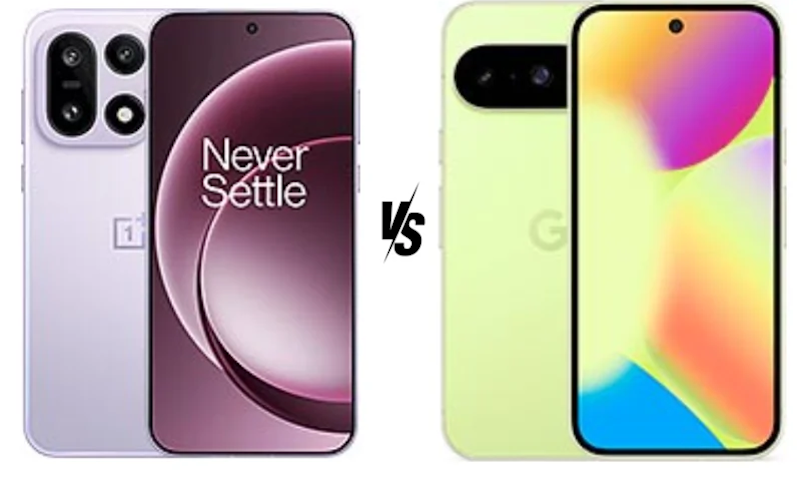
In the current Android landscape, the OnePlus 15 and the Google Pixel 10 stand as the champions of two diametrically opposed philosophies. One is a testament to raw engineering—chasing speed, thermal efficiency, and hardware dominance. The other is a monument to software optimization, prioritizing machine learning and everyday fluidity over benchmarks.
This comparison goes beyond the spec sheet; it is a choice between a device designed to push boundaries and one designed to be an invisible, helpful companion.
Design and Display: Industrial Might vs. Soft Ergonomics
The aesthetic divide is immediately apparent. The OnePlus 15 embraces an aggressive, industrial design language. With premium materials and a commanding hand-feel, it signals its status as a machine built for enthusiasts. In contrast, the Pixel 10 doubles down on approachability. Its minimalist curves and refined finish prioritize comfort, resulting in a device that feels less like a piece of tech and more like a friendly object.
The displays tell a similar story. The OnePlus 15 offers a visually visceral experience; its panel is tuned for maximum fluidity and saturation, making it the superior choice for high-refresh-rate gaming and media consumption. Google’s panel is no slouch—it wins on brightness consistency and outdoor visibility—but it lacks the sheer “pop” and responsiveness of its rival.
Winner: OnePlus 15 (for visual immersion).
Performance and Endurance: The Speed Gap
When pushed to the limit, the difference in philosophy becomes a performance gap. The OnePlus 15 is an unrepentant powerhouse. Whether multitasking or running heavy graphical loads, it feels instantaneous and aggressive. The Pixel 10 takes a more measured approach. It is perfectly smooth and stable, but it lacks the extra gear that power users often crave.
However, the biggest differentiator remains the power system. While the Pixel 10 offers respectable all-day battery life, it cannot compete with the sheer endurance of the OnePlus 15. More importantly, OnePlus continues to dominate in charging speeds. The ability to gain hours of power in minutes gives the OnePlus 15 a functional utility that the slower-charging Pixel simply cannot match.
Winner: OnePlus 15 (by a significant margin).
Camera: Versatility vs. Consistency
This is the only category where the battle is truly close. The OnePlus 15 relies on high-end hardware to produce dramatic, vibrant, and highly detailed images across a variety of focal lengths. It is a camera system that encourages creativity.
The Pixel 10, however, remains the king of computational photography. It may not have the most flexible glass, but its software processing ensures that point-and-shoot results are consistent, with superior exposure balance and natural skin tones. If you want a photo that looks “real” every time, the Pixel wins. If you want a photo that looks “impressive,” the OnePlus takes the lead.
Winner: Tie (Pixel for reliability, OnePlus for creativity).
The Value Proposition
At approximately $900, the OnePlus 15 commands a premium over the $800 Pixel 10. Is the extra $100 justified?
In a word: Yes. While the Pixel 10 offers excellent value through its long-term software support and AI features, the OnePlus 15 offers physically more phone. The superior charging architecture, the higher-grade display, and the raw processing headroom make the price hike feel like a fair exchange for the hardware provided.
Final Thoughts
The Google Pixel 10 is an excellent device for the average user who values software longevity and a reliable camera. However, when judged as a complete flagship package, the OnePlus 15 takes the crown.
By delivering a superior display, unmatched charging speeds, and performance that feels future-proof, the OnePlus 15 offers a more complete and capable experience for those who demand the most from their pocket computer.


