
AnTuTu January 2026. Rankings: RedMagic 11 Pro+ Tops 4 Million Points

The battle for Android performance supremacy continues, and AnTuTu has released its official benchmark rankings for January. Based on average scores from users in China throughout the month, the data reveals a stark divide in the semiconductor landscape: while Qualcomm remains the undisputed king of the premium sector, MediaTek has effectively locked down the mid-range market.
AnTuTu January: Flagships
In the flagship arena, the RedMagic 11 Pro+ continues its reign as the industry’s performance benchmark. With a staggering average score of 4,104,271, it sits comfortably at the top. However, its dominance faces an imminent threat. Industry analysts predict that the upcoming iQOO 15 Ultra, launching this month, is poised to snatch the crown in the February rankings given the brand’s performance claims.
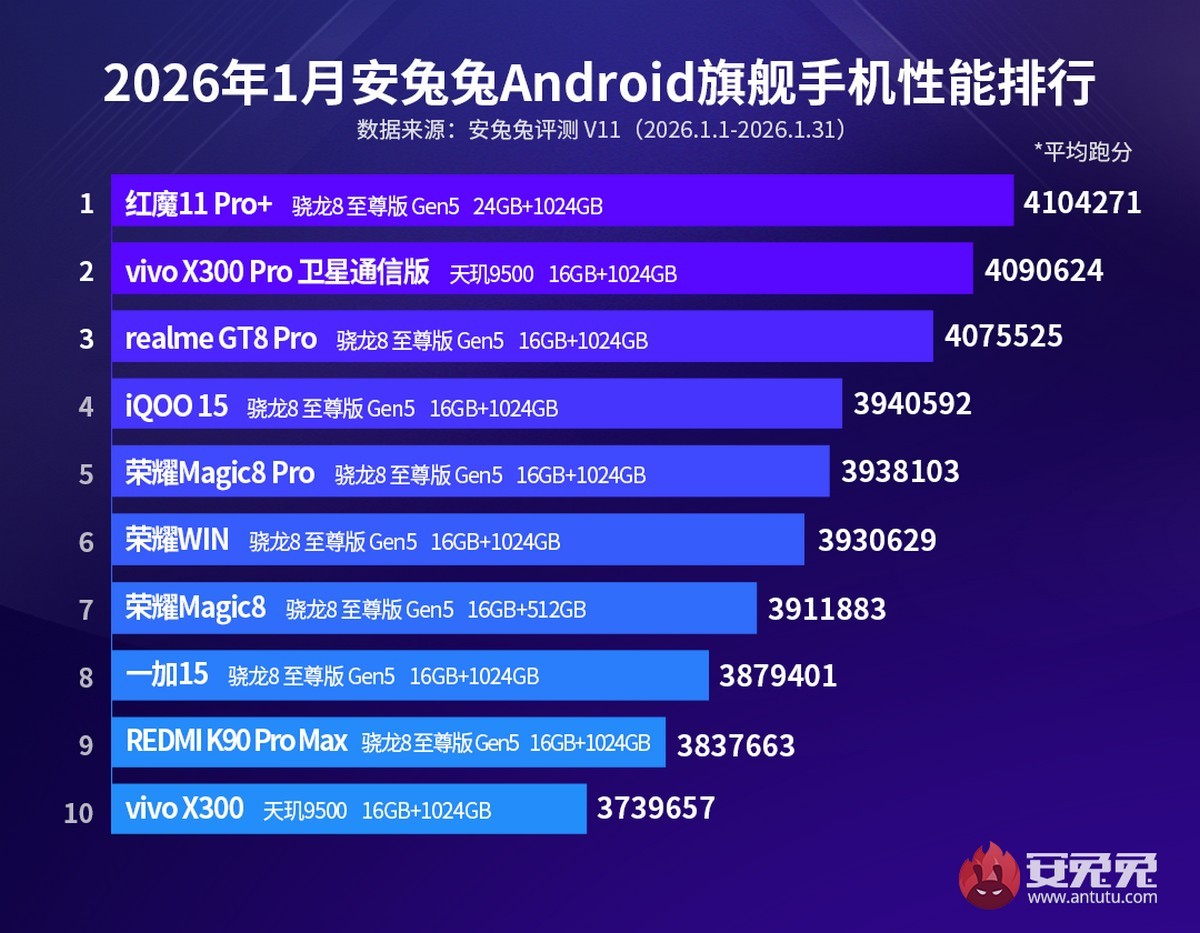
The runner-up spot goes to the vivo X300 Pro (Satellite Communication Edition), followed closely by a roster of heavy hitters including the Realme GT 8 Pro, the standard iQOO 15, and the Honor Magic8 Pro.
The underlying story here is silicon dominance. Of the top ten devices, eight are powered by Qualcomm’s Snapdragon 8 Elite Gen 5. Only two devices—the vivo X300 and Redmi K90 Pro Max—managed to break into the top tier using MediaTek’s Dimensity 9500.
Antutu January Mid-Range
While Qualcomm wins the high-end war, the mid-range chart is a complete shutout for the US chipmaker. The Honor Power 2 took the pole position with an average score of 2,218,856, leading a chart where the top seven positions are occupied exclusively by MediaTek silicon.
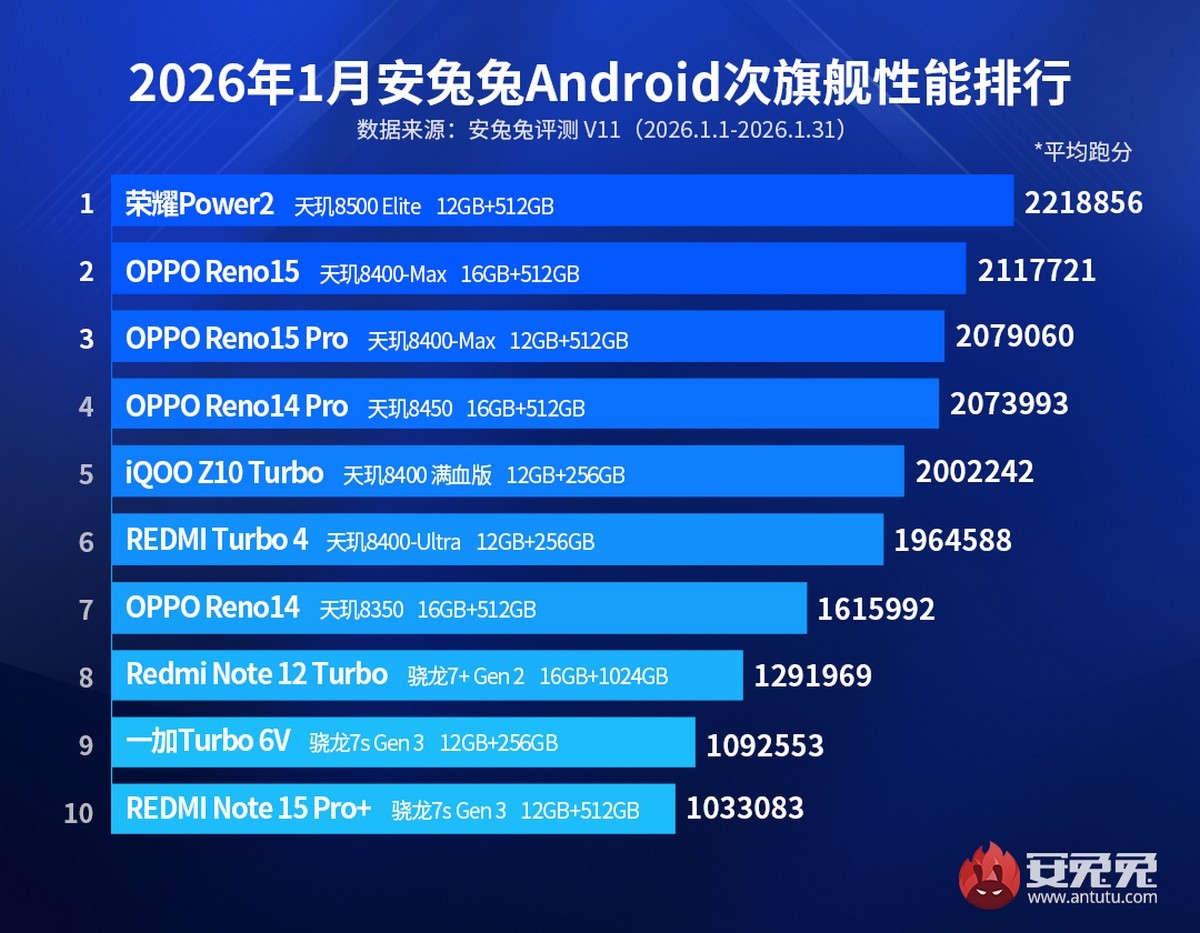
The Dimensity 8 series proves to be the chip of choice here. The latest Dimensity 8500 leads the pack, followed by the Oppo Reno15 series and iQOO Z10 Turbo. Interestingly, the performance gap between the new 8500 and the previous 8400 appears marginal compared to the significant leap seen from the 8300 generation. Qualcomm’s absence in the top seven highlights a significant gap in their portfolio for this specific market segment, with Snapdragon-powered devices relegated to the bottom three spots.


